You know the feeling — opening a new batch of compacts only to find scratches on the surface or a logo that starts peeling after testing. These issues usually trace back to poor material selection, weak process control, or unreliable suppliers. This guide walks you through practical steps, data-backed choices, and proven sourcing methods to help your packaging runs stay flawless from start to finish.
Reading Notes: The Ultimate Breakdown of Luxury Cosmetic Packaging Wholesale Success
- Bulk Discounts Slash Costs: Buying in volume significantly lowers your per-unit cost, padding your profit margins in a competitive luxury market.
- Custom Molds Build Perception: Unique packaging forms designed through custom molds enhance your brand’s prestige and shelf appeal.
- Volume Production = More Profit: Scaling up manufacturing reduces unit pricing and helps prevent costly stockouts.
- Material Matters in Luxury Appeal: From glass bottles to acrylic containers, each material type plays a role in product protection and perceived value.
- Quality Checks Save Face: Ensure durability with tests for glass thickness, closure seals, hot stamping, and consistent color matching.
- Speed Wins Global Markets: Optimized shipping and EDI automation reduce delays and help you scale your luxury cosmetic packaging wholesale efforts worldwide.
- Sustainability Is Non-Negotiable: Eco-conscious buyers demand PCR content, refill systems, and recyclable materials—don’t skip the green appeal.
Unlock Explosive Growth With Hidden Luxury Cosmetic Packaging Wholesale Secrets
Want to break free from razor-thin margins and finally scale? These insider moves in the luxury cosmetic packaging wholesale game could be your unfair advantage.
Tired of Low Margins? Leverage Bulk Discounts
- Buying more doesn’t just mean paying less—it means gaining serious control over your bottom line.
- Suppliers typically offer tiered pricing, where cost per unit drops as order volume increases.
→ That’s not pocket change—it’s a margin shift that can make or break your quarter.
• Brands in the premium space often miss out on these savings by ordering small batches due to fear of overstocking. But with smart inventory planning, those fears vanish fast.
• Pairing bulk orders with flexible warehousing lets you stock up without cramping your cash flow.
Short answer? Go big or stay stuck in tiny profits.
How Custom Molds Elevate Brand Perception
• A unique mold isn’t just about shape—it’s about storytelling through design.
• Consumers associate custom packaging with exclusivity and luxury—think glass-like finishes, embossed logos, or asymmetrical silhouettes that scream “premium.”
• Custom molds allow brands to align packaging aesthetics with their core message—clean beauty lines go minimal; avant-garde brands push bold geometry.
• Don’t forget: a distinct mold makes counterfeiting tougher and brand recognition stronger.
Multiple wins packed into one strategic move—and yes, it costs more upfront but pays off tenfold in long-term brand equity.
Volume Production Boosts Profits
Here’s what happens when you scale smart:
- Manufacturing cost per unit drops dramatically at higher volumes.
- Labor and setup time get amortized across thousands instead of hundreds.
- Freight costs shrink per item when shipping full container loads instead of partials.
Let’s break it down:
Lower Cost Inputs + Streamlined Production + Reduced Waste = Profit Increase
Volume isn’t just quantity—it’s power play economics for savvy beauty entrepreneurs aiming to dominate the wholesale channel.
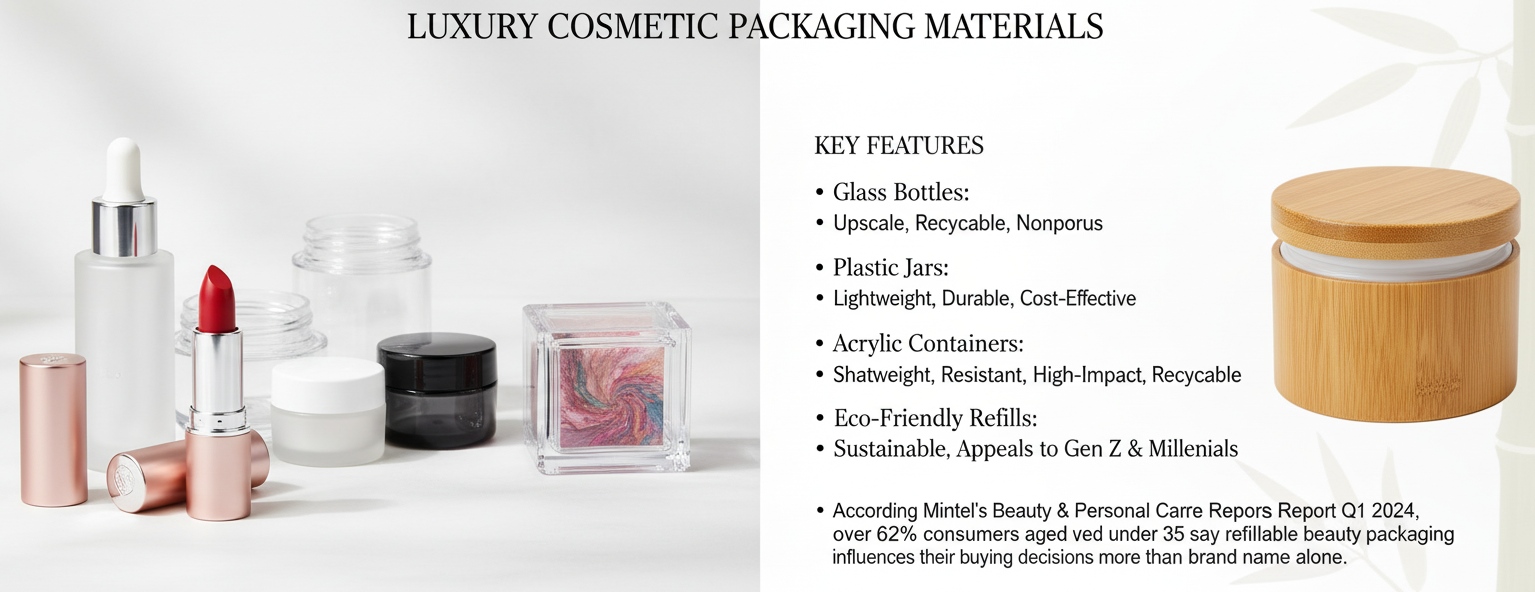
Types Of Luxury Cosmetic Packaging Wholesale Materials
A quick look at the materials that shape upscale beauty packaging, from sleek metals to eco-smart refills.
Glass Bottles
- Timeless aesthetic with an upscale vibe
- Resistant to chemical interaction with formulas
- Recyclable and nonporous
Slick, weighty, and cool to the touch—glass bottles scream luxury without trying too hard. They’re often used for serums, oils, and perfumes because they preserve product integrity like nothing else. You’ll find them tinted or clear, frosted or glossy, but always elegant.
| Material Type |
Customization Level |
| PET |
High |
| PP |
Moderate |
| HDPE |
Low |
| Acrylic Mix |
Very High |
Plastic jars are the workhorses of skincare packaging—lightweight but tough enough to protect creams and balms. With options like PET and HDPE, brands can play around with shapes and finishes while keeping costs in check.
Acrylic Containers
• Mimics the clarity of glass but won’t shatter when dropped
• Ideal for showcasing bold pigments or shimmer-based products
• Offers excellent printing surfaces for branding
When you want your product to pop on shelves but don’t want the fragility of glass, acrylic steps in as your MVP. These containers are especially popular in high-end makeup lines where visual impact is everything.
Aluminum Components
Step-by-step breakdown of how aluminum elevates cosmetic packaging:
- It starts with its feather-light weight—perfect for portability.
- Then comes durability—it resists corrosion like a champ.
- Next up is its luxe matte or brushed finish.
- Finally, it’s endlessly recyclable—green points scored.
From pump collars to lipstick tubes and sprayer heads, aluminum isn’t just functional—it adds that cool-to-the-touch feel that spells premium.
Eco-friendly Refills
Refillable formats slash single-use waste dramatically
Compatible with paperboard sleeves or reusable bamboo shells
Attracts Gen Z & millennial buyers prioritizing sustainability
According to Mintel’s Beauty & Personal Care Report Q1 2024, over 62% of consumers aged under 35 say refillable beauty packaging influences their buying decisions more than brand name alone. That makes eco-conscious refills not just good karma—but good business too.

5 Key Quality Checks For Cosmetic Packaging Wholesale
A few overlooked checks can wreck your entire packaging game. Let’s break down the five essentials every cosmetic packaging buyer should have on their radar.
Is Your Glass Bottle Thickness Up to Standard?
• Inconsistent thickness can lead to cracking during transit—major no-no.
• Always verify dimension measurement at multiple points around the bottle base and neck.
• Use calibrated tools like ultrasonic thickness gauges for accuracy.
The industry standard for glass bottles used in high-end skin care ranges from 2.5mm–4mm depending on volume. Anything under that? You’re gambling with breakage risk.
Also, don’t forget drop test validation—especially if you’re dealing with heavier serums or oils in glass containers.
Closure Seal: Ensuring Screw Caps Don’t Leak
- Perform a leakage test using water-dye simulation under pressure conditions.
- Inspect threads and ridges on both cap and bottle neck for smooth engagement.
- Run torque tests to ensure caps can be opened without tools—but still seal tightly.
- Simulate shipping by shaking capped units vigorously over 24 hours.
If your screw caps fail even one of these, you’re risking product loss and customer complaints—not worth it when better options are out there in bulk luxury cosmetic packaging deals.
Hot Stamping Durability Under Stress Tests
• Heat up the bottle surface post-stamping—check if the foil peels or warps.
• Rub test: simulate friction from handling or being stored next to other products—does it smudge?
• UV exposure check: Does the stamped logo fade after a week under light?
Hot stamping may look sleek, but if it doesn’t hold up under stress, it’ll cheapen your brand image fast. A flaking label is worse than no label at all when selling premium cosmetics wholesale.
Custom Color Matching Consistency Check
Color matching isn’t just about aesthetics—it’s about brand trust. A mismatch between your jar cap and tube body screams inconsistency, especially in upscale cosmetic packaging wholesale orders where visual harmony matters more than ever.
Use digital spectrophotometers for precise color reads across batches, and always compare against master samples before approving mass production.
PCR Content Options for Eco-Compliance
According to Euromonitor International’s April 2024 sustainability outlook report, over 61% of beauty consumers now consider recycled content a key purchase factor—up from just 42% two years ago.
That means verifying actual percentages of PCR content isn’t optional anymore—it’s expected:
– Ask suppliers for third-party certification documents confirming recycled material ratios.
– Cross-check packaging weight against virgin versions; some PCR blends are lighter or denser.
– Ensure PCR doesn’t compromise cosmetic compatibility, especially with active ingredients like retinol or vitamin C that may react with certain plastics.
Even if you’re buying bulk through a supplier like Topfeelpack just once, make sure eco-compliance boxes are ticked—or risk losing eco-minded buyers fast.
Struggling With Delays? Streamline Your Workflow
Speed matters—especially when clients are waiting and inventory’s running thin. Let’s fix what’s slowing you down, from shipping hiccups to order input errors.
Volume Production to Prevent Stockouts
Short bursts of insight:
– Running out of stock during peak seasons? That’s a killer for wholesale partners relying on consistent supply.
– Scale up production based on demand forecasts tied directly into your CRM and historical sales data.
– Batch manufacturing saves cost per unit while keeping inventory healthy.
– Use real-time dashboards for smarter resource allocation—know when it’s time to shift capacity from jars to tubes or vice versa.
– Outsourcing overflow production can keep shelves full without overburdening core teams.
Topfeelpack helps brands stay ahead by enabling flexible volume runs tailored for both boutique launches and mass-market rollouts across global beauty hubs.
FAQs about Luxury Cosmetic Packaging Wholesale
What are the real benefits of buying luxury cosmetic packaging wholesale?
Short answer: lower cost, tighter quality, smoother timelines.
-
Unit economics: Per-unit price drops once you clear MOQ and tooling; freight is easier to optimize.
-
Consistency: Same resin lots, same coating batches, better color match and fit.
-
Process control: One supplier, one QC plan, fewer handoffs.
-
Customization power: Volume justifies special finishes, inserts, and minor mold tweaks.
-
Risk controls: Negotiate split shipments and in-line inspections to protect cash and quality.
How do custom-designed molds shape how customers see your brand?
Short answer: form becomes part of the brand.
-
Distinct silhouette: Shelf blocking and instant recognition.
-
In-hand feel: Wall thickness, weight, balance, and the “click” of the closure signal quality.
-
Precision fit: Wipers, pumps, and necks that dose cleanly make the product feel premium.
-
Ownable details: Debossed icons, facet lines, or shoulder geometry create memory cues.
Which materials make luxury skincare containers feel truly premium?
-
Glass: Heavy, cool touch, great for serums and creams; fragile but classic.
-
Acrylic (PMMA) / double-wall: Glass-like clarity and depth; watch for scratch risk and solvent stress.
-
PETG: Clear and tough; good impact resistance; avoid hot fills and harsh alcohols.
-
Aluminum / anodized: Cold, satin feel; dents if mishandled but reads high-end.
-
Zamak caps: Very weighty, luxe; plating quality matters.
-
Finishes that help: Soft-touch, matte UV, frost, ceramic inks, brushed metal—applied with proper rub/chemical testing.
Is screen printing really better than using labels on bottles or jars?
It depends on run size, artwork, and timelines.
Screen printing
-
Pros: Durable inks, no label edge, premium look, great for spot colors.
-
Cons: Setup per color, limited micro-detail/gradients, rework is hard.
Pressure-sensitive labels
-
Pros: Low MOQ, fast changes, CMYK images, foils/emboss options, late-stage application.
-
Cons: Edge lift/scuff risk, adhesive sensitivity (heat/humidity), may complicate recycling.