Glass Cosmetic Containers: Strategies for Bulk Buying
You ever stare at a mountain of empty jars and think, “There’s gotta be a smarter way to do this”? If you’re in the beauty biz — skincare mogul or indie makeup wizard — bulk buying glass cosmetic containers isn’t just about stocking up. It’s your backstage pass to lower costs, tighter branding, and fewer supply chain headaches.
Glass is glam — it’s durable, recyclable, and screams luxury. But sourcing the right style (hello 50ml vs. 100ml), finding legit suppliers with their ISO badges polished, and squeezing value out of every cap and dropper? That’s where strategy comes in. As McKinsey reported in 2023, packaging choices now drive up to 30% of perceived product value for beauty consumers.
No need to wing it — we’re breaking down the moves that save money without selling out your brand vibe.
Quick Answers in Glass: A Fast-Paced Guide to Smart Buying with Glass Cosmetic Containers
→ Bulk Orders Slash Costs: Ordering 50 ml and 100 ml containers in volume can cut unit prices by up to 30%, thanks to economies of scale.
→ Smart Material Choices: Soda-lime glass offers affordability, while borosilicate brings heat resistance for high-end lines—choose based on your brand’s needs.
→ Supplier Credibility Counts: Prioritize ISO 9001 and GMP-certified suppliers with REACH-compliant pricing models for quality and transparency.
→ Decoration Makes the Difference: Screen printing, frosting, and hot stamping elevate your packaging game—especially cost-efficient when done in bulk runs.
→ Closures Are Cost Levers Too: Standard screw caps reduce tooling expenses; pump dispensers or droppers add value but raise costs, so choose wisely.
→ Lead Time Forecasting is Essential: Stay ahead of delays by forecasting demand, keeping buffer stock (like frosted black jars), and syncing with color coating cycles.
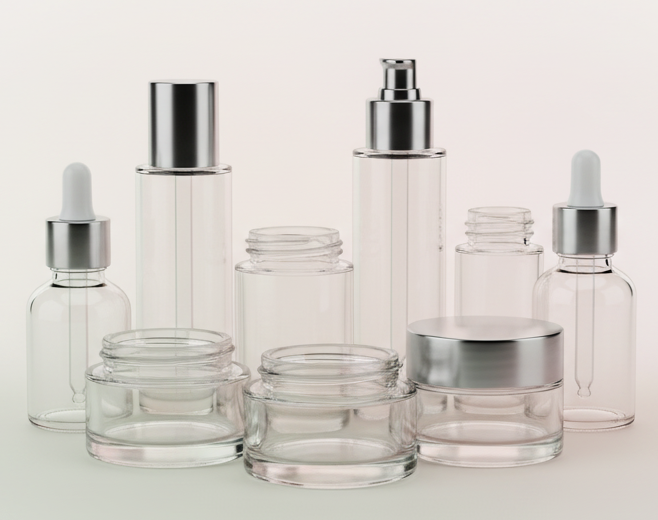
How Bulk Glass Cosmetic Containers Orders Cut Unit Price By 30%
Ordering big isn’t just about quantity—it’s about unlocking smarter ways to cut costs across materials, printing, and closures.
Maximizing Volume Orders: Bulk 50 ml & 100 ml Options
When you’re ordering bulk quantities of 50 ml or 100 ml glass bottles, the savings stack up fast. Here’s how:
- Lower per-unit glass production cost: Manufacturers offer tiered pricing as volumes rise.
- Streamlined shipping logistics: Full pallet loads reduce freight costs per item.
- Batch manufacturing efficiencies: Running thousands of identical cosmetic containers speeds up production and reduces waste.
- Storage optimization: Uniform sizing like 50 ml and 100 ml fits better in warehouse systems, saving space and handling time.
- Supplier incentives: Many suppliers offer discounts or free decoration setup with larger orders.
Topfeelpack helps brands scale smoothly by offering MOQ-friendly pricing tiers that make sense for fast-growing product lines.
Comparing Soda-Lime and Borosilicate Glass Costs
Choosing between soda-lime glass and borosilicate glass? Here’s a quick comparison to help you decide which fits your budget and purpose:
| Glass Type | Avg. Cost per Unit | Heat Resistance | Scratch Resistance | Common Use Case |
|---|---|---|---|---|
| Soda-lime | $0.18 – $0.30 | Low | Medium | Mass-market glass containers |
| Borosilicate | $0.35 – $0.60 | High | High | Premium skincare packaging |
According to a 2024 report from Allied Market Research, over 68% of mid-tier beauty brands still opt for soda-lime due to its lower cost and acceptable durability for shelf-stable products.
Cutting Closure Expenses with Standard Screw Caps
Caps might seem small, but they can eat up a surprising chunk of your packaging budget. Here’s how to cut that down:
- Standardize across SKUs: Use the same standard screw caps across multiple product lines to avoid custom tooling fees.
- Bulk cap orders: Just like bottles, caps get cheaper in bulk—especially when you stick with common diameters.
- Avoid specialty finishes: Fancy metallics or matte lacquers cost more and usually don’t add value unless you’re in the luxury tier.
- Partner with suppliers who stock standard closures: That means faster lead times and fewer delays.
By keeping your closure expenses lean, you free up budget for product development or marketing without sacrificing functionality.
Simplifying Decoration with Screen Printing for Large Runs
When you’re producing thousands of cosmetic containers, decoration costs can spiral—unless you go with screen printing. Here’s why it works:
- Low setup cost per unit when spread over large runs.
- Durable finish that doesn’t peel or fade, even with oil-based skincare.
- No need for labels, which can lift or wrinkle over time.
- Faster application compared to digital or hot stamping methods.
Screen printing is ideal for brands that want a clean, high-end look without the per-unit cost of labels. Topfeelpack offers in-house glass printing services that cut turnaround time and help small brands look big.
Five Factors To Evaluate Glass Cosmetic Containers Suppliers
Picking the right supplier for your beauty packaging isn’t just about looks—it’s about trust, quality, and knowing what to expect.
Quality Certifications: ISO 9001 and Food Grade Compliance
- ISO certification isn’t just a fancy stamp—it proves consistent quality control.
- Food-grade compliance means the containers are safe enough to hold edible products, so you know they’re clean for skin contact too.
- Ask suppliers if their audits are current. Some may flash a certificate from years ago that’s no longer valid.
- Look out for third-party verification. This adds another layer of assurance beyond self-declared claims.
Material Expertise in Amber, Flint and Crystal Glass
Different formulas need different types of glass—knowing this sets expert suppliers apart.
• Amber glass blocks UV rays, perfect for light-sensitive serums.
• Flint glass, clear as day, is ideal when you want your product color to shine through.
• Crystal glass adds luxury with its weight and brilliance—think high-end perfumes or oils.
A seasoned supplier should help match the right material to your product’s needs without overcomplicating things.
Capacity to Handle Orders Up to 200 ml
Some brands need tiny vials; others go big with lotion bottles. A good supplier handles both ends effortlessly.
→ Can they scale? If they can handle small runs today but grow with you tomorrow, that’s gold.
→ Do they offer mold customization across all sizes? Flexibility here avoids bottlenecks later on.
→ Check if their production line supports seamless transition between formats—from sample-size droppers to full-sized jars up to 200 ml.
It’s not just about volume—it’s about how well they juggle variety without compromising delivery times.
Exploring Decoration Methods with Hot Stamping and Coating
When it comes to giving your packaging that “wow” factor, decoration options matter more than most people think.
You’ll want choices like:
- Hot stamping, which gives logos that metallic pop everyone loves on shelves.
- Spray coating, great for matte finishes or gradient effects.
- Silk-screen printing, solid for bold colors and long wear.
- Some even offer UV spot coating or acid etching for niche designs.
Ask what combinations are possible—can they do hot stamping over frosted coating? That kind of flexibility saves time later when you’re deep into branding decisions.
Transparent Pricing Models Aligned with REACH Standards
No one likes surprise costs halfway through production—and smart buyers avoid them by asking the right questions upfront.
Start by reviewing:
✔ Breakdown of unit cost vs mold fee
✔ Minimum order quantity thresholds
✔ Freight and customs estimates if shipping internationally
Also confirm REACH compliance—this ensures materials meet strict EU chemical safety standards. Suppliers following these rules tend to be clearer about what goes into each bottle or jar, helping you avoid regulatory headaches down the road.
How To Ensure Supplier Reliability?
Making sure your suppliers don’t flake is half the battle in product success. Here’s how to keep your partners solid and your deliveries on point.
Auditing Certifications: REACH, RoHS and GMP Standards
When a supplier flashes a certificate, don’t just nod—verify it. Real compliance with REACH, RoHS, and GMP standards means you’re not gambling on quality or legality.
- REACH ensures chemicals in materials meet EU safety thresholds.
- RoHS bans hazardous substances in electronics—especially relevant if packaging uses LED components or embedded chips.
- GMP focuses on hygiene, process control, and traceability—key when dealing with colored coatings or fragrance-infused glass jars.
Ask for recent audits, not dusty PDFs from five years ago. If they can’t produce proof, that’s a red flag waving right at you.
On-Site Factory Inspections for Quality Assurance
You’ve got to see it to believe it—literally. Visiting the factory gives you eyes on the ground and insight into how your products are actually made from raw glass shells to finished cosmetic containers.
• Watch the production line run: Are workers gloved? Is dust swirling around open containers?
• Check storage conditions: Pallets stacked near open windows? That’s a no-go.
• Inspect sample batches yourself: Test durability, tint consistency, and cap fitment right there.
A walkthrough can uncover shortcuts that never show up in glossy brochures or Zoom calls.
Crafting Robust MOQs and Penalty Clauses
Don’t get caught short when orders spike or timelines slip. Lock down expectations early by setting clear minimum order quantities (MOQs) and penalties into contracts:
- MOQ Terms:
• Define minimum units per SKU.
• Include seasonal flexibility clauses.
• Tie pricing tiers directly to volume brackets. - Penalty Clauses:
• Late delivery = % discount off next invoice.
• Quality failure = full refund + shipping costs.
• Missed MOQ = supplier covers expedited freight fees.
These aren’t scare tactics—they’re accountability tools that protect your timeline, budget, and brand reputation from supplier mishaps involving delayed batches of frosted cream jars or mismatched lids on lip balm tubes.
Implementing Real-Time Supply Chain Tracking
Here’s where tech finally earns its keep—real-time tracking lets you monitor every stage of production and delivery without relying solely on weekly updates from vendors who may ghost you mid-order. A single dashboard can show:
| Stage | Status Visibility | Notification Trigger | Common Delay Cause |
|---|---|---|---|
| Raw Material Intake | Yes | Low stock alert | Supplier backlog |
| Production Start | Yes | Machine idle alert | Equipment downtime |
| Packaging & QC | Partial | Defect rate >5% | Staff shortage |
| Shipment Dispatch | Yes | Route deviation alert | Customs hold |
With this setup, if there’s an issue brewing—like a delay in sourcing violet-tinted glass—you’ll know before it hits your warehouse shelves. A few good platforms even integrate directly with ERP systems so alerts pop up where your ops team already lives online.
Unpredictable Lead Times? Forecasting For Smoother Delivery
When things get held up, it’s usually not the big stuff—it’s the little surprises. Here’s how to smooth out the bumps with smart timing and prep.
Forecasting Demand for Key Volume Types
Forecasting isn’t just a numbers game—it’s about reading the room. Here’s how to stay a step ahead:
- Watch seasonal sales trends, especially for 15ml and 50ml jars. These sizes spike during gifting seasons.
- Use 12-month rolling averages to account for volatility in product launches.
- Sync with sales teams quarterly to adjust forecasts based on promotions or influencer campaigns.
“Brands that forecast by SKU size outperform their peers by 23% in inventory turnover,” according to a 2024 McKinsey packaging report.
By nailing volume forecasting, you avoid overstocking slow movers and underestimating hot-sellers. That means fewer headaches and more wins across your production line.
Buffer Stock Strategies for Frosted Black Cream Jars
These frosted black beauties always seem to run out when you need them most. Here’s a smarter way to keep them on hand:
- Set a minimum threshold based on your average 6-week burn rate.
- Add 15% above that baseline to cover supplier delays.
- Rotate buffer stock quarterly to avoid dust-collecting inventory.
→ Pro tip: Keep buffer inventory in climate-controlled storage to preserve the finish on frosted black jars. Nothing worse than scuffed surfaces on a premium product.
This strategy keeps your launch timelines tight—even when your supplier’s running late.
Scheduling with Amber Glass Lead Times
Amber’s got that classic, apothecary vibe—but the lead times can throw a wrench in your flow. Don’t get caught off guard:
- Typical lead time: 45–60 days
- Chinese New Year? Add 20 extra days
- Custom embossing? Add another 10–15 days
| Amber Glass Type | Standard Lead Time | With Customization | Peak Season Delay |
|---|---|---|---|
| 30ml Dropper Bottle | 45 days | 60 days | +20 days |
| 100ml Jar | 50 days | 65 days | +25 days |
| 200ml Bottle | 60 days | 75 days | +30 days |
| 50ml Pump Bottle | 48 days | 63 days | +20 days |
Plan your amber glass orders backward from your launch date. That’s how Topfeelpack keeps client timelines tight, even when the glass world moves slow.
Aligning Production Cycles for Pantone Color Coatings
Getting your Pantone match isn’t just about color—it’s about timing. These coatings need their own runway:
- Batch coating schedules usually run bi-weekly.
- Pantone-matched paint application adds 7–10 days to production.
- QC for color consistency can delay things if not pre-approved.
“Color accuracy is now a top-3 packaging priority for premium skincare brands,” says 2024 Nielsen Global Beauty Packaging Trends.
To keep your Pantone color coating game strong:
- Approve color samples at least 3 weeks before coating.
- Align production start with coating schedule to avoid idle time.
- Always request a post-coating QC sample before final assembly.
This way, your packaging doesn’t just look good—it shows up on time.
Private Label Launches: Custom Glass Bottle Sourcing
Thinking about launching your own product line? Nailing the right bottle design is where it all begins.
Closure Options: Dropper Caps vs. Pump Dispensers
• Dropper caps work best for oils, serums, and anything that needs precise control. They give off a boutique vibe and are usually paired with amber or cobalt glass for that apothecary feel.
• Pump dispensers, on the other hand, scream convenience. They’re ideal for lotions, foundations, or toners—basically anything with a thicker consistency. Plus, they reduce mess and make dosing super easy.
• Choose based on texture and user behavior. If your formula is thick or creamy? Pump it. Thin and precious? Go with the dropper.
Crafting Brand Identity with Screen Printing and Frosting
According to Mintel’s Beauty Packaging Report Q2/2024, “Packaging aesthetics now influence over 72% of first-time skincare purchases.” That’s why screen printing isn’t just decoration—it’s storytelling in ink.
- Screen printing allows intricate logos and text directly onto the bottle surface.
- Frosted finishes add a touch of elegance while muting bright contents.
- Combine both techniques to balance visibility with luxury appeal.
The combo makes your brand look polished without needing secondary labels—especially vital when using minimalistic glass cosmetic containers.
Eye-Catching Custom Pantone and Solid Color Bottles
There’s nothing subtle about color psychology in packaging—it’s loud, bold, and sells fast.
Want to stand out on shelves?
Pantone-matched bottles let you sync packaging to your branding down to the exact shade—no compromises. Solid colors like matte black or pearl white also command attention while offering UV protection for light-sensitive formulas.
But here’s the kicker: Custom coloring works best when paired with unique closures or textures like metallic collars or gradient sprays. When everything clicks visually? Boom—you’ve got shelf dominance.
Child-Resistant Safety Features for Private Label Lines
Safety isn’t optional anymore—it’s expected by both regulators and parents alike.
Grouped by function:
Twist-Lock Closures
- Require push-and-turn action
- Ideal for essential oils or pharmaceuticals
- Meet U.S. CPSC regulations
Push-In Button Caps
- Offer one-handed access for adults
- Prevent curious little hands from opening
- Often used in CBD-infused products
Tamper-Evident Seals
- Build consumer trust instantly
- Show if bottles have been opened before purchase
- Work well on droppers and pumps alike
Pair these safety features seamlessly into your private-label packaging strategy without sacrificing style—or peace of mind.
Comparing Dropper Cap Sizes by Functionality
| Dropper Size | Volume Dispensed | Ideal For | Typical Use Case |
|---|---|---|---|
| Small | ~0.25ml | Lightweight serums | Vitamin C concentrates |
| Medium | ~0.5ml | Facial oils | Anti-aging blends |
| Large | ~1ml | Body applications | Massage oil portions |
| Jumbo | ~2ml | Hair treatments | Scalp nourishing oils |
When picking droppers for cosmetic glass packaging, size matters more than you think—it affects dosage control, shelf life perception, even how premium your product feels in-hand.
Choosing Between Matte vs Glossy Finishes
Glossy finishes reflect light beautifully but can smudge easily—better suited for high-shine branding like luxe perfumes or glosses. Matte coatings offer grip and sophistication but may dull vibrant hues slightly. You’ll want to test both under store lighting before committing fully—they behave differently under LEDs than sunlight!
Each finish alters how consumers perceive value—and that perception can tilt buying decisions heavily in crowded retail environments full of similar-looking glass cosmetic jars and bottles.
How Color + Texture Pairings Influence Buying Behavior
Step-by-step breakdown:
Step 1: Pick a core brand color that aligns emotionally—think calming blues for sleep aids or energizing oranges for vitamin serums.
Step 2: Choose texture overlays that contrast—like glossy labels on frosted bottles—to create visual tension that draws attention naturally on shelves.
Step 3: Test combinations using A/B mockups across multiple lighting conditions including warm indoor bulbs and cool daylight LEDs; some combos pop better under specific lighting profiles!
These micro-decisions help shape macro results at checkout lanes everywhere—from indie boutiques to mass retailers carrying custom-packaged skincare lines globally.
Combining Form + Function in Limited Edition Runs
Short runs aren’t just about exclusivity—they’re R&D playgrounds too:
– Try out unique shapes like geometric flacons or asymmetrical vials; these catch eyes faster than standard cylinders.
– Blend rare finishes such as sandblasted surfaces + metallic foils.
– Incorporate dual closures—dropper cap inside a pump sleeve—for hybrid-use products.
– Add tactile elements like soft-touch coatings over embossed logos; feels expensive because it is!
Limited editions let you experiment boldly while keeping risk low—a smart move if you’re testing new concepts within niche beauty markets using small batches of specialty cosmetic containers made from glass materials.
Final Touches That Make Your Product Pop
• Use shrink bands around necks—not just tamper-proof but adds perceived value instantly.
• Add QR codes printed directly onto bottle bases linking to tutorials.
• Opt for weighted bottoms—they feel luxurious even if what’s inside is affordable.
• Don’t forget inner seals beneath caps—they show care was taken during filling & packing stages.
• Finally? Stick with one bold design element per SKU so each product tells its own story without cluttering visual identity across your whole line-up!
FAQs about Glass Cosmetic Containers
What are the most cost-effective ways to reduce unit prices when ordering glass cosmetic containers in bulk?
Cutting costs without cutting corners—it’s a balancing act. The trick lies in smart decisions early on:
- Stick to common sizes like 50 ml or 100 ml. Factories are already set up for these, so you’ll save on tooling and setup.
- Soda-lime glass is your friend. It’s cheaper than borosilicate and still looks great on the shelf.
- For decoration, screen printing gets the job done with minimal fuss and lower costs on big runs.
- Standardize your closures. Custom caps might look fancy, but they’ll eat into your budget fast.
How do I choose between dropper caps and pump dispensers?
It all comes down to how your product feels in the customer’s hand. A silky serum? A dropper gives that precise, almost ritualistic application. A thick lotion? A pump lets users get just the right amount—clean, quick, and satisfying. The texture of your formula, how it’s used, and even the mood you want to create all play a role in this seemingly simple choice.
What should I look for in a reliable glass cosmetic container supplier?
Trust is built on proof, not promises. A good supplier should:
- Show compliance with REACH and RoHS—these ensure your materials are safe and legal.
- Follow GMP standards, so you know every batch is consistent.
- Allow factory visits or video audits. Seeing the process builds confidence.
- Be upfront about pricing—no hidden fees, no surprises.
Are child-resistant closures available for custom private label packaging?
Yes—and they’re essential if your product could be mistaken for something edible or if it contains potent ingredients. These closures meet safety standards while still looking sleek. For private label brands, they offer peace of mind and a professional edge. You won’t have to sacrifice style for safety.