Choosing Skin Care Containers by Ingredient Type
When your luxe formula flops, blame the bottle. Smartly matched skin care containers can save your brand from costly meltdowns.
Ever watched a luxe face cream turn runny and sour before its time? That’s not just bad luck—it’s usually the container throwing shade at your ingredients. Skin care containers aren’t just pretty vessels sitting on a shelf; they’re the unsung heroes (or villains) of product performance. A jar might look like it belongs in a spa—but stick an oxygen-sensitive retinol formula in there without protection, and you’ve got trouble.
Big buyers know: one wrong packaging call can tank repeat orders faster than you can say “oxidation.” According to Topfeelpack’s senior material engineer, “We’ve seen clients lose entire batches due to choosing PET for oil-heavy formulas—HDPE would have held up better under pressure.”
This is where things get juicy. Because matching your vitamin C serums, shea butter blends, or hyaluronic acid gels with the right bottle isn’t just smart science—it’s brand survival.
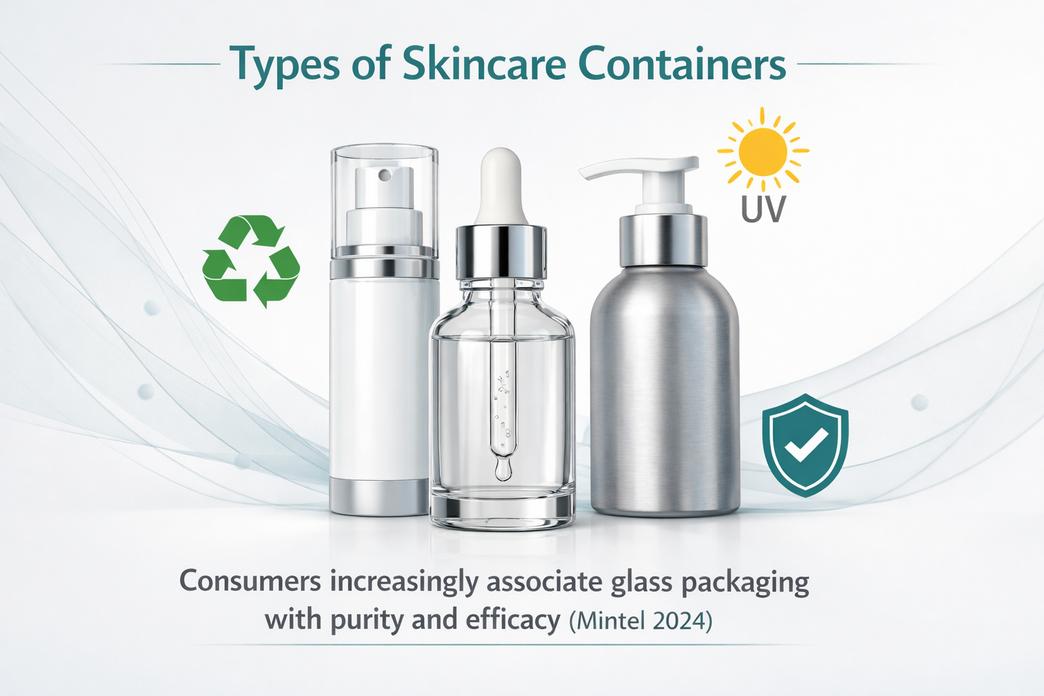
Types Of Skin Care Containers By Material
Exploring how different materials shape the function and feel of skin care containers.
PET Plastic Airless Pump Bottles
- PET plastic is a go-to for those who want lightness without sacrificing durability.
- The airless pump keeps formulas fresher, longer—no air, no oxidation.
- These bottles are recyclable, making them a solid pick for eco-conscious brands.
- Shields your product with an invisible oxygen barrier.
- Ensures smooth and controlled dispensing, even with thicker lotions.
Perfect for travel kits or daily skincare routines.
Glass Dropper Bottles and Spray Vials
You’ll find glass dropper bottles holding high-end serums in nearly every luxury routine.
• Their chemical resistance makes them ideal for potent ingredients like acids or retinol.
• The dropper allows precision when applying oils or actives—no waste, no mess.
According to a 2024 report by Mintel, “Consumers increasingly associate glass packaging with purity and efficacy.”
The UV-safe tint on some of these spray vials protects sensitive formulas from sunlight damage too.
Aluminum Lotion Pumps and Tube Packaging
- Start with the strength of aluminum, which resists corrosion even with acidic creams.
- Add sleek finishes like brushed metal or mirrored polish—it screams premium skincare.
- Combine it with tightly sealed lotion pumps, so nothing leaks into your makeup bag.
These tubes are more than pretty—they offer long-term protection thanks to strong internal barrier properties, especially for ointments that degrade easily with tube packaging.
HDPE Plastic Roll-On Bottles and Refillable Jars
Here’s where practicality meets sustainability:
Lightweight but tough—HDPE plastic doesn’t crack under pressure (literally).
Built-in rollers make applying deodorants or muscle balms effortless on the go.
Most models are designed as reusable or refillable jars, cutting down on waste big time.
Short shelf? No problem—these compact designs fit anywhere while still offering full-size performance from their sturdy shapes like squat jars or slimline roll-ons.
Acrylic Cream Jars and Dispenser Bottles
Let’s break this down:
- Aesthetics: High-gloss clarity gives these containers a true luxury vibe.
- Think upscale spa counters and boutique shelves.
- Function: Many come with airless pumps hidden inside stylish outer shells.Branding: Hot stamping looks sharp on acrylic cream jars, perfect for limited edition launches.
- Keeps your cream safe from contamination after every use.
The combo of visibility and resilience makes these dispenser bottles ideal for prestige skincare lines aiming to stand out while keeping things functional behind the scenes.
And yes—they’re built to last through drops, spills, and repeat use without losing that polished edge you paid for in the first place.
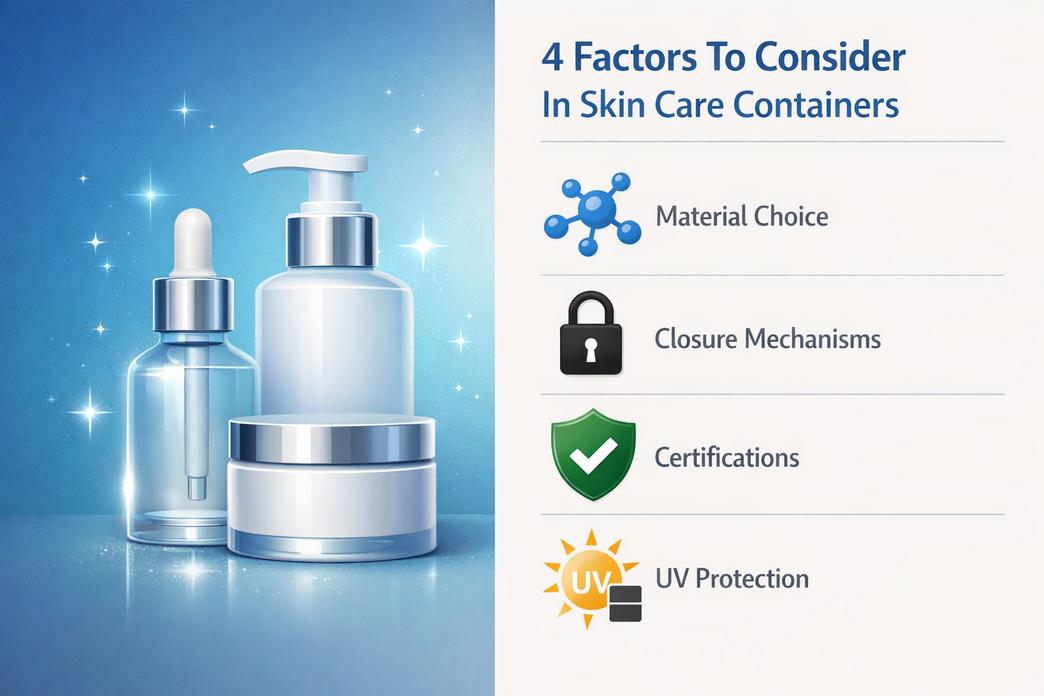
4 Factors To Consider In Skin Care Containers
Choosing the right skin care containers isn’t just about looks—it’s about protecting your formula and keeping customers happy.
How material choice affects ingredient stability
The wrong packaging material can mess with your product faster than you think. Some ingredients react badly to plasticizers or metals, leading to serious ingredient degradation. That’s why high-end brands often go for glass or PET—they offer better chemical resistance, keeping those precious active ingredients safe and stable.
- Glass is inert and ideal for sensitive actives like retinol.
- PET resists moisture and oxygen better than standard plastics.
- Avoid PVC; it can leach chemicals into formulas.
In short, the right materials help extend your product’s shelf life while preserving its full benefits.
Avoiding leaks with advanced closure mechanisms
No one wants lotion exploding in their bag. That’s where smart closure systems come in. From locking pumps to flip-top caps, these designs focus on tight seals and easy use.
- Screw caps + inner seals = double-layered leak protection
- Airless pumps = less air exposure + cleaner dispensing
- Tamper-evident lids = peace of mind for both brand and buyer
A good fit between bottle necks and closures maintains long-term seal integrity, especially during shipping stress tests.
Certifications and standards: ISO 9001, FDA, REACH compliance
When picking out your next batch of skin care containers, check if the supplier hits all the right marks—literally. Certifications ensure every bottle meets strict safety rules across global markets.
ISO 9001 = solid quality management
FDA-compliant materials = safe for skin contact
REACH compliance = passes tough EU-level material regulations
| Certification | Focus Area | Regulatory Body | Region |
|---|---|---|---|
| ISO 9001 | Process & consistency | ISO | Global |
| FDA | Health & safety | U.S. FDA | United States |
| REACH | Chemical transparency | ECHA | Europe |
These aren’t just stamps—they reflect real trust in manufacturing quality and environmental responsibility.
Leveraging functional features like UV protection
Light-sensitive creams need more than just a pretty jar. Smart packaging uses built-in defenses like tinted walls or layered coatings to block light—and that means longer-lasting results for users.
• Colored glass bottles minimize UV rays
• Frosted finishes add style while boosting opacity
• Multi-layer plastic walls create effective light barriers
Each of these enhances overall product preservation, especially when dealing with antioxidants or natural oils prone to quick oxidation. If you’re bottling anything that hates sunlight, make sure your container has strong enough UV filters baked right in.
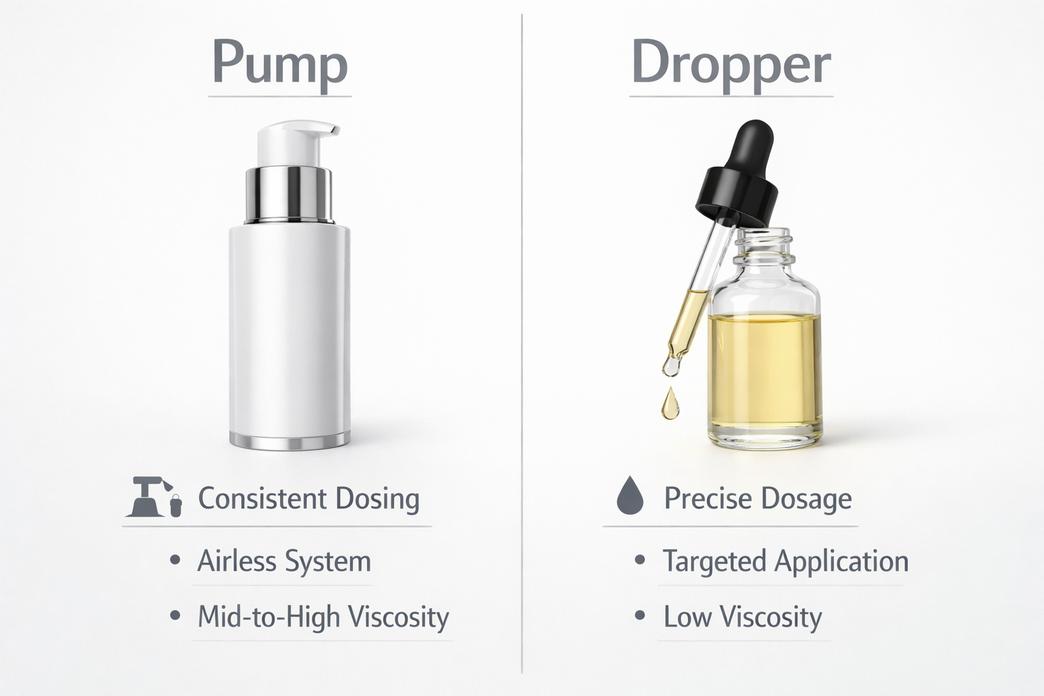
Pump Vs Dropper In Skin Care Containers
Choosing the right dispenser for your product isn’t just about looks—it’s about function, hygiene, and user experience.
Pump
When it comes to thicker skincare products like cream, gel, or high-viscosity serum, a pump mechanism is often the go-to. Here’s how it breaks down:
A. Functionality & Control
• Pumps offer consistent dosing, so you don’t overdo it.
• Their design limits exposure to air, keeping formulas stable longer—especially useful for sensitive emulsions.
B. Hygiene & Preservation
1. The mostly airless system helps prevent oxidation and contamination.
2. This is crucial for active ingredients that degrade quickly when exposed to oxygen or light.
C. Compatibility with Product Types
• Works best with mid-to-high viscosity products like lotions and thick serums.
• Not ideal for watery solutions due to flow limitations.
D. User Experience Factors
1. Easy one-hand use makes pumps super convenient in daily routines.
2. Less mess—no dripping or spills like you might get from open-mouth jars or tubes.
In short, if you’re packaging a rich moisturizer or a dense anti-aging formula in your skin care container, a pump brings both cleanliness and convenience to the table.
Dropper
Droppers shine when precision matters—and that’s often the case with concentrated skincare formulas housed in glass bottles.
- You get exact control over dosage; just squeeze and release.
- Ideal for lightweight liquids like botanical oils, water-based actives, or any aqueous, low-viscosity blend.
- Because of their delicate nature, droppers are usually paired with more fragile, premium-looking containers—think amber glass vials on your vanity.
- They’re especially great when applying treatment serums drop by drop onto targeted areas—like dark spots or fine lines.
- That said, they can be less sanitary if not handled properly since they’re exposed during application.
- Also worth noting: while elegant, droppers aren’t always travel-friendly—they can leak if not sealed tightly.
So if you’re bottling something potent and fluid in your line of skin care containers, a dropper might be the smarter move—for both precision and presentation.
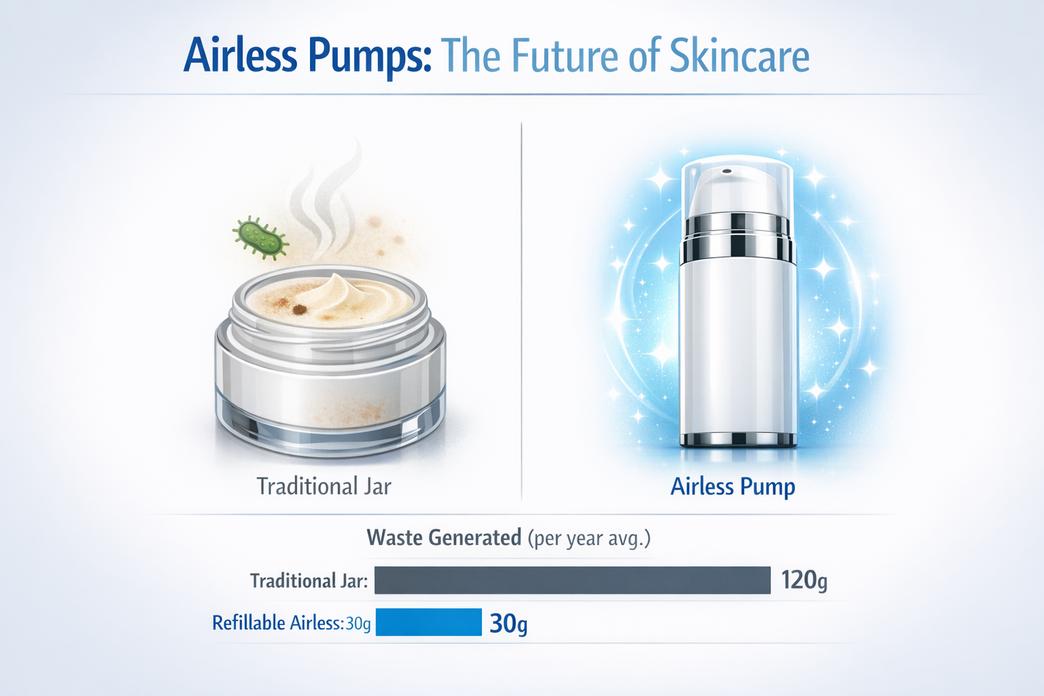
Can Airless Pumps Prevent Oxidation Effectively?
Airless systems are changing the game for keeping formulas fresh. Here’s how they tackle oxidation from all angles.
How airless technology eliminates headspace
- Vacuum dispensing pulls product up without letting air sneak back in.
- A tightly sealed piston design ensures no oxygen enters as the product is used.
- This tech means less exposure = longer-lasting skincare.
In short, by eliminating that pesky headspace, airless pumps stop oxygen from messing with your formula. It’s like shrink-wrapping freshness inside every pump.
Role of UV-blocking materials in oxidation prevention
• Colored packaging isn’t just for looks—it’s science. Blocking light helps prevent photo-oxidation, especially in formulas packed with actives.
• Materials like amber glass or opaque plastics filter out harsh rays that degrade ingredients over time.
• Brands often use built-in UV filters to protect against both visible and invisible light damage.
A well-designed container reduces breakdown caused by UV exposure, which keeps your serum or cream potent longer—no more yellowed vitamin C!
PET vs. HDPE barrier performance comparison
| Material Type | Oxygen Transmission Rate (cc/m²/day) | Moisture Barrier | Chemical Resistance |
|---|---|---|---|
| PET plastic | 2–6 | Moderate | Excellent |
| HDPE plastic | 150–200 | High | Good |
PET wins when it comes to blocking oxygen—its low permeability makes it a go-to for sensitive formulations in modern skin care containers. For brands aiming at longevity and stability, PET is simply smarter than HDPE.
Lab-tested oxidation control in airless systems
- Scientists placed identical creams into two types of packaging: traditional jars and airless pumps.
- Over six weeks, they ran accelerated aging tests under heat and humidity.
- The jar-exposed formula showed 40% more ingredient degradation.
- In contrast, the one inside the airless system retained texture, scent, and color better.
These findings make a solid case: if you’re serious about protecting your formula—and giving customers a fresher experience—airless is the way to go.
Topfeelpack’s advanced pump designs integrate all these features into their latest line of high-performance skin care containers, making oxidation one less thing you need to worry about.
Reversal: Why Airless Pumps Outshine Traditional Jars In Skin Care Containers
Airless tech is flipping the script on how we store and use our favorite beauty formulas—here’s why it’s winning over traditional options.
Traditional jars: contamination and oxidation risks
- Traditional jars get opened again and again, letting air sneak in every time. That’s where the trouble starts.
- Contaminants from fingers or spatulas mix with your product, inviting bacterial growth that can mess with your skin big time.
- The more air exposure, the faster ingredients break down—cue oxidation, which leads to serious ingredient degradation.
- Open jar → exposed formula
- Exposed formula → higher chance of spoilage
- Spoiled product = irritation or wasted money
Not just gross—this also means more preservatives are needed to keep things shelf-stable, which isn’t ideal for sensitive skin types.
Continuous formula freshness with airless pumps
Here’s how airless pumps keep your skincare game fresh:
• They use a sealed chamber that stops oxygen from creeping in, preserving delicate actives like vitamin C and peptides.
• With each pump, only what you need comes out—no backflow, no mess, no bacteria party inside the bottle.
• This tech keeps formulas stable longer without stuffing them full of preservatives.
The result? Better performance over time and consistent texture from first pump to last drop—a win-win for both your routine and your wallet.
Sustainable refillable airless designs
Let’s break it down with some real-world numbers:
| Feature | Traditional Jar | Airless Pump | Refillable Airless |
|---|---|---|---|
| Product Exposure | High | Low | Low |
| Waste Generated (per year avg.) | 120g | 90g | 30g |
| Reusability | None | Limited | High |
| Environmental Score* | 2/10 | 6/10 | 9/10 |
*Based on internal lifecycle analysis standards by EU packaging regulators (2024)
These new-gen containers aren’t just about looks—they’re built for circular use cycles that minimize landfill waste while keeping your creams clean inside a refillable container system using modern airless technology.
So if you’re thinking long-term eco vibes without compromising performance? These sleek little bottles are the future of smart, sustainable skin care containers.
FAQs about Skin Care Containers
1. What materials are most trusted for high-quality skin care containers?
PET plastic and glass often take center stage—PET keeps creams bright through its oxygen barrier, while glass cradles oils without chemical interference. Acrylic adds shine like a jewel in the hand; HDPE offers durability when journeys grow long. Aluminum wraps formulas with elegance, especially when finished with UV metallization or frost for drama on display.
2. How do airless pump bottles protect delicate formulations?
Airless technology pulls each dose upward through piston precision, never allowing the fresh cream or serum to meet open air until it touches skin. This dance between formula and dispenser wards off oxidation during months of travel and storage—ideal for serums housed in acrylic or PET bodies, topped by dispenser pumps that feel smooth yet decisive to press.
3. Which closures give peace of mind against leaks and damage?
- Screw caps clamp firmly on tube packaging and cream jars during transit
- Disc top caps allow effortless control without accidental spills from spray bottles
- Dropper assemblies draw measured drops from sleek glass vials with grace
A tamper-evident seal can whisper trust into every purchase; child-resistant closures add another layer of calm where safety matters most.
References
[Mintel - https://www.mintel.com]
[ISO 9001 Quality Management - https://www.iso.org]
[U.S. FDA Cosmetics - https://www.fda.gov]
[ECHA REACH Regulation - https://echa.europa.eu]
[ScienceDirect Oxygen Permeability - https://www.sciencedirect.com]