How to choose the ideal serum bottle for maximum product freshness?
When the wrong serum bottle kills your formula, sales suffer—find out how to keep freshness fierce and shelves turning heads.
The wrong serum bottle can tank your product faster than a bad Yelp review. Active ingredients? Toasted by UV rays. Fragrance profile? Gone with the wind—or worse, oxidized into something that smells like grandma’s expired perfume. For brands pouring heart and dollars into high-performance formulas, packaging isn’t an afterthought—it’s insurance.
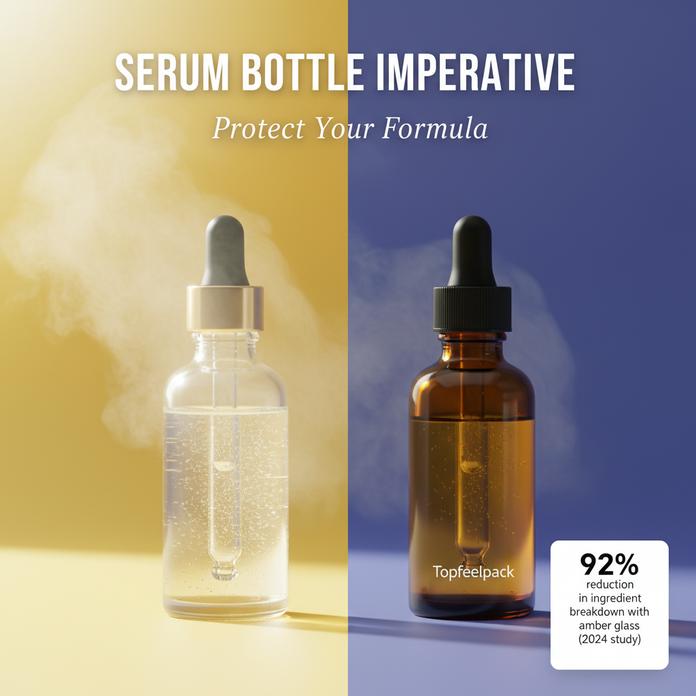
One of Topfeelpack‘s senior engineers, Clara Ji, puts it bluntly: “Most degradation issues aren’t caused by poor formulation—they’re caused by poor protection.” Her team’s 2024 material study showed amber glass reduced ingredient breakdown rates by up to 92% compared to standard PET bottles under shelf-simulation tests.
You don’t need a PhD in chemistry to know this stuff matters—customers sniff out quality fast (literally). A serum that turns cloudy or funky halfway through is a repeat-sale killer. And no founder wants their five-star formula ruined because the pump leaks or lets in too much air.
So how do you pick packaging that protects freshness like Fort Knox while still looking fly on shelves? Buckle up—we’re about to break down what really works when choosing the right bottle system for your serum.
Essential Insights for Serum Bottle Selection
- Material impact: Amber glass can reduce ingredient breakdown by 92%, making it superior for light-sensitive formulas.
- Market trends: Euromonitor International reports that HDPE usage in personal care has surged by 18% as brands seek durable, recyclable alternatives.
- Consumer demands: Mintel‘s latest research shows 62% of consumers view UV protection as an essential packaging feature.
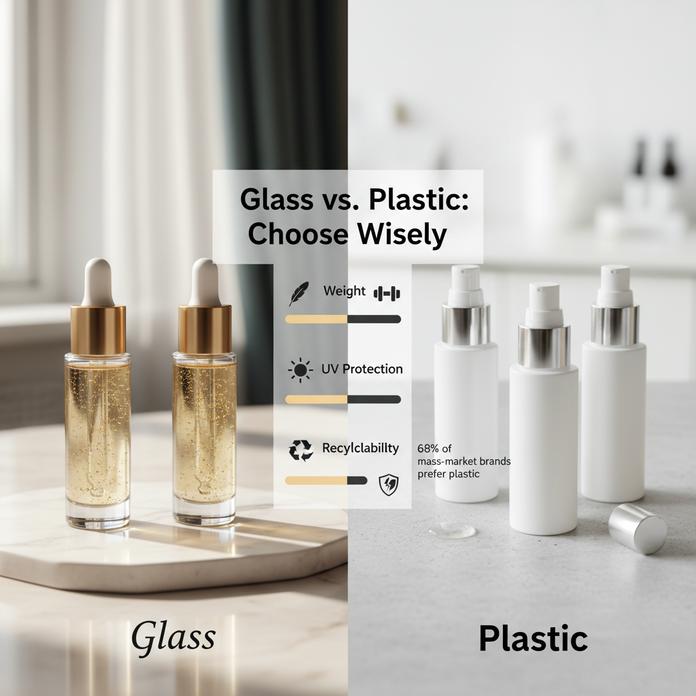
- Glass vs. Plastic: While glass is perceived as premium, the Global Packaging Report 2024 notes 68% of mass-market brands prefer plastic for its logistics and pricing efficiency.
- Refillable options: Eco-conscious consumers are driving the demand for refillable bottle designs, which now account for 15% of new skincare launches.
Why material choice is the “secret sauce” of freshness
Choosing between glass and plastic isn’t just about the “vibe”—it’s about the science of stability.
The dominance of amber glass in protecting active ingredients
Amber glass is the undisputed heavyweight champion for high-potency serums. Why? Because it blocks the specific blue and violet light waves that cause oxidation.
- Vitamin C, Retinol, and Peptides are notoriously light-sensitive; they begin to lose efficacy the moment photons hit the formula.
- glass bottles offer a non-reactive barrier, ensuring zero chemical migration between the container and your product.
- The deep pigment of amber filters out up to 99% of harmful rays, significantly extending shelf life compared to clear containers.
If your serum is packed with “hero” actives, amber is the safest bet to ensure the customer gets the results you promised.
The rise of HDPE and PET in mass-market skincare
While glass is gold, plastic is practical. Recent shifts in the supply chain have made high-quality plastics like HDPE and PET more attractive for global brands.
■ HDPE (High-Density Polyethylene): Known for its opacity and chemical resistance, it’s the go-to for budget-friendly lines that still need UV defense. ■ PET (Polyethylene Terephthalate): Offers glass-like clarity with a fraction of the weight, making it a logistics darling for e-commerce brands. ■ Sustainability: Both materials are now widely available in PCR (Post-Consumer Recycled) versions, helping brands hit their green goals without breaking the bank.
A recent Euromonitor International report highlighted that the move toward lightweight plastics has cut shipping-related carbon footprints by an average of 14% for mid-sized beauty houses.
5 Essential Features of An Ideal Serum Bottle
A great serum bottle isn’t just about looks—it’s about safety, function, and lasting quality. Here’s what makes a bottle truly stand out.
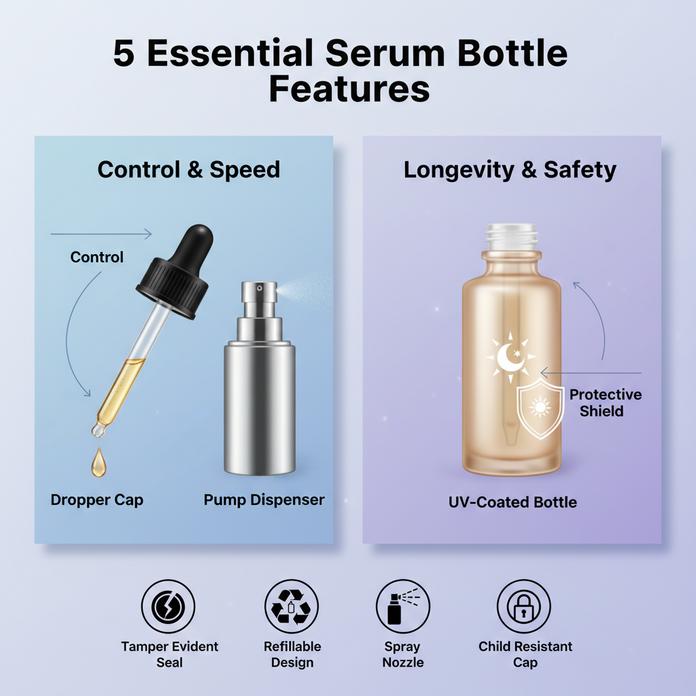
Importance of a Tamper Evident Seal for Safety
- A broken seal? That’s an instant red flag. A solid tamper-evident seal ensures the formula inside hasn’t been messed with, keeping everything safe and sound.
- It’s not just about physical protection—it builds serious consumer trust, especially when buying online or off the shelf.
- Brands that use visible indicators like shrink bands or snap caps are showing they care about product integrity, not just appearances.
When safety matters most, this tiny feature speaks volumes.
Choosing the Right Closure Type: Dropper Cap vs. Pump Dispenser
• Want control? Go with a dropper cap—perfect when you’re working with thin serums that need precise drops on target spots. • Prefer speed and tidiness? A pump dispenser is your go-to; it limits air contact and works wonders with thicker formulas.
Each closure type affects how much product gets used, how quickly it oxidizes, and even how hygienic your skincare routine feels. Smart packaging means smarter skincare—and better results from every drop of serum.
How UV Coating Enhances Product Longevity
Many active ingredients in serums—like vitamin C or retinol—are light-sensitive, which means they degrade fast if exposed to sunlight.
That’s where a high-quality UV coating steps in as your product’s invisible shield. By blocking harmful rays, it slows down oxidation and keeps the formula potent longer than regular glass ever could.
According to Mintel’s 2024 Packaging Sustainability Report, over 62% of consumers now consider UV protection “essential” in premium skincare packaging—a clear sign that longevity isn’t optional anymore; it’s expected.
The Advantages of a Refillable Design for Eco-Friendly Practices
• Refillable design
- Cuts down on single-use plastic waste
- Encourages repeat purchases through refill programs • Supports global sustainability goals by lowering overall packaging demand • Offers cost savings over time—consumers spend less per refill • Reduces shipping emissions due to lighter refill units • Gives brands an edge among eco-conscious buyers looking to reduce their personal carbon footprint
Topfeelpack offers customizable refillable options that combine sleek aesthetics with long-term functionality—because going green should never mean compromising on style or performance.
Maximizing Accessibility: Spray Nozzle vs. Child Resistant Cap
Short bursts make life easier:
- A fine-mist spray nozzle delivers even application without needing fingers—ideal when you’re multitasking or applying toner-like serums on the go.
- On the flip side, households with little ones benefit from a well-designed child-resistant cap, making sure curious hands don’t get into things they shouldn’t.
Both offer different kinds of accessibility: ease versus security—and depending on who’s using the bottle and where, either could be non-negotiable features in your next favorite serum container.
Should You Choose Glass Or Plastic Serum Bottles?
Choosing between glass and plastic for your serum bottle packaging? Let’s break it down—material matters more than you think.
Glass Bottles
- Superior UV Protection: Amber and cobalt glass block harmful rays that can degrade sensitive serums fast.
- Recyclability: Eco-conscious brands love glass for its infinite reuse potential without quality loss.
- Inertness Matters: Unlike some plastics, glass doesn’t react with formulas, preserving the serum’s potency.
Pro tip: If you’re going for a luxe vibe, nothing beats the feel of thick-walled glass in hand. It screams premium.
But heads up—it’s heavier, fragile, and costlier to ship. That said, many boutique skincare labels still prefer it to elevate shelf appeal.
Plastic Bottles
- Featherlight Design
- Drop-proof Durability
- Budget-friendly Production
Plastic is perfect if you’re aiming to cut costs without sacrificing function. It’s also safer for travel-sized packaging—no shattered messes in your toiletry bag.
However, not all plastics are created equal. Some may allow air permeability or even minor chemical leaching, which can affect formula stability over time.
That said, advanced barrier resins now offer better protection than before. For high-volume items like body serums or trial kits, plastic just makes sense.
“With over 68% of mass-market skincare brands opting for plastic due to logistics and pricing efficiency,” notes Global Packaging Report 2024.
Key Differences Between Glass and Plastic
| Feature | Glass | Plastic |
|---|---|---|
| Weight | Heavy | Lightweight |
| UV Protection | High (especially amber) | Moderate |
| Recyclability | Excellent | Varies by resin type |
| Durability | Fragile | Highly durable |
● Material decisions impact product integrity big time—especially when dealing with light-sensitive ingredients like Vitamin C or retinol.
● If sustainability is part of your brand DNA, go with recyclable glass, but if you’re scaling fast and shipping globally? Lightweight plastic wins on logistics every time.
Topfeelpack offers both options tailored to your brand story—whether you’re chasing elegance or efficiency in your next serum bottle launch.
Common FAQs on Serum Packaging
1. Does the color of a glass bottle really matter for potency?
Absolutely. Beyond amber, cobalt blue glass and emerald green provide moderate protection, but they are often chosen for branding rather than maximum shield capacity. If your formula is stable and you want a luxe look, these are great. If it’s volatile? Stick to amber or opaque coatings.
2. How do I choose between custom size bottles and standard stock?
- Stock Bottles: Best for speed-to-market and lower MOQs (Minimum Order Quantities).
- Custom Size: Ideal for brands wanting a signature silhouette that “pops” on Instagram or retail shelves.
- Pro Tip: Ensure your Airless Pump closures are compatible with custom shapes to avoid leakage.
3. What makes cobalt blue glass special in global markets?
It’s the hue of trust—deep cobalt locks away light while adding dramatic visual appeal during transit across continents.
- Pairs well with Custom Size bottles for niche lines
- Suitable for Airless Pump closures to protect sensitive ingredients until use
4. Which closure type works best for a generous 100ml capacity?
Choice is guided by how people interact with it:
- Dropper Cap: measured elegance; ideal for thin serums. Link to Dropper Cap solutions.
- Pump Dispenser: quick satisfaction; suits thicker blends. Check Pump Dispenser options.
Both marry style with function when matched to Matte Finish or UV Coating bottles.
5. Why do PET plastic serum bottles attract wholesale buyers?
Light to lift and tough against travel mishaps:
★ Cuts freight costs without risking shatter.
★ Welcomes Label Application or Pad Printing designs easily.
★ Often crafted as Refillable Design options satisfying eco-conscious customers.
6. How do airless pumps keep serums fresh across long journeys?
An airless pumps system whispers security—it draws each drop without inviting oxygen inside.
- Maintains potency from factory to far-off store shelves.
- Perfect match with Clear Glass or Plastic HDPE bodies featuring Tamper Evident Seal.
References
[Container & Packaging - How Amber Glass Jars Enhance Product Shelf Life - https://www.containerandpackaging.com/resources/How-Amber-Glass-Jars-Enhance-Product-Shelf-Life]
[Fortune Business Insights - Cosmetic Packaging Market Size, Share | Global Report [2032] – https://www.fortunebusinessinsights.com/cosmetic-packaging-market-102130]
[Straits Research - Cosmetic Packaging Market Size, Growth & Demand Report by 2033 - https://straitsresearch.com/report/cosmetic-packaging-market]
[Mintel - Global Beauty Packaging Trends - https://www.mintel.com/insights/beauty-and-personal-care/global-beauty-packaging-trends/]
[Mintel - 2024 Global Beauty and Personal Care Trends - https://www.mintel.com/press-centre/mintel-announces-global-beauty-and-personal-care-trends-for-2024/]
[Euromonitor International - Top Trends Shaping Beauty and Personal Care Industry in 2024 - https://www.euromonitor.com/article/top-trends-shaping-the-beauty-and-personal-care-industry-in-2024]