How to Choose the Best Refillable Sunscreen Bottle for Travel
Sunscreen spills in a carry-on? That’s how brands lose loyal customers at 30,000 feet. The humble refillable sunscreen bottle plays a bigger part than you’d think—it’s the unsung hero of your travel skincare line, and travelers aren’t settling for leaky caps or single-use plastics anymore.
Here’s the rub: buyers want TSA-sized bottles that won’t burst in-flight, eco-lovers are chasing biodegradable options, and retailers are eyeballing FDA-compliant packaging like hawks. Miss one beat, and it’s back to square one with your procurement team.
“Over 58% of U.S. consumers now consider sustainable materials when choosing personal care products,” says McKinsey & Co., putting pressure on bulk suppliers to get smart—fast.
So if you’re sourcing cosmetic packaging by the pallet-load, it pays to know what globetrotters truly need—and what keeps you off recall lists.
Top 5 Features to Look for in a Travel Sunscreen Bottle
A solid travel sunscreen bottle keeps your skin safe and your bag mess-free—here’s what you really need in one.
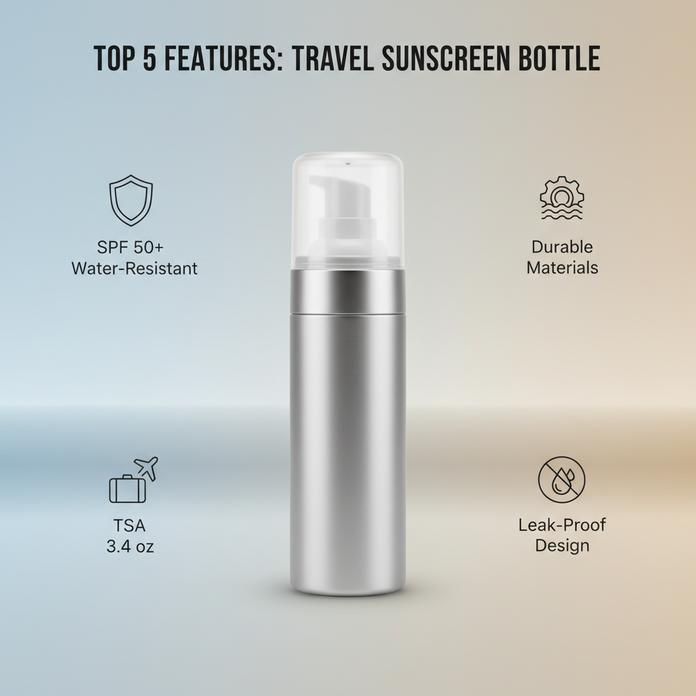
Essential SPF Ratings for Effective Sun Protection
- Broad-spectrum is non-negotiable. It shields against both UVA and UVB, which means fewer sunspots and way less risk of burns.
- Go with at least SPF 30, but if you’re out hiking, swimming, or sweating buckets, bump it up to an SPF 50+ water-resistant formula.
- Don’t fall for SPF overkill—anything above SPF 50 offers only slightly more protection but might give a false sense of security if you’re not reapplying regularly.
Whether you’re topping off your favorite refillable sunscreen bottle, or testing out a new brand, the right SPF makes all the difference in actual protection—not just peace of mind.
Ideal Bottle Size for Your Travel Needs
- Short trips? A compact bottle under 3.4 oz fits TSA rules so you can breeze through security checks without tossing your skincare stash.
- Road-tripping or camping? Larger bottles like the classic 8 oz capacity work better since weight isn’t as big of a deal when you’re not flying.
- Daily commuters and beachgoers might prefer something mid-size—think around 5 oz, which balances portability with longevity between refills.
No matter where you’re headed, matching your trip type with the right-sized container makes using a reusable or refillable sunscreen bottle way easier on the go.
Recommended Closure Types for Easy Dispensing
Grouped by usability and spill-proofing:
- Flip-top caps: Quick snaps open and shut—ideal if you’re reapplying while juggling snacks, sunglasses, and kids at the beach.
- Airless pump design: These are clutch when you don’t want air exposure degrading your sunscreen’s ingredients inside that sleek little travel bottle.
- Twist-lock pumps: Less likely to leak in backpacks or purses; perfect if you’re tossing it into luggage without worrying about pressure changes mid-flight.
Each closure style has its perks depending on how often—and where—you use that trusty refillable sunscreen bottle during travel days.
Importance of Portable Labeling for Identification
You ever reach into your bag thinking it’s sunscreen but end up squeezing out conditioner? Yeah, labeling matters more than most think:
- Use labels made from durable stuff like waterproof paper stock, especially since that bottle’s gonna get wet eventually.
- A good label sticks tight—choose one with a strong yet flexible base like a pressure-sensitive adhesive, so it won’t peel off halfway through vacation.
- Go digital: modern options like QR-coded tags printed using high-res digital systems make info readable even after long sun-filled days at the beach.
It’s not just about neatness—it’s about knowing exactly what’s in each bottle when seconds count under the sun.
Extra Perks That Make Travel Bottles Stand Out
Some features aren’t must-haves—but they sure make life easier:
→ Transparent sides let you eyeball how much product is left before heading out again.
→ UV-blocking plastic helps keep ingredients stable longer inside any kind of reusable container—even better if it’s tinted amber or cobalt blue.
→ Ergonomic shapes reduce hand strain when applying lotion repeatedly throughout hot afternoons abroad or during festival weekends.
These small upgrades can turn any refillable sunscreen bottle from “meh” into “must-pack.”
How Portability Impacts Reapplication Habits
Carrying a lightweight travel-friendly design actually encourages proper use:
01 | People are more likely to reapply every two hours—as dermatologists recommend—when their sunscreen fits easily into pockets or belt bags.
02 | Smaller containers also reduce waste because users only take what they need instead of slathering excess just because it’s available in bulk form back home.
03 | With compact bottles more visible and accessible throughout the day, skipping applications becomes less common—even among forgetful folks!
So yeah, size does matter… especially when it comes to staying protected consistently under intense sunlight conditions abroad or close to home.
The Role of Material Durability During Travel
Let’s be honest: travel gear takes hits—and so do bottles tossed around in duffels and carry-ons:
A well-built container should resist cracking from pressure shifts on planes or random knocks during hikes across rocky terrain. Flexible plastics like HDPE hold up well while still being light enough not to weigh down your pack unnecessarily.
And don’t forget chemical resistance! Some sunscreens break down lesser materials over time—but tough polymers keep formulas intact inside any refillable sunscreen bottle no matter how far off-grid you wander next weekend.
Why Leak-Proof Design Is Non-Negotiable
Grouped by leak-prevention tech:
- Double-seal mechanisms — inner plug plus outer cap = zero mess even upside-down in transit bags
- Pressure-release valves — prevent explosions caused by altitude changes mid-flight
- Silicone gaskets — flexible seals that adapt better than rigid plastic rings
Nothing ruins a trip faster than finding gooey lotion all over clean clothes—or worse, electronics! Choosing smartly designed closures ensures every drop stays put until needed… no surprise spills here!
By locking down these details early on, you’ll spend less time cleaning up messes—and more time enjoying wherever that little refillable sunscreen bottle takes you next!
Best Materials for Refillable Sunscreen Bottles
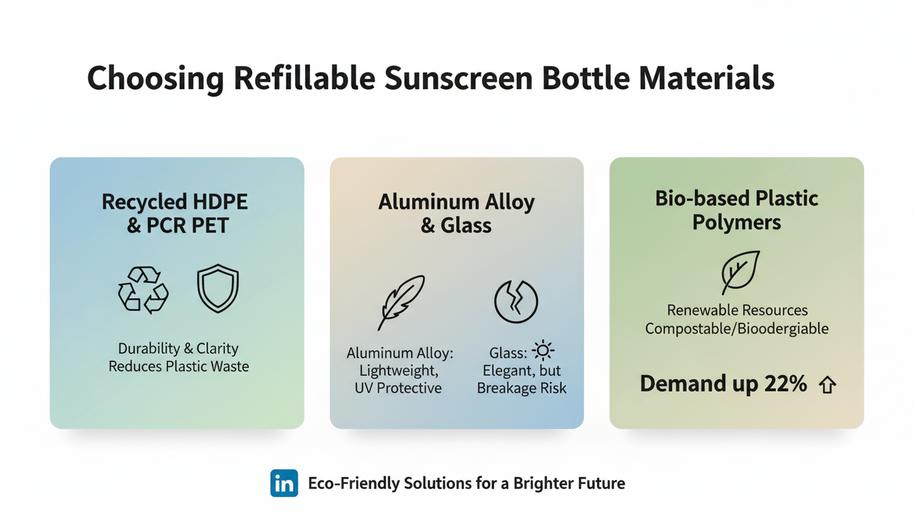
Picking the right material for your refillable sunscreen bottle isn’t just about looks—it’s about durability, sustainability, and real-world convenience.
Differences Between Recycled HDPE Plastic and PCR PET Plastic Bottles
Choosing between Recycled HDPE and PCR PET comes down to how you plan to use your refillable sunscreen bottle:
- Durability & Resistance
- Recycled HDPE plastic stands out with its high impact resistance and chemical stability.
- It’s perfect if you’re tossing it in a beach bag or backpack regularly.
- Appearance & TextureSustainability Scorecard
- If you want that sleek, glossy finish, go with PCR PET plastic—it mimics glass but won’t shatter.
- It’s also lighter than glass yet offers decent structural strength.
| Material Type | Clarity | Durability | Recyclability | UV Resistance |
|---|---|---|---|---|
| Recycled HDPE | Low | High | High | Moderate |
| PCR PET | High | Moderate | High | Low |
For those trying to strike a balance between eco-consciousness and aesthetics in their refillable sunscreen bottle, mixing these eco-friendly materials across product lines might even be the sweet spot.
Advantages of Aluminum Alloy Containers vs. Glass Bottles
The tug-of-war between aluminum alloy containers and traditional glass bottles is all about trade-offs:
Lightweight & Travel-Friendly — Aluminum wins big here; it won’t weigh down your tote or crack under pressure.
Breakage Risk — Glass looks fancy but is fragile as heck if dropped on tile or concrete.
Eco Points — Both are recyclable, but aluminum has higher reuse efficiency rates according to the EPA’s post-2024 report on packaging waste streams.
UV Protection — Aluminum shields better against sunlight degradation—huge plus when storing mineral-based sunscreens that oxidize easily.
So if you’re planning on refilling often and heading outdoors with your sunscreen bottle in tow, aluminum cosmetic jars probably got your back.
Eco-Friendly Options: Bio-Based Plastic Polymer Overview
It’s not just about ditching old-school plastics—it’s about what replaces them too. Enter bio-based polymers:
Derived from sugarcane, corn starch, or even algae—these materials are made from renewable resources rather than fossil fuels.
They don’t just feel good ethically; many are biodegradable or compostable under industrial conditions.
According to Future Market Insights’ Q1 2024 sustainability report, demand for bioplastics in personal care packaging jumped by over 22%, driven by Gen Z preferences toward lower-impact products like refillable sunscreen bottles.
But heads up—not all bio-plastics degrade equally fast outside lab settings, so check certifications like ASTM D6400 before assuming they’ll break down in your backyard compost bin!
If you’re eyeing a greener path without compromising usability, bio-based options could be the future-proof choice for your next refillable sunscreen container set-up.
Can You Bring Refillable Sunscreen Bottles on Flights?
Flying with your favorite refillable sunscreen bottle? Here’s what you need to know before packing it in your carry-on or checked bag.
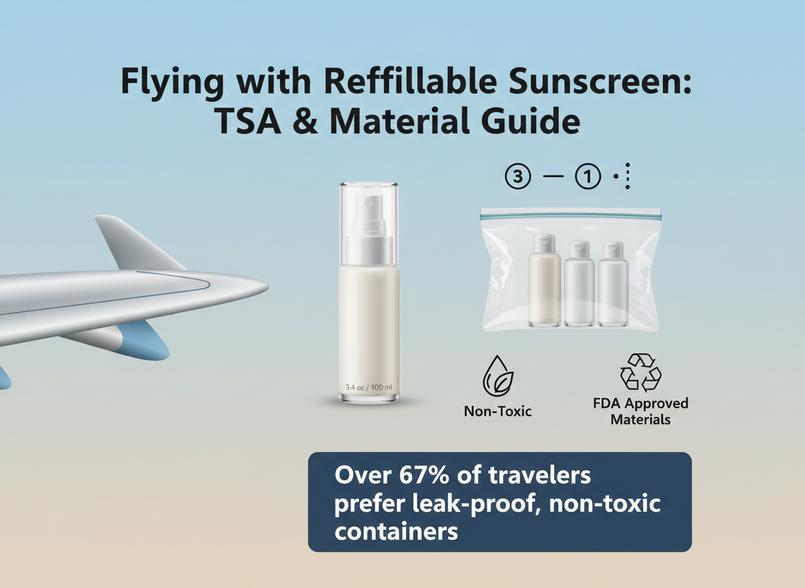
TSA Regulations on Travel Size Containers Explained
- TSA has a rule known as the 3-1-1 rule, meaning:
- Liquids must be in containers no larger than 3.4 oz (100 ml).
- All containers must fit in one clear quart-sized zip-top bag.
- Each traveler is limited to one such bag in their carry-on.
- If your refillable sunscreen bottle holds more than 3.4 oz, it can’t go through the security checkpoint—simple as that.
✦ For anything over the limit, toss it into your checked luggage or risk having it tossed by agents.
Long story short: if you’re bringing a big bottle of sunscreen through airport security, think again. The TSA doesn’t care how eco-friendly or cute your container is—it’s all about size limits and liquid content.
Need a workaround? Opt for smaller travel-size bottles and refill them from your main stash once you land. That way, you stay sun-safe and compliant without drama at the gate.
Compliance with FDA Approved Materials for Air Travel
When choosing a refillable sunscreen bottle, don’t just look at capacity—material matters too:
• Use bottles made from FDA approval-compliant plastics like food-grade PET or BPA-free HDPE.
• Avoid cheap plastic that might leach chemicals during air pressure changes.
• Look for features like tight seals and nozzles designed for leak control—that’s key when flying.
According to Statista’s Q1 2024 packaging report, “Over 67% of travelers now prefer containers labeled as both leak-proof and made from certified non-toxic materials.”
Multiple short notes worth remembering:
— Not all plastics are equal; some degrade faster under cabin pressure.
— A cracked lid mid-flight = lotion disaster inside your backpack.
— Choose bottles labeled as safe for both cosmetics and food storage to avoid issues with airline staff questioning contents.
So yes, bring that handy little refillable container—but make sure it’s made from something airlines won’t raise eyebrows at, especially if it’s filled with creamy SPF goodness.
Common Mistakes When Choosing a Refillable Sunscreen Bottle
Choosing the right refillable sunscreen bottle can save you hassle, spills, and even fines—if you avoid these common traps.
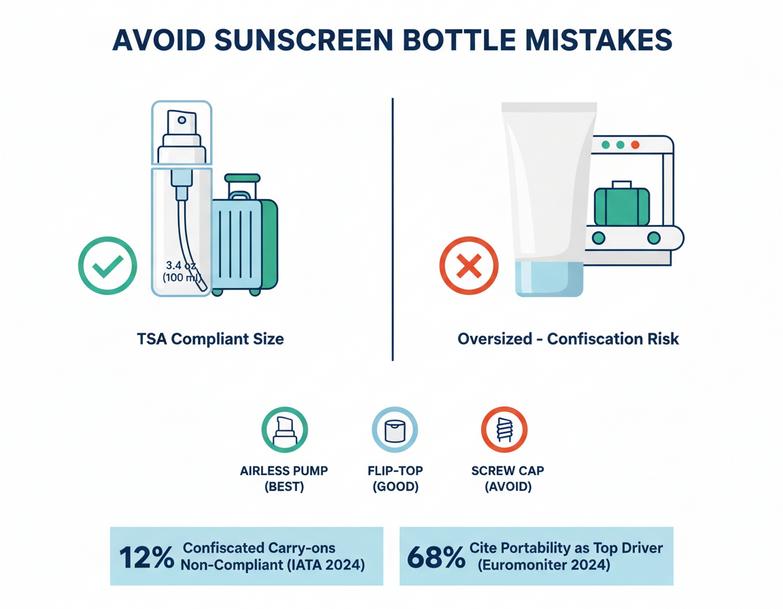
Ignoring Regulatory Compliance: What You Should Know
• Don’t assume all bottles are flight-ready. TSA rules cap liquid limits at 3.4 oz (100 ml) for carry-ons, and going over can get your sunscreen tossed at security.
• Check for compliance with FDA, EU cosmetic packaging standards, or California Prop 65 if traveling internationally. Some materials may trigger customs issues even if they seem harmless.
• “A recent IATA report in 2024 found that over 12% of confiscated carry-on items were non-compliant personal care containers.”
→ Always look for labels indicating travel-safe certification and cross-check with your airline’s site before packing that sleek but oversized bottle.
Overlooking Closure Type: The Risks of Poor Dispensing
→ A bad cap ruins everything. You want something that won’t leak into your bag or waste product every time you squeeze it.
Flip-top caps? Better than twist-offs.
Airless pump dispensers? Gold standard.
Avoid basic screw caps with orifices—they’re notorious for leaks on planes due to pressure changes.
Grouped by closure type:
| Closure Type | Leak Resistance | Travel Suitability | User Experience |
|---|---|---|---|
| Screw Cap | Low | Poor | Inconsistent |
| Flip Top | Moderate | Good | Easy |
| Airless pump design | High | Excellent | Clean & Precise |
| Mist sprayer | Moderate | Good | Fine Mist |
The wrong dispensing mechanism might leave your bag oily—or worse, empty.
Selecting the Wrong Size: Impact on Travel Convenience
You’d think bigger is better—but not when squeezing a jumbo bottle into your carry-on. That gallon jug? Leave it at home unless you’re hitting a month-long road trip.
Here’s what works better:
- Go with travel-sized options like 50 ml or 3.4 oz bottles—they fit TSA rules and slide easily into small pouches.
- Prioritize portability—flat-profile designs save more space than round ones.
- Match size to use case:
- Day trip? Try 30 ml.
- Weekend getaway? Pack two 50 ml bottles.
- Family beach day? Multiple refillables beat one bulky jug every time.
“According to Euromonitor’s Q1 2024 skincare trends report, portability was cited as the top purchase driver for travel containers by over 68% of respondents.”
So yeah—skip the industrial-size refill next time you fly and keep it compact instead.
FAQs
What SPF ratings work best for refillable sunscreen bottles in bulk orders?
A practical range keeps both casual sun-lovers and outdoor athletes happy:
- Broad Spectrum SPF 30 – dependable skin defense under daily conditions.
- Water Resistant SPF 50 – stands firm against sweat, ocean spray and pool splashes.
- Mineral-Based SPF 30 & Reef-Safe SPF 50 – trusted by eco-focused resorts protecting marine habitats.
How does TSA carry-on sizing influence wholesale production choices?
Air travel forces careful size planning for convenience:
| Market Segment | Size Option | Benefit |
|---|---|---|
| Frequent flyers | 3.4 oz Travel Size | Safe through security checks without stress |
| Beach-town retailers | 8 oz Standard Bottle, 16 oz Family Size | Ideal for longer stays or group trips |
The wrong choice risks unhappy customers juggling too-large containers mid-trip.
Which closure styles are most favored in large-scale sunscreen bottle supply?
Choosing the right top changes how the product feels in-hand:
- Flip Top Dispensing Cap – quick morning routine essential at hotels.
- Airless pump design – guards formula freshness over months of use.
- Twist Lock Pump Mechanism – adventure-proof against leaks during hiking or sailing weekends.
Why do regulations shape material selection when ordering these bottles?
Compliance protects brands from shipment delays and client disappointment:
FDA Approved Materials anchor trust; EU Cosmetic Regulations align with cross-border sales; California Prop 65 Compliant plastics like Recycled HDPE Plastic avoid harmful chemical concerns, while stylish yet light Aluminum Alloy Containers satisfy upscale boutique demands without triggering rejection notices at customs checkpoints.
References
- Winning in sustainable packaging in 2025: Bringing it all together – McKinsey & Company
- SPF 30 vs. SPF 50: Which Sunscreen Offers Better Protection? – Cetaphil
- Travel Tips: 3-1-1 liquids rule | Transportation Security Administration – TSA
- Can You Bring a Water Bottle on a Plane? Tips for Staying Hydrated – Remitly
- FDA Compliant Plastic Materials – Professional Plastics
- Airless Pump Bottles and Skincare: 7 Reasons They’re a Perfect Match – FH Packaging
- The growing popularity and versatility of aluminum cosmetic jars in sustainable beauty packaging – APG Packaging
- Bioplastics Packaging Market Size, Share, Industry Report, 2032 – Fortune Business Insights
- 5 Benefits of Airless Pump Technology – Paramount Global
- Aluminum vs Plastic vs Glass Bottles | CPI Packaging Guide – AlumBottle