What is the best type of spray bottle for cosmetics solutions
When the wrong plastic spray bottles sabotage your cosmetics, your brand pays the price—here’s how to choose ones that truly perform.
Plastic spray bottles might seem like a backstage player in the glam world of cosmetics, but trust me—they’re the unsung heroes keeping your product alive and looking sharp. When your serum starts smelling off or your toner leaks mid-shipment? Nine times outta ten, it’s because the wrong bottle got cast in the leading role.
No two sprays are created equal. Facial mists love a fine mist sprayer; thick conditioners? Not so much. Packaging that doesn’t play well with formulas can mess with shelf life—and worse—your brand’s reputation.
According to Smithers’ 2023 Global Packaging Report, demand for functional cosmetic packaging is expected to hit $35 billion by 2027, driven largely by refillable formats and ergonomic features.
So if you’ve been burned by brittle caps or leaky pumps before, pull up a chair. We’re about to break down what makes a spray bottle not just passable—but perfect—for your product line.
Essential Insights on Plastic Spray Bottles for Cosmetics
➔ Material Types: Choose from PET, HDPE, LDPE, PCR, and PETG for optimal durability and chemical resistance in your spray bottles.
➔ Spray Types: Match the right sprayer—fine mist for toners, trigger for hair care, and foam for cleansers—to enhance product performance.
➔ Capacity Considerations: Select bottle sizes ranging from 50 ml to 1000 ml based on your target market, whether personal use or wholesale.
➔ Key Features: Look for leak-proof designs, ergonomic grips, and UV protection to ensure safety, usability, and longevity in your packaging.
➔ Color Options: Consider transparent vs. opaque bottles; transparency showcases clarity, while opaque options protect sensitive formulas from light.
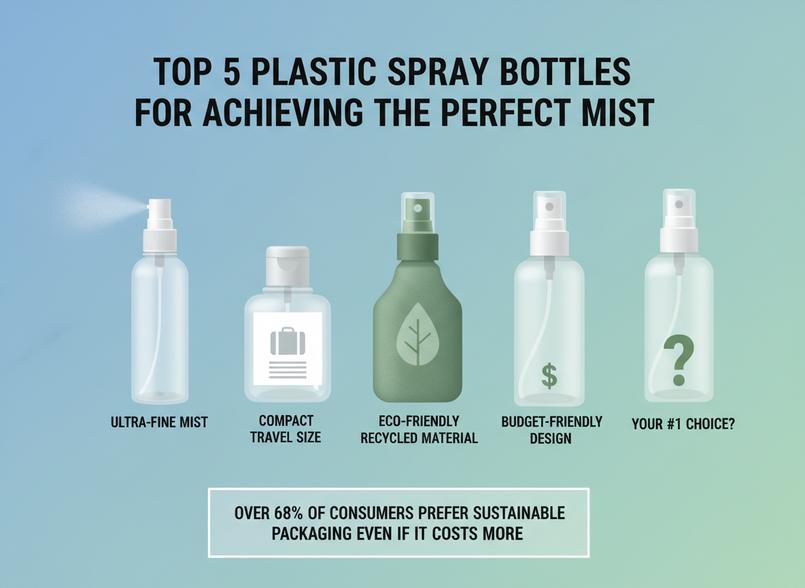
The Ultimate Guide to Plastic Spray Bottles for Cosmetics
Get the lowdown on choosing the right plastic spray bottles—from materials and nozzles to sizes and features that actually make a difference.
An Overview of Material Types for Cosmetics Spray Bottles
You’ve got options when it comes to what your bottle’s made of—and yeah, it matters more than you think.
- PET: Lightweight, crystal-clear, solid choice for most beauty sprays.
- HDPE: More rigid, super resistant to chemicals—great for stronger formulations.
- LDPE: Softer feel with squeeze-friendly flexibility.
- PCR plastic: Eco-conscious pick made from recycled content.
- PETG: A hybrid—it blends clarity with toughness.
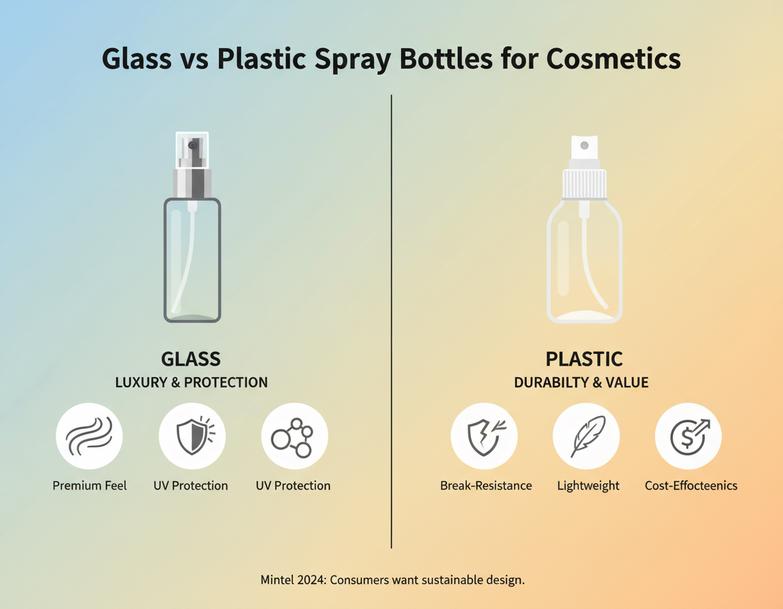
- Glass and aluminum? Fancy but less common in everyday spray packaging due to cost and fragility.
Each material brings its own vibe—some are all about the look (aesthetics), others focus on safety or sustainability like better chemical resistance or higher recyclability. Just don’t pick blindly; your formula deserves better.
Exploring Different Spray Types: Fine Mist, Trigger, and More
Not all sprayers are created equal. What works for toner might flop hard for setting spray.
- Fine mist sprayers = delicate application; think facial mists or toners.
- Trigger sprayers = more power; perfect for hair detanglers or leave-ins.
- Pump sprayers = thicker liquids like serums or oils.
- Continuous spray = smooth 360° coverage without finger fatigue.
- Foam sprayers = ideal for face washes or mousse-style cleansers.
The real magic lies in the atomization, how the product exits through the nozzle, and what kind of experience that creates. Choosing the right dispensing mechanism changes everything—from texture to how much product you waste (or save).
The Importance of Capacity: Which Size Suits Your Needs?
Size isn’t just a number—it’s about convenience, portability, and purpose.
• 50–100 ml bottles? Killer for travel kits and testers. • 150–250 ml? Go-to size for daily personal care use at home or in salons. • 500 ml+? Now we’re talking bulk refills or pro-level salon setups.
Some folks want something compact they can toss in a gym bag; others need a high-volume workhorse that won’t run dry mid-service. Think about your usage habits before picking capacity—and remember that both ounces (oz) and milliliters (ml) matter when comparing global packaging standards.
Key Features to Look for in a Cosmetic Spray Bottle
You want a bottle that won’t betray you mid-spritz—so keep an eye out for these must-haves:
• Leak-proof seals so your bag doesn’t end up soaked • Ergonomic shapes that fit naturally in your hand (no awkward angles) • UV protection if your formula is light-sensitive • BPA-free plastics because nobody wants hormone disruptors near their face • Refillable designs so you’re not tossing out plastic every month
And yeah—looks still count too! A sleek design adds shelf appeal while also signaling quality inside-out.
According to Mintel’s 2024 Beauty Packaging Report, over 68% of consumers said they’re more likely to repurchase products housed in packaging they find “easy to use” and “aesthetically pleasing.” That means form meets function isn’t optional anymore—it’s expected.
If you’re looking to tick all those boxes at once, Topfeelpack makes some seriously slick cosmetic-grade bottles worth checking out—they nail both design and durability without skimping on eco-friendly options either.
Factors to Consider When Choosing Plastic Spray Bottles
Picking the right plastic spray bottles isn’t just about function—it’s a branding choice that can make or break how your product connects with customers.
Color Options: How Transparent vs. Opaque Affects Your Brand
• Transparent bottles help show off the product inside—think clear toners or vibrant cleaning liquids. Customers like seeing what they’re buying.
• Opaque packaging, on the flip side, hides contents but protects them better from light damage. It also gives a more upscale vibe—perfect for luxury skincare.
• Want to color-code your line? That’s where you can use hues strategically across either bottle type to enhance brand image and improve shelf recognition.
- If you’re selling essential oils or light-sensitive formulas, go opaque.
- For crystal-clear serums or bright cleaners? Transparent wins every time.
- Keep in mind how color affects product visibility, and by extension, consumer trust.
Topfeelpack offers both styles in custom shades so you never have to compromise between function and aesthetics.
Material Matters: Why BPA-Free and UV Protection are Essential
| Feature | Benefit | Ideal Use Cases | Risk if Missing |
|---|---|---|---|
| BPA-Free | Prevents harmful leaching | Skincare, baby products | Health concerns |
| UV Protection | Shields formula from breakdown | Serums, oils | Product degradation |
| High-Density PE | Durable & flexible | Household sprays | Cracking under pressure |
| PETG Blend | Cosmetic-grade clarity | Perfumes, toners | Clouding/discoloration |
When choosing your bottle material, don’t skimp on safety. Not all plastics are created equal—some leach chemicals when exposed to heat or sunlight.
UV inhibitors baked into the plastic act like sunscreen for your formula. And with consumers paying closer attention to ingredient integrity than ever before, using safe materials like BPA-free plastic isn’t optional—it’s expected.
Choosing the Right Surface Finish: Glossy vs. Matte vs. Custom Texture
“Consumers form an impression of packaging within seven seconds,” according to Mintel’s 2024 Global Packaging Trends Report—and that includes how it feels in their hands.
Short takes:
- A glossy finish reflects more light and makes colors pop—ideal for bold branding.
- A soft-touch matte surface adds elegance and makes handling feel premium.
- Going with a unique pattern or grip-enhanced surface? That’s where a custom texture shines—literally setting your product apart from competitors on crowded shelves.
Each finish influences user experience differently:
- Visual impact (glossy = vibrant; matte = muted)
- Tactile response (smooth vs velvety)
- Perceived value (custom = high-end)
In short, surface finish isn’t just about looks—it shapes how people interact with your product daily and defines overall brand perception through subtle sensory cues.
Top 5 Plastic Spray Bottles Preferred by Beauty Professionals
Beauty pros don’t mess around when it comes to their tools—especially their go-to plastic spray bottles. Here’s what makes these five types the real MVPs.
PET Plastic Bottles: The Go-To Choice for Skincare Toners
- Crystal-clear visibility for toners makes PET plastic a favorite.
- Lightweight and recyclable—what’s not to love?
- Compatible with most water-based formulas.
- These bottles are sleek, sturdy, and perfect for travel kits.
- Their clarity helps monitor product levels at a glance.
• Strong barrier properties mean less risk of formula degradation.
You’ll see them all over skincare counters, often holding facial mists or hydrating sprays because they’re light in the hand but tough on leaks.
Short shelf life? Not with PET—its chemical resistance keeps toners fresher longer.
Spritz after spritz, they hold up without cracking or warping under pressure.
Table: Comparison of Common Bottle Materials Used in Skincare
| Material | Transparency | Weight | Recyclability | Chemical Resistance |
|---|---|---|---|---|
| PET | High | Light | Yes | Moderate |
| HDPE | Low | Light | Yes | High |
| Glass | High | Heavy | Yes | Very High |
HDPE Plastic Solutions: Popular for Hair Care Products
- HDPE plastic is the workhorse behind countless shampoo and conditioner bottles.
- Opaque finish protects formulas from UV damage.
- Built to survive drops in steamy bathrooms or salon backbars.
- Easy to squeeze, even when wet—bonus points!
• Great chemical resistance means no weird reactions with your styling products.
The durability of these bottles is unmatched; you can toss them around without worrying about cracks or leaks.
According to Euromonitor’s 2024 packaging trends report, HDPE remains the top choice for hair care due to its “exceptional performance under high-moisture environments.”
It’s no surprise that stylists swear by these reliable containers when mixing custom blends or storing leave-in treatments.
Custom Color Options: Personalizing Your Essential Oil Packaging
• Want your brand to pop? Go bold with custom colors like matte black or frosted teal.
• Colored bottles aren’t just pretty—they protect your oils from light degradation too.
• Amber and cobalt blue tones are especially popular among indie brands looking for that boutique vibe.
Each color serves a purpose beyond looks:
- Amber = blocks UV rays
- Cobalt blue = eye-catching + moderate protection
- Green = earthy aesthetic + branding harmony
With more consumers expecting personalized products, matching your bottle color to your scent profile isn’t just smart—it’s expected now.
And let’s be real: no one wants their lavender oil going rancid because of bad packaging choices.
Ergonomic Grip Designs: Why They Matter for Frequent Use
A good grip can make all the difference when you’re spraying toner ten times a day—or styling hair nonstop during client appointments.
- Non-slip textures help prevent drops mid-use.
- Contoured shapes fit naturally into hands.
- Trigger mechanisms reduce finger strain over time.
- Anti-fatigue designs keep wrists happier during long sessions.
- Some even come with soft-touch coatings that feel luxe yet practical.
- Compact grips are ideal for smaller hands or travel kits.
- Wide-neck versions make refilling way easier—no spills!
Whether you’re misting curls into place or prepping skin before makeup, ergonomic design isn’t fluff—it’s function wrapped in comfort.
Leak-Proof Designs: Essential Features for Body Sprays
Body sprays demand trust—you toss them in bags, stash them in drawers, carry them everywhere—and expect zero messes.
• A solid leak-proof design includes tight seals and precision-engineered valves that keep contents secure even upside down.
• Fine-mist nozzles ensure smooth application without drenching clothes or skin unevenly.
Multi-item grouping:
✔ Secure Seal — Keeps liquid inside where it belongs during transit ✔ Travel-Friendly Caps — Snap-lock features stop accidental sprays on-the-go ✔ Mist Control — Adjustable nozzles allow either wide coverage or targeted spritzes
No one wants a leaky bottle ruining their purse liner—or worse—their client’s handbag!
These features aren’t luxuries anymore—they’re standard expectations among savvy users who know what separates quality from chaos in the world of everyday grooming essentials like plastic spray bottles and atomizers alike.
How to Properly Clean and Maintain Plastic Spray Bottles
Keeping your plastic spray bottles in shape means less waste, better function, and fewer headaches.
Cleaning Techniques: Safe Ways to Maintain Your Spray Bottle
A clean sprayer is a happy sprayer—here’s how to keep yours grime-free without wrecking the plastic.
• Use warm water mixed with just a drop or two of mild soap. Shake well before spraying through the nozzle. • Avoid bleach or ammonia-based products. These harsh agents can degrade the bottle’s material over time. • If your spray starts sputtering, soak the nozzle in vinegar for 10 minutes to dissolve clogs caused by buildup.
- Rinse thoroughly after each refill—leftover chemicals can react with new solutions.
- Let all parts air dry completely before reassembling; moisture invites mold and mildew growth inside the tube or trigger head.
☑ Always check for cracks near the neck and base—these are common stress points that compromise bottle hygiene.
A regular cleaning routine doesn’t just remove gunk—it protects your hands from chemical residue and keeps your sprayer ready when you need it most.
Short tips that go a long way:
- A monthly deep clean keeps odors at bay.
- Don’t forget the trigger head—it’s where most buildup hides.
- Label bottles so you know what was inside last time.
By sticking to safe cleaning methods, you’ll avoid breakdowns, extend usability, and maintain proper disinfection capability without harming your tools.
Refillable Options: Benefits and Maintenance Tips for Longevity
Refillable plastic spray bottles aren’t just about saving cash—they’re about being smart with what you already have.
Sustainability Gains
- Reduces single-use waste by allowing repeated use over months or years.
- Cuts down on packaging clutter in both households and businesses.
Cost Savings Over Time
- One-time purchase leads to dozens of uses with bulk-bought cleaners or DIY solutions.
- Fewer trips to buy new bottles = lower fuel usage too.
Maintenance Tips for Durability
- Rinse immediately after each use if switching liquids—this prevents cross-contamination and clogging issues.
- Store away from direct sunlight; UV rays weaken plastics fast.
- Keep caps closed tightly when not in use—it helps preserve internal pressure balance during storage cycles.
Here’s how refillable models stack up based on average home usage:
| Feature | Disposable Bottles | Refillable Bottles | Difference |
|---|---|---|---|
| Avg Uses Per Year | ~12 | ~50+ | +38 |
| Cost Per Use ($) | $0.83 | $0.19 | –77% |
| Waste Generated (oz) | 60 | <10 | –83% |
With proper care, these versatile containers offer long-term performance while supporting eco-conscious habits—and let’s face it, they’re just more convenient once you’re in the groove.
Keep those refillables squeaky clean inside and out, because good habits lead to great results every single spray.
FAQs about Plastic Spray Bottles
1. Which materials work best for cosmetic spray packaging?
PET plastic carries a crystal clarity loved in skincare toners, while HDPE plastic stands firm against salon hair care chemicals. LDPE and PETG plastics bend slightly in the hand yet stay strong—perfect for richer cleansers. Brands with an eco-heart often turn to PCR plastic made from recycled origins.
2. How do spray types shape the user’s experience?
Fine mist sprayers float over the skin like morning fog for facial toners. Trigger sprayers feel purposeful in hair care products, delivering generous coverage quickly. Lotion pumps measure out creamy skincare lotions evenly; Foam sprayers whip cleansers into gentle clouds that invite touch; Stream sprayers offer targeted bursts of essential oils where precision matters most.
3. What bottle capacities fit both travel needs and professional refills?
- 50 ml volume: Slip easily into handbags or deluxe gift sets
- 100 ml volume: Daily skincare mist routines without bulk
- 250 ml volume: Hair sprays that need lasting supply on shelves
- 500–1000 ml volumes: Salon-size body sprays and multi-day refill stock
4. Why does choosing BPA-free material matter so much?
It protects sensitive formulas—like organic essential oils—from leaching risks, giving customers peace of mind when they press down on a Black glossy lotion pump or hold a Transparent fine mist filled with precious blends close to their face every day.
5. How can UV protection carry your product through tough light conditions?
Custom color bottles shield more than style—they guard vitamin-rich serums inside from fading potency under light attack, especially clear PET designs touched by sunlight on store fronts or bathroom counters.
6.What surface finishes give personality to your packaging?
Glossy surface shines boldly under retail lights; Matte surfaces whisper elegance suited for premium lines; Soft-touch coating feels luxurious with each grip; Metallized finish turns heads instantly; Custom texture builds tactile memory customers never forget when spraying their favorite body mists at home or away.