Moisturiser Pump Bottle: Best Materials for a Durable Moisturiser Pump Bottle
Ever had a moisturiser pump bottle sputter out halfway through its life, like a car coughing to a stop on an empty tank? You’re not alone. In the fast-paced world of skincare, nobody’s got time for leaky lids, jammed pumps, or bottles that crack under pressure. Packaging isn’t just packaging—it’s the armor your product wears into battle.
Durability matters. And not just because it saves you money on replacements—but because it protects your brand’s reputation like a loyal guard dog in sunglasses. When someone spends 40 bucks on face cream and the pump fails? That’s how loyalty cracks faster than cheap plastic.
According to Mintel’s Global Beauty Packaging Report (2023), over 68% of consumers say functional packaging is as important as ingredients when choosing skincare products. Translation: if your bottle’s busted, it won’t matter how magical your formula is.
So what materials actually hold up—through shipping trucks, bathroom humidity, kids knocking things off counters—and still look good doing it? Buckle up; we’re about to break down exactly what makes a moisturiser pump bottle tough enough for real life.
Quick Answers for a Long-Lasting Moisturiser Pump Bottle
→ Material Matters Most: High-density polyethylene, polypropylene, and PET plastics are top picks for strength, chemical resistance, and recyclability in daily skincare use.
→ Glass Brings the Class: Glass pump bottles offer durability with eco-friendly appeal—perfect for premium brands aiming to reduce plastic waste.
→ Pump Performance Counts: Choose smooth-dispensing pumps or airless vacuum systems to enhance flow control and extend product shelf life.
→ Lock It In Securely: Tamper-evident seals and child-resistant caps protect product integrity while boosting consumer confidence.
→ Designs That Go the Distance: Refillable packaging designs and mono-material construction support sustainability without compromising on durability or user experience.
→ Details Define Durability: UV coating protection shields sensitive ingredients from light degradation, ensuring quality over time.
The Importance Of Material Choice In Moisturiser Pump Bottles
Choosing the right material for a moisturiser pump bottle isn’t just about looks—it’s about performance, sustainability, and user experience.
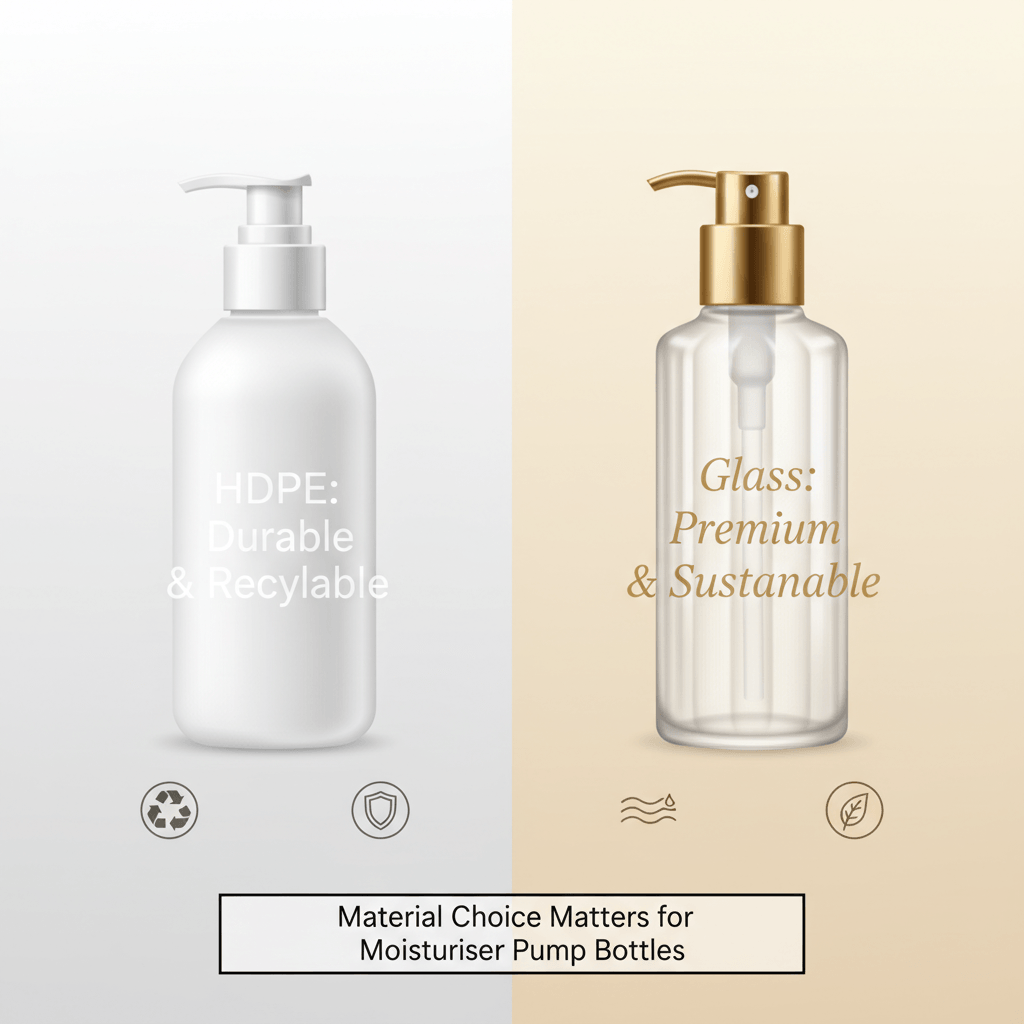
Why High-Density Polyethylene Is a Top Choice
You want your skincare packaging to be tough, reliable, and safe for long-term use? That’s where HDPE comes in swinging.
- It’s got serious muscle when it comes to durability—toss it in your bag or drop it on the floor, and it won’t crack like glass.
- Chemical resistance is another win. Many formulas with active ingredients stay stable inside an HDPE container without breaking down or reacting.
- Lightweight but strong? Yes please. Less weight means lower shipping costs and less environmental impact during transport.
- Plus, it’s widely accepted in recycling streams, so tossing that empty bottle doesn’t have to feel guilty.
According to Euromonitor International’s 2024 report on sustainable packaging trends, “HDPE remains a top performer due to its balance of cost-efficiency and recyclability across global markets.”
So next time you’re holding that smooth white moisturiser pump bottle—chances are good it’s made from this unsung hero of plastics.
The Role of Glass in Eco-Friendly Packaging
Glass might not scream “modern” like some newer materials do—but when it comes to green cred and shelf appeal? It’s still king.
• Sustainability: 100% recyclable without loss of quality—glass can be remelted endlessly.
• Barrier Properties: Keeps air and light out better than most plastics, protecting sensitive creams.
• Aesthetic Appeal: Nothing says premium like the weight and clarity of real glass.
• Chemical Compatibility: No leaching risk—ideal for natural or organic formulas that need purity.
That said, it’s heavier than plastic alternatives like PET, which can hike up transport emissions unless offset by local sourcing or reuse strategies.
For eco-conscious consumers who want their moisturiser pump bottle to look chic and tread lightly on the planet? Glass delivers both style points and sustainability chops.
Understanding Biodegradable Additives in Material Selection
Biodegradable additives are shaking up how we think about plastic packaging—and they’re sneaking into more skincare bottles than you might guess.
These additives don’t change the look or function of materials like PP, LDPE, or even some forms of flexible plastic used around the pump mechanism. Instead, they tweak how these materials behave after disposal—helping them break down faster under specific landfill conditions where microbes thrive.
This matters because traditional plastics can linger for centuries; biodegradable-enhanced versions aim to disappear much sooner without compromising product protection during use.
Still, not all biodegradable claims are created equal—watch out for greenwashing. Look for certifications or third-party testing and avoid additives flagged on the U.S. Plastics Pact “Problematic & Unnecessary Materials” list.
Top Materials For Long-lasting Moisturiser Pump Bottles
Choosing the right material for a moisturiser pump bottle isn’t just about looks—it’s about durability, function, and sustainability.
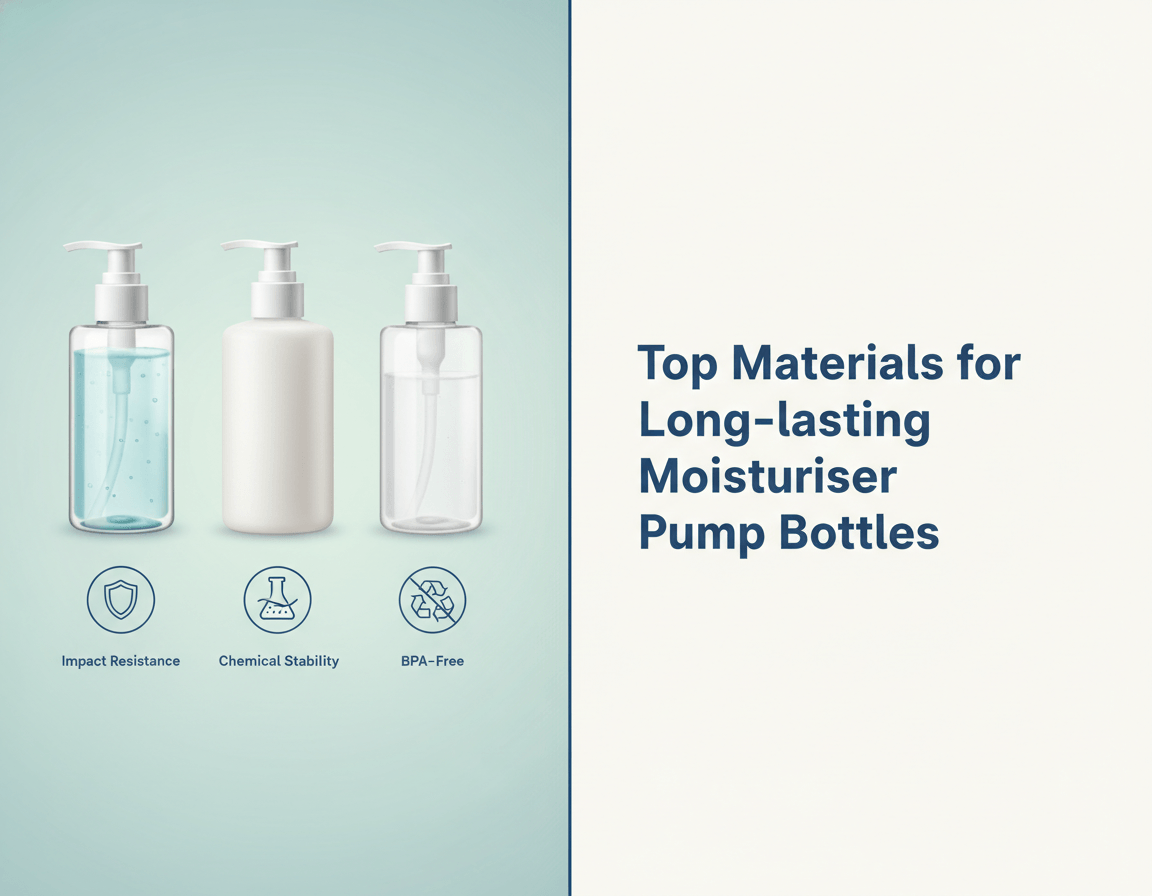
Polypropylene Plastic Resin: Strength and Versatility
- Impact Resistance: This stuff can take a beating—dropped bottles won’t crack easily.
- Heat Tolerance: Perfect for hot climates or warm bathrooms.
- Chemical Stability: Won’t react with your skincare formula.
- Low Cost & Lightweight: Budget-friendly without sacrificing quality.
- Common in Pumps & Closures: Ideal for dispensing mechanisms.
Thanks to its resilience, polypropylene (PP) is a top pick when you want your moisturiser pump packaging tough but light.
Acrylic Durable Polymer: Lightweight Yet Resilient
Acrylic brings that glassy vibe without the weight or risk of shattering:
① It’s crystal-clear—showing off product color beautifully.
② Has solid scratch resistance—keeps bottles looking fresh longer.
③ Lighter than glass—saves on shipping costs and shelf strain.
If you’re after style plus toughness in your moisturiser container, acrylic (PMMA) delivers both in spades.
PET Recyclable Plastic: A Sustainable Option
Clear as glass but way tougher, PET bottles are made for recycling champs:
• Eco-conscious consumers love it—it’s widely accepted by recycling programs.
• Great oxygen barrier—helps extend product shelf life naturally.
• Less breakage risk than glass or acrylic during transit.
When you’re aiming for green beauty goals without ditching clarity or strength, go with recyclable PET plastic.
Glass Eco-Friendly Containers: Style Meets Durability
Glass feels premium—and it is—but it’s not just pretty:
It resists chemical leaching, making it a safe bet for sensitive formulas inside any moisturiser pump bottle setup. Plus, it’s endlessly recyclable without degrading quality over time. That means fewer microplastics floating around and more reuse loops closing cleanly.
For brands chasing elegance and eco-points? Nothing beats good ol’ fashioned glass.
HDPE and LDPE Applications in Moisturiser Packaging
Short notes on these two unsung heroes:
• HDPE is opaque, sturdy, and often used in clinical-looking skincare lines due to its no-nonsense vibe and chemical resistance.
• Meanwhile, LDPE is softer and squeezable—better suited for tubes than pumps but still relevant if paired with hybrid systems.
Both plastics offer moisture barriers that help preserve delicate formulations over time.
PCR Plastics: Giving Waste a Second Life
Post-consumer recycled (PCR) materials are turning trash into treasure:
→ Step one: Used plastic gets collected from bins worldwide.
→ Step two: It’s cleaned up and processed into new resin pellets.
→ Step three: These pellets form new containers—including those handy moisturiser pump bottles!
More brands are tapping into PCR thanks to rising demand for circular packaging solutions that don’t skimp on performance or aesthetics—see APR’s third-party Design® Recognition program guiding compatible designs.
SAN & PETG Options for High-End Feel Without Glass Weight
Grouped by finish and feel:
Styrene Acrylonitrile (SAN) – Known for glossy finishes; holds up well against oils found in rich creams; slightly heavier than basic plastics but much classier looking on vanities.
Polyethylene Terephthalate Glycol (PETG) – Offers clarity like PET but adds flexibility; less brittle under pressure; great for curved designs or ergonomic grips on larger dispensers.
Both give off luxe vibes while keeping things practical under daily use conditions typical of any moisturising routine.
Tritan Copolyester: The New-Age Contender
This one’s gaining ground fast—and here’s why:
• BPA-free yet ultra-tough—it mimics glass clarity but doesn’t shatter like it when dropped from your bathroom counter at 7am before coffee hits.
• Withstands repeated washing cycles—ideal if you’re refilling your moisturiser pump bottle instead of tossing it out every time.
• Doesn’t hold onto odors—a big win when switching between products inside reusable containers made from this modern polymer called Tritan.
Perfect match? Probably not always—but definitely worth testing if sustainability meets durability is your north star!
How To Ensure Your Moisturiser Pump Bottle Lasts?
Keeping your moisturiser pump bottle working like a charm isn’t rocket science—it’s just smart design and smarter habits.
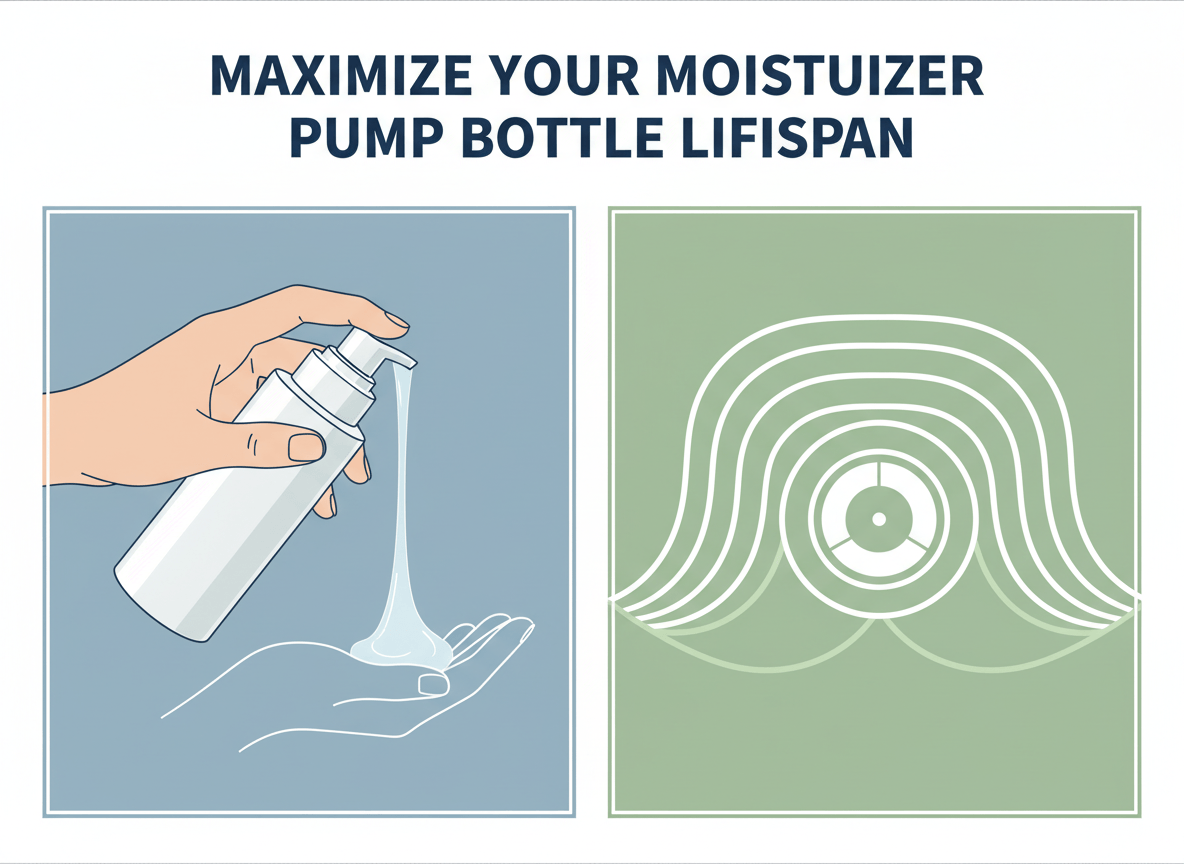
Selecting a Smooth Dispensing Pump for Reliability
A smooth-flowing pump on your moisturiser pump bottle can save you from daily messes and product waste. Here’s what to look for:
• Spring-back mechanism – ensures the pump doesn’t jam or stick mid-use.
• Wide nozzle head – helps avoid clogging, especially with thicker creams or lotions.
• Lockable twist top – crucial for travel or tossing into bags without leaks.
Also, pay attention to the internal tube length—it should reach near the bottom to reduce leftover product. A well-designed dispensing mechanism doesn’t just improve daily use; it extends the life of your favorite skincare by reducing frustration and encouraging consistent use. For thicker creams and sensitive actives, consider airless technology.
Incorporating Tamper-Evident Secure Seals
Tamper-evident seals might seem like overkill, but they’re low-key lifesavers when it comes to protecting your precious formula inside that sleek little pump bottle:
- They deter contamination—no air exposure before first use.
- They build trust—you know your product hasn’t been messed with.
- They keep freshness locked in longer—especially important if you’re not using it daily.
Learn more about best-practice seal choices from industry guidance on tamper-evident packaging.
Benefits of the Airless Vacuum System
Airless vacuum tech isn’t just fancy talk—it genuinely boosts how long your moisturiser stays fresh and effective:
– No oxygen = less oxidation = longer shelf life.
– Push-up base reduces trapped residue, cutting down on product wastage big time.
– Great for active ingredients that degrade when exposed to light or air.
See how airless works in practice and why brands adopt it here: airless pump technology. Prefer an internal option? Explore Topfeel’s airless bottle lineup for turnkey solutions.
Plus, you’ll find yourself squeezing out every last drop without needing scissors or hacks—your skin wins, your wallet wins, everyone’s happy.
Proper Storage Habits Extend Lifespan
Keep that glossy little bottle doing its job longer with these no-brainer storage habits:
• Store upright to prevent leakage through the nozzle tip.
• Keep away from direct sunlight—that heat will mess up the formulation fast!
• Avoid humid areas like steamy bathrooms where mold can sneak into crevices.
Even high-quality packaging can’t fight off bad storage vibes forever—treat it right!
Cleaning Your Moisturiser Pump Bottle Occasionally
You don’t need to scrub it weekly, but occasional cleaning keeps things smooth:
Step 1: Detach the pump head if possible without damaging threads.
Step 2: Rinse under warm water while pumping gently until clear liquid flows out.
Step 3: Let dry completely before reattaching—trapped moisture breeds bacteria!
Doing this once every couple months is enough unless you notice gunk buildup earlier.
Recognizing When It’s Time to Replace
Sometimes it’s not about saving a bottle—it’s knowing when to let go:
– If the pump sticks even after cleaning… it’s probably worn out internally.
– If you see discoloration around the nozzle… that could mean bacteria growth inside!
– If there’s an odd smell… toss it immediately; expired formulas are no joke on sensitive skin.
Knowing when to say goodbye helps avoid irritation—and makes room for something fresher and better-sealed next time around.
Choosing Materials That Resist Degradation
Materials matter more than most folks think with a moisturiser pump bottle:
Plastic Types:
• Polypropylene – durable and resistant to most skincare acids/oils.
• PET – lightweight but may degrade faster under UV exposure.
Metal Options:
• Aluminum-lined pumps offer extra protection from light-sensitive ingredients.
Glass:
• Heavier but highly stable for long-term storage without leaching chemicals into formulas.
Choosing wisely here means fewer breakdowns over time—and better safety overall for whatever’s going onto your face daily.
Minimizing Product Wastage Through Design Tweaks
Tiny design upgrades make a huge difference in how much of that expensive cream actually ends up on your skin instead of stuck inside packaging:
– Curved inner walls help funnel product toward the dip tube naturally as levels drop down.
– Transparent windows let you monitor usage so you don’t over-pump blindly near empty stages.
And don’t forget those “last drop” tools like spatulas—they work best when paired with bottles designed not to trap thick residue deep inside corners or seams. For highest recovery, airless systems are a proven path.
3 Key Properties To Look For In Moisturiser Pump Bottle Materials
Choosing the right moisturiser pump bottle isn’t just about looks—it’s about function, safety, and sustainability.
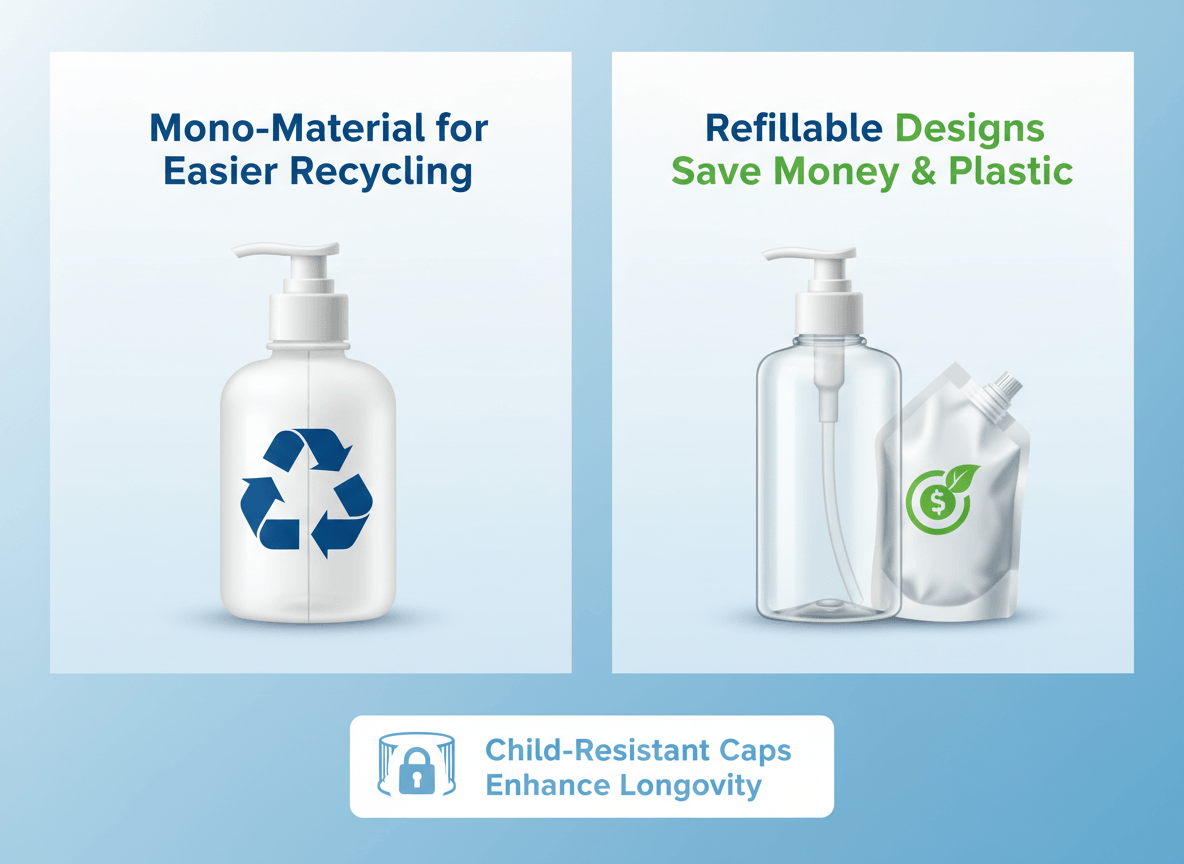 The Significance of Mono-Material Construction
- Easier recycling means less hassle for consumers and better circularity for the planet.
- Bottles made from only one material—like all-HDPE, or all-PET—don’t need to be disassembled before being tossed into the bin.
- Brands are leaning into mono-materials because they’re cleaner to process, and that cuts down on contamination risks.
The humble moisturiser pump bottle might seem simple, but mono-material builds are doing heavy lifting behind the scenes. They make it easier to maintain material compatibility, reduce waste during sorting, and improve overall recyclability. That’s why more brands are ditching complex hybrids in favor of streamlined materials like PP or LDPE, which still deliver solid chemical resistance without compromising form or feel. For practical design rules, see the APR Design® Guide.
Advantages of Refillable Packaging Designs
- Cut down on plastic use with every refill.
- Save money over time—no need to buy a whole new bottle each time.
- Keep your vanity clutter-free with one sleek design.
Refillable designs aren’t just trendy—they’re smart. A good refill system uses durable materials like thick-walled PET or even glass, both known for their strong barrier properties, so you can reuse them again and again without worrying about leaks or product degradation. Explore Topfeel’s refillable airless bottle options for brand-ready systems.
According to Mintel’s 2024 Sustainable Beauty insights, refill and reuse remain priority themes for brands and consumers alike.
How Child-Resistant Safety Caps Enhance Longevity
• These caps aren’t just about keeping kids safe—they help protect the formula inside by preventing accidental exposure to air and moisture.
• Most child-resistant closures use highly durable materials like double-layered PP, chosen for its excellent stress crack resistance under repeated twisting forces.
Want the regulatory backdrop? See 16 CFR Part 1700.
Importance of UV Coating Protection
A quality UV coating acts like sunglasses for your skincare—shielding formulas from harsh light that can break down active ingredients fast. This is especially crucial when using transparent containers made of materials such as glass or clear PET, which otherwise allow full-spectrum light penetration.
Topfeel offers UV coating options on moisturiser pump bottles to ensure longer-lasting product stability and color integrity—even when stored near windowsills or bathroom lights. UV protection not only helps preserve texture and fragrance but also boosts consumer trust by delivering consistent performance from start to finish.
The Impact Of Material On Pump Mechanism Performance
Material choice changes everything—from how smooth a pump works to how long it lasts. Let’s break down what that means when it comes to your favourite moisturiser pump bottle.
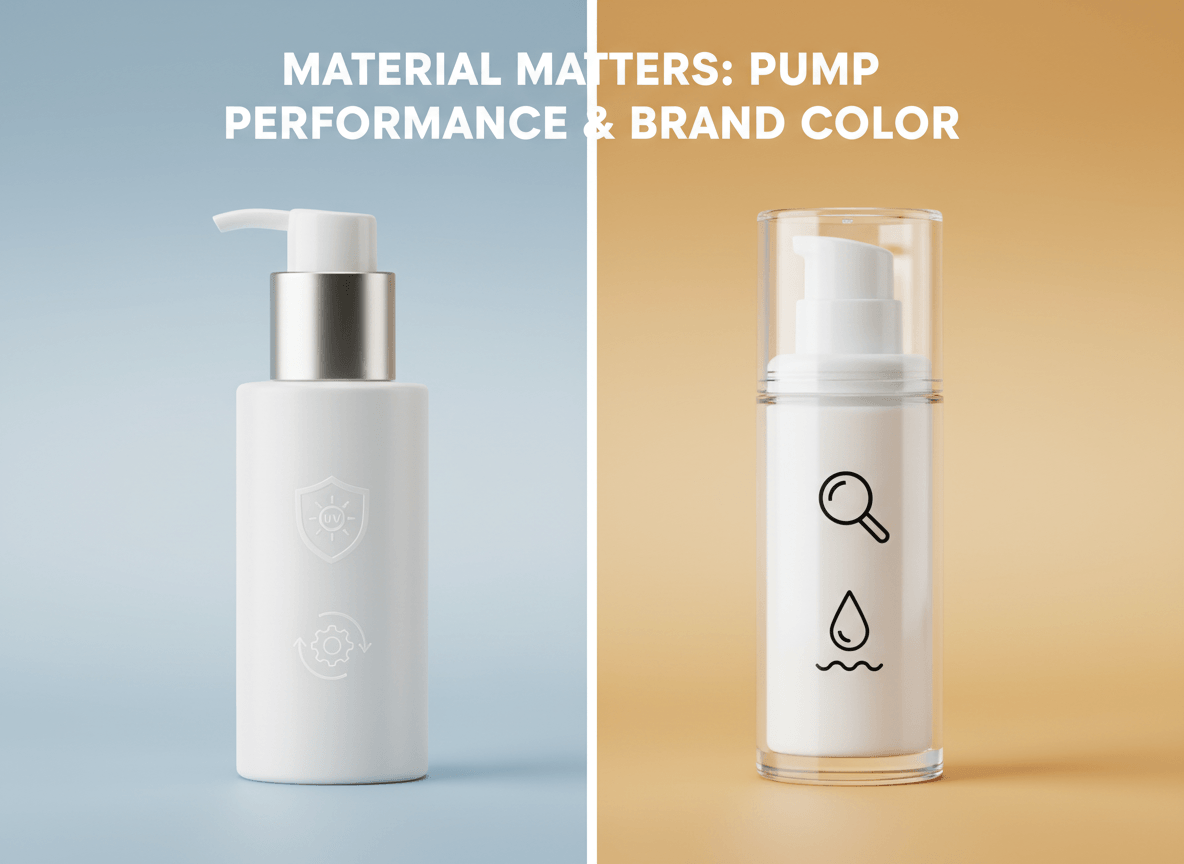
Comparing Opaque White Pigment vs. Transparent Clear Finish
Opaque and transparent finishes both do their thing, but they serve totally different purposes depending on where and how your moisturiser pump bottle gets used:
- Opaque white pigment
- Blocks out UV rays, which helps preserve light-sensitive ingredients.
- Hides internal components, giving a clean, sleek look.
- Often made from denser materials with higher wear resistance and better material strength.
- Transparent clear finish
- Shows off the product inside—great for visual appeal or color-based marketing.
- Easier to monitor remaining quantity at a glance.
- Typically lighter in formulation but may offer lower corrosion resistance, especially under high-humidity conditions.
Both finishes impact custom branding too. Want Pantone precision? Your material needs to support that goal—which leads us right into the next point.
How Material Choice Influences Custom Pantone Matching
Color matching isn’t just about paint chips—it’s chemistry meets design. The base material of your moisturiser pump bottle can either help or hurt your brand’s visual consistency:
• Polypropylene vs PETG: One absorbs pigments more evenly, while the other reflects light differently—this affects perceived tone even if Pantone codes are identical.
• Surface texture plays a role too; glossy finishes reflect more light, making colors appear brighter than matte ones using the same formula.
• According to Mintel’s Q1 2024 Packaging Insight Report, “Over 63% of beauty consumers say packaging color influences their perception of product quality.” That means nailing your brand hue is non-negotiable.
When Topfeel engineers work with clients on custom packaging solutions, they always consider how surface finish, base polymer type, and coating interact with Pantone goals—because getting that shade wrong by even a hair can throw off shelf appeal big time. For real-world examples of Pantone color execution, see Topfeel’s product notes (“any your Pantone color”) on items like PA117.
FAQs
What materials give moisturiser pump bottles the best durability?
Durability isn’t just about surviving a fall from the bathroom counter. It’s about withstanding time, temperature shifts, and constant use. Polypropylene is strong yet light—resistant to heat and moisture. PET plastic offers clarity without sacrificing toughness, while glass adds elegance and resists chemical breakdown over years of storage.
Do airless vacuum systems really make a difference in skincare packaging?
Absolutely—they’re not just for show. These systems pull product upward without letting air sneak back in. That means fewer preservatives are needed because oxidation slows way down. For sensitive formulas or premium creams that lose potency quickly, this design can be the quiet hero behind longer shelf life. Learn more about airless benefits.
Why choose refillable designs when ordering moisturiser pump bottles in bulk?
- Builds brand loyalty by encouraging reuse.
- Cuts waste—and cost—over time.
- Appeals to eco-conscious buyers looking for sustainable choices.
A thoughtfully designed refill system doesn’t just save money; it tells customers you care beyond the sale. See Topfeel’s refillable airless bottle executions.
How does material affect how well the pump works?
It’s more than looks—it changes everything from texture handling to UV protection. A clear bottle might showcase your formula beautifully but could let damaging light through unless treated with special coatings. Opaque plastics like white polypropylene shield contents better but hide what’s inside. The right balance depends on what matters most: visibility or preservation?
Can Pantone colors shift depending on container material?
Yes—and sometimes subtly enough that only your designer notices… until production day arrives and 10,000 units look “off.” Glass reflects differently than acrylic; even gloss levels change perception under store lights versus studio lighting. Always test samples before approving full runs if color accuracy is part of your identity—it saves headaches later.
References
- Beauty & Personal Care Trends 2024, Mintel – https://passionsquared.net/wp-content/uploads/2024/01/Mintel_2024_Global_Beauty_and_Personal_Care_Trends_English.pdf
- Sustainable Packaging: Circularity for Rigid Plastics (Report page), Euromonitor – https://www.euromonitor.com/sustainable-packaging-circularity-for-rigid-plastics/report
- Plastics: Material-Specific Data, U.S. EPA – https://www.epa.gov/facts-and-figures-about-materials-waste-and-recycling/plastics-material-specific-data
- Facts About Glass Recycling, Glass Packaging Institute – https://www.gpi.org/facts-about-glass-recycling
- What are the Benefits of Using Airless Pump Bottles, APG Packaging – https://apackaginggroup.com/blogs/news/what-are-the-benefits-of-using-airless-pump-bottles
- Benefits of Airless Pump Technology, Paramount Global – https://www.paramountglobal.com/knowledge/benefits-airless-pump-technology/
- Tamper-Evident Packaging Solutions (Overview), Paramount Global – https://www.paramountglobal.com/knowledge/tamper-evident-packaging-solutions/
- eCFR 16 CFR Part 1700 – Poison Prevention Packaging (Child-Resistant Packaging), CPSC – https://www.ecfr.gov/current/title-16/chapter-II/subchapter-E/part-1700
- APR Design® Guide Overview, Association of Plastic Recyclers – https://plasticsrecycling.org/apr-design-hub/apr-design-guide-overview/
- APR Design® for Recyclability Recognition, Association of Plastic Recyclers – https://plasticsrecycling.org/apr-design-hub/apr-design-recognition/
- HMC Polypropylene Chemical Resistance Guide – https://www.hmcpolymers.com/storage/download/hmc-pp-chemical-resistance.pdf
- Oxygen Transmission in PET (Knowledge Article), Industrial Physics – https://industrialphysics.com/knowledgebase/articles/the-need-for-measuring-the-oxygen-transmission-rate-on-pet-bottle-caps/
- Is PET Recyclable? ICPG – https://blog.icpg.co/is-pet-recyclable-icpg
- SAN (Styrene-Acrylonitrile) Properties, NETZSCH – https://polymers.netzsch.com/Materials/Details/2
- PETG Sheets Technical Data, S-Polytec – https://www.s-polytec.com/media/attachment/file/d/a/data_sheet_petg_sheets.pdf
- Eastman Tritan™ (Overview) – https://www.eastman.com/en/products/brands/tritan
- The Science of UV Protection in Packaging (Whitepaper), Holland Colours – https://www.hollandcolours.com/hubfs/2024%20-%20Guide%20Lightguard%20200624%5B2%5D.pdf
- Environmental Claims & Green Guides (Degradable Claims), FTC – https://www.ftc.gov/business-guidance/resources/environmental-claims-summary-green-guides
- U.S. Plastics Pact – Problematic & Unnecessary Materials List – https://usplasticspact.org/problematic-materials/