Can’t Get It Open? Here’s How to Open Pump Bottles Every Time
When bulk buyers ask “how to open pump bottles,” it’s more than curiosity—it’s chaos, design fails, and brand reputation on the line.
Ever watched someone wrestle with a pump bottle like they’re defusing a bomb? Not exactly the brand experience you want after spending millions on sleek design. The phrase “how to open pump bottles” might sound like child’s play—but for cosmetic packaging set buyers dealing in hundreds of thousands of units, it’s the difference between glowing reviews and returns piled sky-high. Sticky springs, misaligned dip tubes, closures that laugh in your face—these aren’t flukes; they’re fixable flaws rooted deep in component choices.
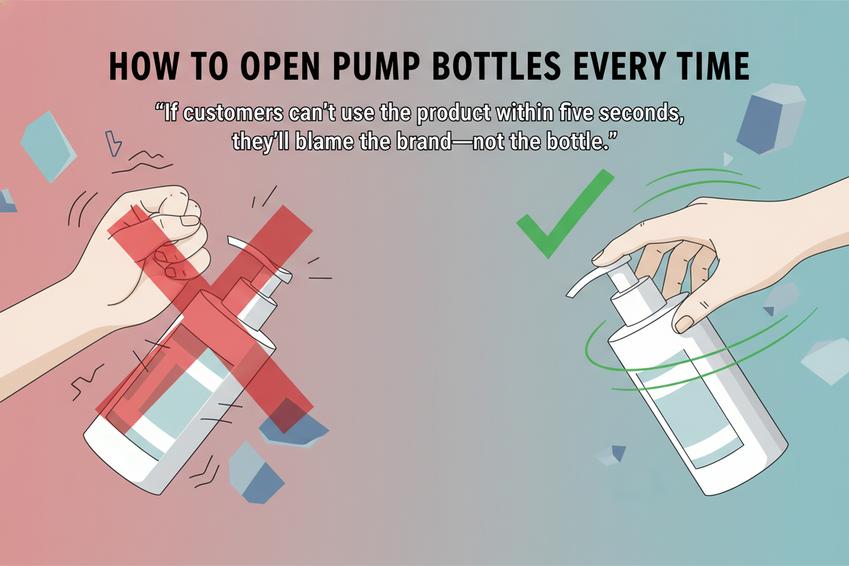
One Topfeelpack engineer recently put it bluntly: “If customers can’t use the product within five seconds, they’ll blame the brand—not the bottle.” In bulk orders, every tiny misfire adds up fast. So pull up a chair—we’re cracking open what really makes pumps pop… or not.
Essential Guide to Understanding How to Open Pump Bottles
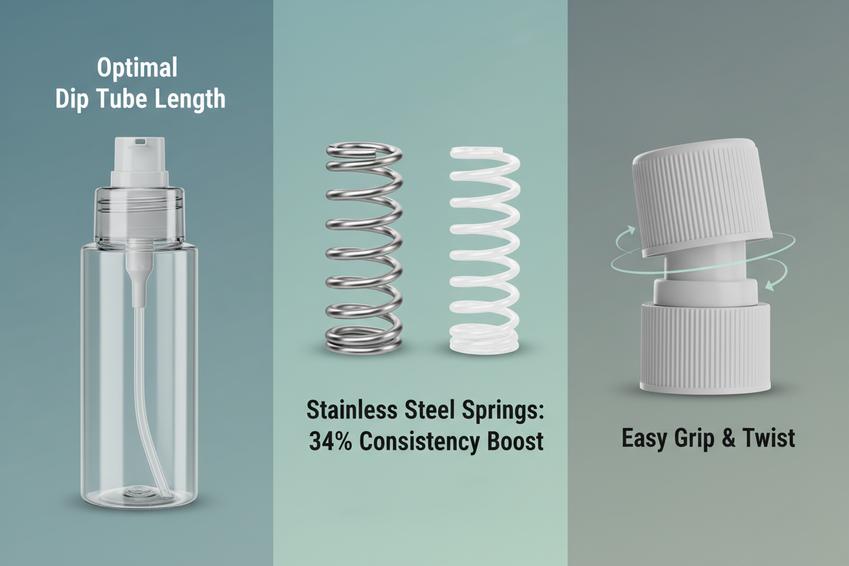
- Proper Dip Tube Length: Ensure the dip tube reaches the bottom of the bottle for consistent product dispensing.
- Spring Material Selection: Choose stainless steel springs for durability and consistent pressure in lotion and foam pumps.
- Closure Size Considerations: Match the closure size with the bottle neck to facilitate easy opening and prevent leaks.
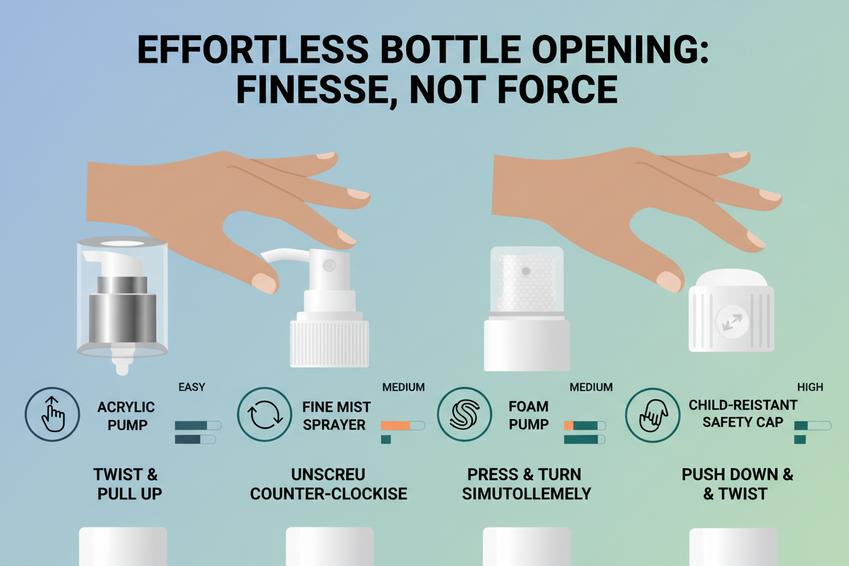
- Acrylic Bottle Handling: Gently twist the pump head counterclockwise to unlock for effortless dispensing.
- Fine Mist Sprayers Technique: Press down and twist the nozzle to unlock and access fine mist sprayer effectively.
- Foam Pump Practices: Apply even pressure on the actuator for consistent foam release with cleansers or conditioners.
- Safety Cap Removal: Simultaneously press and twist safety caps to access lotions or sunscreen bottle quickly.
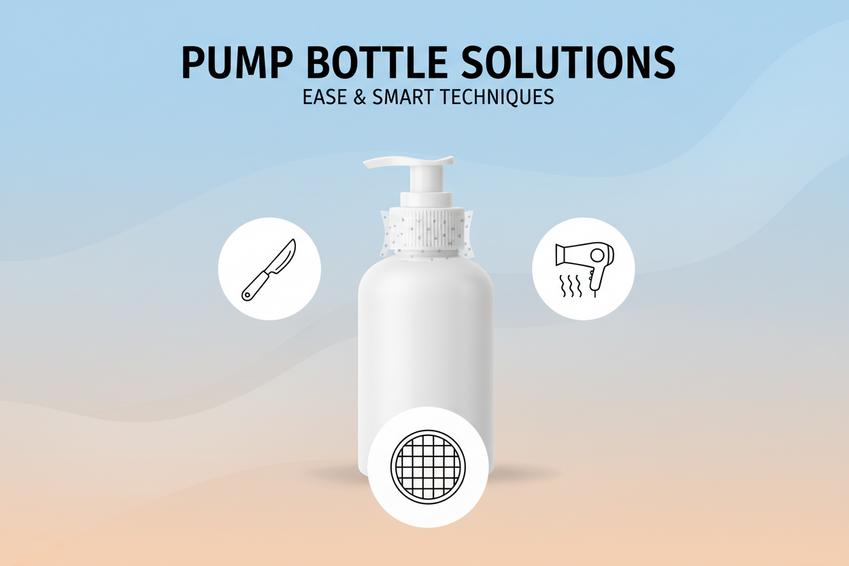
- Troubleshooting Seals: Use a small tool to pierce tamper-evident seals or apply heat to assist with induction seals.
- Dealing with Glass Bottle Resistance: Grip firmly and twist the pump head counterclockwise to overcome initial resistance when opening.
3 Essential Tips for Easy Pump Bottle Use
Mastering how to open pump bottles isn’t rocket science, but a few overlooked details can make all the difference. Here’s what really matters.
Ensure Proper Dip Tube Length for Optimal Flow
Getting smooth flow from your pump bottle starts with something most folks don’t think twice about—the dip tube. A well-fitted tube length means less hassle and more product per press.
- Long enough to reach the bottom: If your dip tube doesn’t touch the base, you’ll leave usable product behind.
- Avoid trimming too short: Cutting it too much disrupts suction, making every pump weaker than it should be.
- Tapered ends help: This design minimizes clogging and improves liquid flow consistency.
- Match tube diameter to viscosity: Thicker lotions need wider tubes; thin liquids do better with narrow ones.
- Check compatibility with bottle shape: Curved or angled bottles may require custom-cut tubes for max efficiency.
- Pump mechanism matters too: Some pumps are designed to work only if the tube is perfectly aligned inside.
So next time you’re struggling with how to open pump bottles and get that last bit out, check the length of that sneaky little plastic straw first.
How Spring Material Affects Pressure Release
It’s wild how something as small as a spring can change everything about using a pump bottle. That tiny coil inside? It controls how much force you need—and whether it’s smooth or stiff when you press down.
Stainless steel springs hold up better over time. They resist corrosion, especially in moisture-heavy environments like bathrooms or kitchens.
Plastic springs might be cheaper but lose their tension faster, leading to inconsistent pressure release.
For foam bottle dispensers, tighter spring tension delivers a better-quality foam—but only if paired correctly with the valve system.
Industry analysis suggests that stainless steel springs significantly improve dispensing consistency compared to plastic alternatives, which can wear out faster in high-volume settings. That kind of stat shows just how underrated this component is.
When you’re trying to figure out how to open pump bottles easily without feeling like you’re arm-wrestling plastic—check what type of spring it’s packing under the hood.
The Role of Closure Size in Opening Ease
A mismatched cap can turn even the simplest task into an annoying struggle. Here’s why getting the right closure size makes opening so much easier:
Small neck? You’ll wrestle with grip. Wide neck? Less twisting effort needed. Thread design matters—a poorly matched twist pattern makes turning feel gritty or stuck. The right-sized bottle cap aligns perfectly with your hand’s natural grip strength and angle.
If you’ve ever twisted till your wrist popped just trying to figure out how to open pump bottles, odds are your issue wasn’t strength—it was an off-size closure messing up your leverage.
Getting this one detail right saves time and frustration every single day.
How to Open Pump Bottles Quickly and Efficiently
Getting stuck with a pump bottle? Here’s how to crack them open without the hassle.
Tips for Handling Acrylic Plastic Pump Bottles
• Always check if the pump bottle is locked by gently trying to twist the top. • If it doesn’t budge, hold the base steady and rotate the cap counterclockwise until you feel a click. • Don’t force it—too much pressure could damage lotion bottle threads or strip the locking mechanism.
The trick with these plastic bottles is finesse, not force. Once unlocked, press down slowly to test flow. Some need a few pumps before dispensing kicks in properly.
Unlocking Fine Mist Sprayers: A Step-by-Step Guide
- Hold the fine mist sprayer upright so gravity doesn’t interfere with priming.
- Grip just below the nozzle, where the collar meets the neck of the bottle.
- Push down slightly while twisting left—this will usually unlock most sprayers with safety locks built into their collars.
Once released, press firmly but not aggressively to activate that clean mist flow for serums or toners. If nothing sprays after five tries, check if your product has clogged up at the pump head—a hot water soak might help clear it out.
Foam Pump Techniques for Smooth Dispensing
Keep your hand steady when pressing down on a foam pump, as uneven pressure messes with foam consistency.
Prime new dispensers by pushing slowly three to five times—air needs clearing before foam appears.
If your cleanser or conditioner comes out runny instead of foamy, double-check that you’re using a formula made for foaming mechanisms.
Foam bottles are picky about angle and speed; too quick or too tilted and you’ll get more liquid than lather.
Understanding Safety Caps: Your Key to Easy Access
You know those stubborn tops on sunscreen bottles? Those are usually safety caps, designed with child-resistant features like push-and-turn systems.
To open:
• Press down firmly while twisting counterclockwise—don’t rush this part; timing matters more than strength here. • Look for arrows or ridges molded into tamper-resistant designs—they’re subtle guides. • Once off, store separately if you’re using daily—it saves time fumbling every morning.
Here’s a quick comparison of common cap types:
| Cap Type | Unlock Method | Common Use | Difficulty Level |
|---|---|---|---|
| Flip-top | Pull then flip | Shampoos | Easy |
| Push-down twist | Press + rotate | Lotions/Sunscreens | Medium |
| Snap-lock | Pull hard | Hand sanitizers | Low |
| Child-resistant | Press + turn combo | Medication creams | High |
Topfeelpack designs its packaging with both functionality and user experience in mind—so unlocking shouldn’t feel like solving a puzzle every time you wash your face.
With these tips on how to open pump bottles—from mist sprayers to foam pumps—you’ll spend less time fiddling and more time enjoying your skincare routine right out of the gate.
What to Do When Pump Bottles Won’t Open
Sometimes figuring out how to open pump bottles feels like a battle. Let’s break down common issues and quick fixes that actually work.
Troubleshooting Tamper Evident Seals and Induction Sealing
• If your pump bottle has a tamper-evident ring or foil seal, don’t just yank—take a closer look. These seals are meant to be tight for safety, but they can be tricky.
• Use the tip of a butter knife, scissors, or even a coin to carefully pierce through the security seal without damaging the threads underneath.
• For stubborn induction seals, try gently warming the top of the bottle with a hairdryer for 15–20 seconds. The slight heat softens the heat seal, making it easier to peel off.
• Some brands use double-sealing: both an outer ring and inner foil. Remove both before attempting to twist the pump head—missing one will keep it locked tight.
• Always check if there’s any hidden perforation or pull-tab under the cap—it might be tucked inside and easy to miss.
If you’re stuck wondering how to open pump bottles with these kinds of seals, remember: it’s not about force, it’s about finesse.
How to Overcome Resistance in Glass Bottle Designs
Glass packaging looks classy but can be frustrating when you’re trying to twist open that new serum or lotion. Here’s what helps:
- Grip-enhancing tools like rubber jar openers work wonders on slippery glass surfaces.
- Wrap a towel around the base of your glass bottle while twisting the pump counterclockwise—it gives better friction without hurting your hand.
- If it still won’t budge, run warm water over just the neck area for 10 seconds; this expands metal collars slightly and reduces internal pressure.
- Avoid using pliers—they might crack delicate packaging or damage threading.
- Sometimes brands glue pumps on during transit protection; in those cases, gently rocking side-to-side while twisting helps break any adhesive grip.
- Always hold close to where the pump meets glass—not at its base—to avoid snapping off an entire top section by accident.
If you’ve been googling how to open pump bottles without breaking them, especially those fancy ones with tight closures, these tricks should save you time—and frustration.
One more thing: Topfeelpack designs their packaging so users don’t have this struggle in the first place—smart design beats brute force every time.
FAQs about How to Open Pump Bottles
How to open pump bottles made of acrylic plastic without damage
Sometimes it feels like the bottle is daring you. Grip the acrylic body firmly—its glossy surface is slippery truth—and twist the actuator gently counterclockwise until a subtle click answers back. Resist that urge for brute force; in fragile form, beauty shatters fast.
How to open pump bottles with safety caps efficiently during filling or testing
Safety caps demand patience and timing:
- Press downward as if coaxing air into calm.
- Twist while keeping pressure steady, letting the mechanism surrender naturally.
After opening, run a small product flow check—it’s reassurance before moving deeper into lotion or sunscreen filling lines.
How to open pump bottles with tamper-evident seals during inspection batches
There’s a quiet art here: slip a narrow tool under seal edges… feel the resistance give way like peeling anticipation from glass or HDPE plastic walls. A hint of mild heat softens stubborn induction sealing so pumps for cleansers or conditioners breathe freely again on trial runs.
What sustainable options exist when choosing refillable lotion pump packaging orders
Every closure tells an environmental story—PCR plastic bodies paired with mono-material designs keep waste low while silk screen printing or label application maintains brand charm; refillable bottle packs for serums invite not just reuse but ritual in daily care routines, reducing plastic usage one measured act at a time.
References:
- How to Open a Stuck Pump Bottle Easily – Panyue Packing
- Stainless Steel vs Plastic Sauce Pumps: Your Choice Guide – UKPACK
- Soap Dispenser Pump Mechanism: Understanding the Essentials – Somewang
Tutorial: How to unlock a lotion pump
This video provides a visual demonstration of the unlocking technique described in the article, which is helpful for readers who prefer seeing the mechanism in action to understand the “press and twist” motion.