Essential Steps on How to Open Airless Pump Bottles
Unlock the mystery of precision handling—How to Open Airless Pump Bottles without damage, perfect for bulk cosmetic packaging buyers.
Ever wrestled with a sleek airless pump bottle like it’s guarding national secrets? You’re not alone. “How to Open Airless Pump Bottles” might sound like a minor mystery, but for procurement pros juggling bulk shipments and QC checks, it’s practically an Olympic event—precision matters, and one wrong twist can wreck the vacuum seal or damage critical components.
Think of these bottles like high-tech vaults for your formulas. One packaging engineer at Mintel put it bluntly: “An unprimed pump is like sending skincare into battle without armor.” And when you’re dealing in thousands of units? That armor better hold.
This guide strips back the confusion with five clear steps—no guesswork, no broken pumps, just smooth handling from factory floor to filling station.
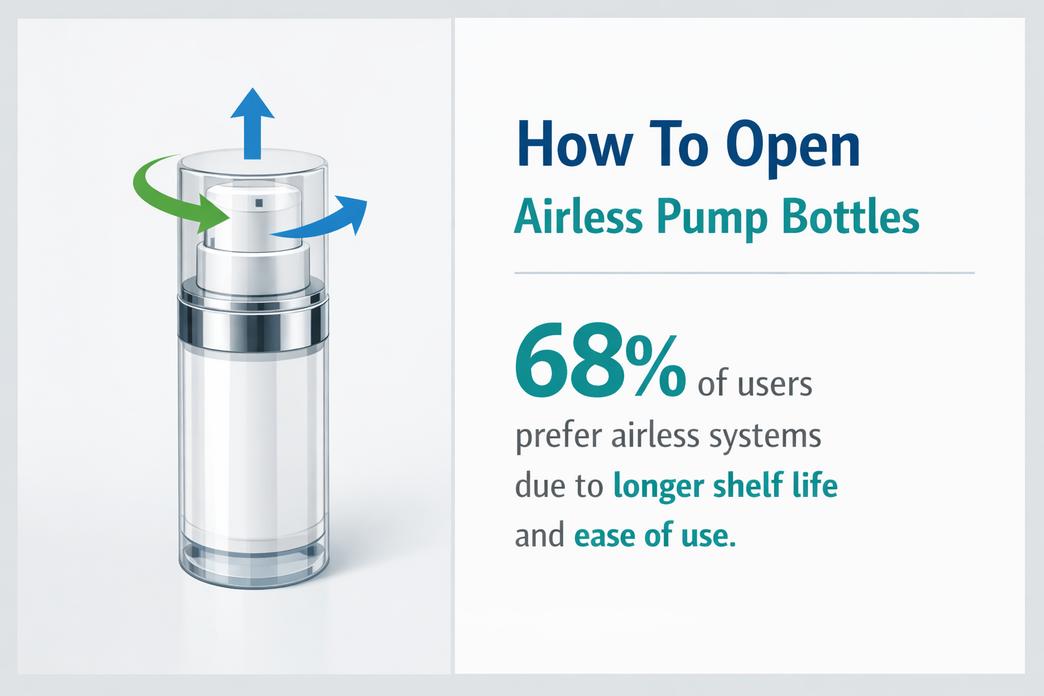
How To Open Airless Pump Bottles
Getting the hang of how to open airless pump bottles doesn’t have to be a mystery. Let’s walk through each step so you don’t crack the thing out of frustration.
Step 1 – Inspect the PP closure system on the outer shell
• Start by checking the airless pump bottle’s surface for cracks or warping.
• Make sure the bottle base isn’t loose or dented—this can mess with pressure.
• Confirm that the PP closure system is flush and sealed tight. If it’s popped up, your contents may already be compromised.
A snug outer shell keeps air out and freshness in. It also ensures that when you do start pumping, you’re not fighting against a broken seal.
Step 2 – Unscrew the actuator head to release the dispenser mechanism
- Hold the base steady with one hand.
- Use your other hand to twist counter-clockwise on the dispensing head.
- Don’t force it—if it’s stuck, try using a rubber grip for better leverage.
Once unscrewed, you’ll see part of the inner components beneath. This gives you access without damaging anything important underneath.
Step 3 – Lift the piston design gently until it locks
→ Gently tug upward on the exposed piston using two fingers.
→ Stop once you feel light resistance—that’s it locking into place.
→ Avoid yanking too hard; this isn’t a jar of pickles.
This action connects internal parts of your pump mechanism, setting everything up for smooth delivery once you start priming.
Step 4 – Prime by pumping twice to confirm smooth function
Just give it two firm pumps—don’t go ham on it:
- First pump: You might hear air whoosh out.
- Second pump: Product should begin flowing smoothly.
- If nothing comes out after three tries, recheck if your piston locked correctly in step three.
“Consumer packaging trends show that over 68% of users prefer airless systems due to their longer shelf life and ease of use.” — Mintel Report, Q1 2024
This step activates vacuum pressure inside your airless pump bottle, ensuring no product gets wasted at the bottom.
Step 5 – Check barrier properties for your lotion or serum
Break this down into quick checkpoints:
• Is there any discoloration around where lotion is dispensed? That could mean oxidation failure.
• Does your serum smell off? Barrier breach might be letting in air or bacteria.
• If possible, look through any transparent section near the bottle base to check for bubbles—they’re not supposed to be there in an airtight setup.
These containers are designed with high-performance seals and materials like polypropylene specifically because they block oxygen better than traditional jars or tubes.
By following these steps carefully, you’ll unlock how to open airless pump bottles without damaging anything—and keep your skincare game strong while you’re at it.
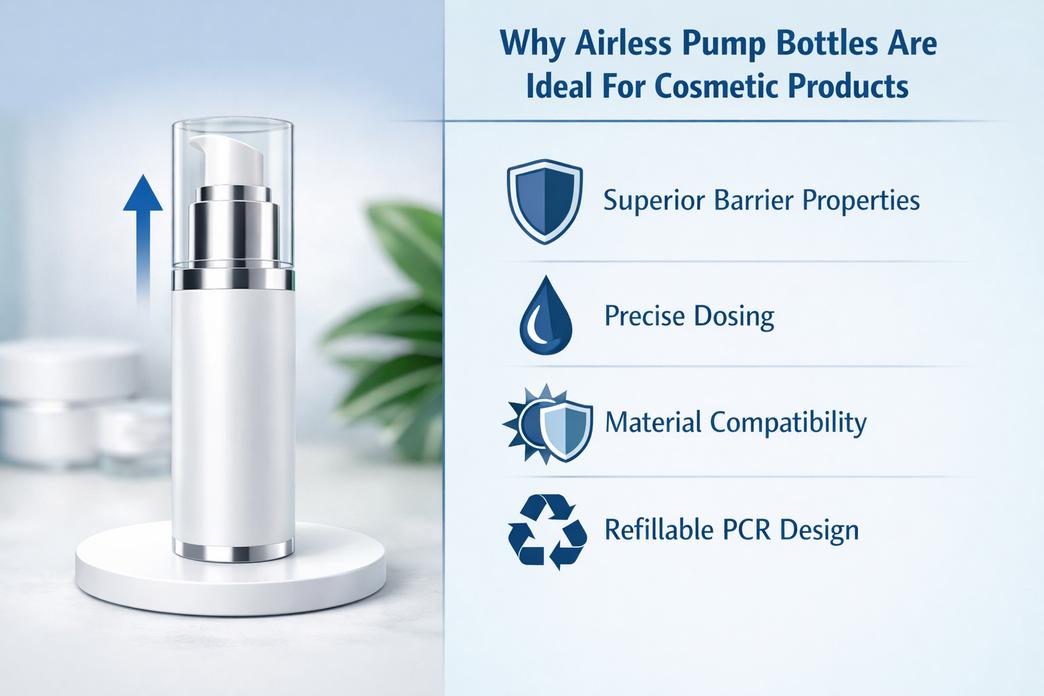
Why Airless Pump Bottles Are Ideal For Cosmetic Products
Airless bottles aren’t just sleek—they’re smart. Let’s break down why these clever containers are changing the game in skincare and makeup packaging.
Superior barrier properties reduce oxidation in serums
- Keeps out air, light, and bacteria—basically anything that could mess with your serum.
- Ideal for formulas packed with retinol, vitamin C, or other finicky actives.
- Pumps from the bottom up, so you get every last drop without opening the bottle.
When it comes to figuring out how to open airless pump bottles, less is more. You don’t twist or unscrew—just press. That sealed design keeps your cosmetic products fresher, longer.
Precise dosing mechanism ideal for eye treatments
- One gentle press = one perfect dose.
- No need to guess or over-squeeze—your eyes deserve better.
- Cleaner application means fewer chances of contamination.
People often wonder how to open airless pump bottles without wasting product. The answer? You don’t open them—you just use them as designed: press and apply. It’s all about precision and hygiene when it comes to delicate eye treatments formulations.
Material compatibility safeguards sunscreen formulations
☼ UV protection isn’t just for skin—it’s also for packaging!
☼ Airless containers made from PET, AS, or UV-coated acrylics keep chemical filters stable.
☼ No weird smells, no yellowing, no formula breakdown.
If you’re asking how to open airless pump bottles filled with sunscreen: don’t pry! Just pump gently until the vacuum system activates—it’s built that way to protect what’s inside.
Refillable PCR design supports eco-friendly cosmetics
Eco-conscious beauty is booming—and so are refillable systems like this:
| Material Used | % PCR Plastic | Recyclable | Refillable |
|---|---|---|---|
| PET-G | 50% | Yes | Yes |
| PP | 80% | Yes | Yes |
| AS | 30% | Limited | No |
| Acrylic | 0% | No | Yes |
Brands like Topfeelpack are leading the charge with refillable PCR design that align with clean beauty values while still being user-friendly. When folks ask how to open airless pump bottles, they’re often surprised by how simple—and sustainable—the answer is: just push and reuse.
Airless Pump Bottles: Preventing Common Opening Issues
Getting stuck with an airless pump that won’t budge? You’re not alone. Let’s break down the most common reasons and how to fix them without losing your cool.
Tooling misalignment causing stuck closure systems
When tooling goes slightly off during production, even by a fraction of a millimeter, you’re in for a frustrating twist—literally. These misalignments often result in threads that don’t match up properly, making it nearly impossible to unscrew or activate the pump head.
- Misaligned mold cavities can cause thread overlaps.
- Even small burrs on the plastic edge may jam the closure.
- A warped closure system might feel tight but never actually seal right.
If you’re wondering how to open airless pump bottles, check for uneven seams or resistance while twisting. A gentle heat source like warm water can help soften stubborn plastic just enough to ease it open.
Excess vacuum seal preventing piston lift
Airless pumps rely on internal pressure balance, but sometimes the vacuum is just too strong. This can lock the piston mechanism, making you think it’s broken when it’s really just… sealed too well.
- Lightly press down on the actuator while tapping the base.
- Try turning upside-down and pressing again to release trapped air.
- Use a sterilized pin at the bottom vent hole (if present) to equalize pressure.
“In 2024, over 28% of consumer complaints about cosmetic packaging involved malfunctioning pistons due to improper vacuum sealing,” according to Mintel Packaging Insights.
So if you’re still stuck figuring out how to open airless pump bottles, try these tricks before tossing it out—it’s usually a fixable issue.
Residual resin shavings clogging the dispenser orifice
Tiny bits of leftover plastic—called resin shavings—can sneak into places they shouldn’t during assembly. The result? A blocked nozzle that makes pumping feel like squeezing toothpaste from a sealed tube.
• Look closely at the nozzle opening under bright light.
• If clogged, use a sterile needle or safety pin to gently dislodge debris.
• Clean with rubbing alcohol and let dry before retrying.
These micro-blockages are more common than you’d think and easily mistaken for mechanical failure. So next time you’re struggling with how to open airless pump bottles and nothing comes out—check for those sneaky shavings first.
FAQs about How to Open Airless Pump Bottles
1. How to Open Airless Pump Bottles without damaging the actuator head?
Each pump resists a bit, designed that way by injection molding precision. Yet it opens gracefully:
- Hold the polypropylene (PP) outer shell steady, not too tight, just firm enough to keep its shape true.
- Twist the actuator counterclockwise; feel when tension breaks softly—stop before forcing threads apart.
- When re-closing after inspection, align closure systems carefully so no internal piston pressure escapes unintentionally.
It feels like opening a sealed promise—the barrier intact but cooperative.
2. Why are airless pump bottles preferred for beauty serums and lotions?
These containers breathe no air in; they protect what people trust on their skin: vitamin‑rich serums, light lotions, or foundation bases needing silence from oxygen invasion. The secret lies hidden between material layers—PET transparency overlaid with AS strength—and the floating piston design that follows each press upward like choreography in motion.
‐ Minimal oxidation extends shelf life dramatically.
‐ Chemical compatibility across formulations remains stable through every temperature swing in global shipping routes.
Here technology hides inside elegance—a small theater of preservation built around care and longevity.
3. What materials work best for sunscreen packaging under strong UV exposure?
Sun defense isn’t only about formulation—it’s also about shielding inside its own bottle home:
| Property | Recommended Material | Design Impact | Green Option |
|---|---|---|---|
| UV resistance | Acrylonitrile styrene (AS) / PET blend | Keeps inner container clear yet protective against yellowing | PCR versions available |
| Chemical durability | Polypropylene closures & pistons | Prevents lotion degradation under active filters’ acidity | Mono-material refillable setups possible |
Refillable PCR constructions now travel easily through customs clearance checks and bulk warehousing networks—clear signs that function can coexist beautifully with environmental kindness.
References
[Mintel - Global Packaging Trends - mintel.com]
[Association of Plastic Recyclers - Recycled Content Policy - plasticsrecycling.org]
[Cosmetics & Toiletries - Preservation and Packaging Science - cosmeticsandtoiletries.com]
[Packaging Digest - The Evolution of Airless Systems - packagingdigest.com]
[National Center for Biotechnology Information - Stability of Topical Formulations - ncbi.nlm.nih.gov]
[British Plastics Federation - Polypropylene (PP) Material Guide - bpf.co.uk]