From Tubes to Pumps: Selecting Hand Lotion Containers Based on Formula Viscosity
Choosing the right hand lotion containers is an art—get it wrong, and even silky creams turn sour. Scale smart with packaging that seduces users.
There’s a strange kind of art to choosing the right hand lotion containers—like pairing the perfect wine with dinner, or finding shoes that don’t just fit but make you feel like a million bucks. Thick, buttery creams suffocate in squeeze tubes; lightweight lotions drown in jars meant for balms. And when you’re sourcing hundreds of thousands of units? One wrong match can tank user experience and send your returns department into meltdown mode.
In 2023 alone, U.S. consumers spent over $1.7 billion on hand and body lotions (Statista), and most brands aren’t losing sleep over shea butter—they’re worrying about pumps that clog or caps that leak before shelf placement even happens.
So here’s the truth: viscosity isn’t just some lab term—it’s your secret weapon when picking packaging that performs, protects your formula, and makes buyers come back for more.
Key Points: Hand Lotion Containers Essentials
➔ Match Viscosity to Dispenser: thin lotions flow through fine mist sprayers or disc-top caps; medium consistencies work best with pump dispensers; thick formulas require tubes, jars, or lotion pumps.
➔ Select Optimal Container Material: glass and aluminum deliver superior barrier protection; HDPE, PP, and PCR plastics offer lightweight, cost-effective, and eco-friendly options.
➔ Leverage Pump Bottle Benefits: precise dosing controls waste, airless pumps preserve formula integrity, and one-handed operation enhances user experience and hygiene.
➔ Choose Appropriate Volume: 50–250 ml is ideal for personal care; 500 ml+ sizes cater to family or professional settings.
➔ Tailor Shape and Finish: oval or cylindrical bottles with matte, frosted, or soft-touch coatings improve grip, aesthetic appeal, and brand differentiation.
➔ Avoid Common Pitfalls: never ignore lotion thickness when selecting caps or pumps, don’t pair heavy formulas with mist sprayers, and factor in sustainability features like mono-material design.
➔ Customize for Branding and Sustainability: employ silk screen printing, custom color matching, and recyclable or refillable packaging to reinforce brand identity and eco-conscious positioning.
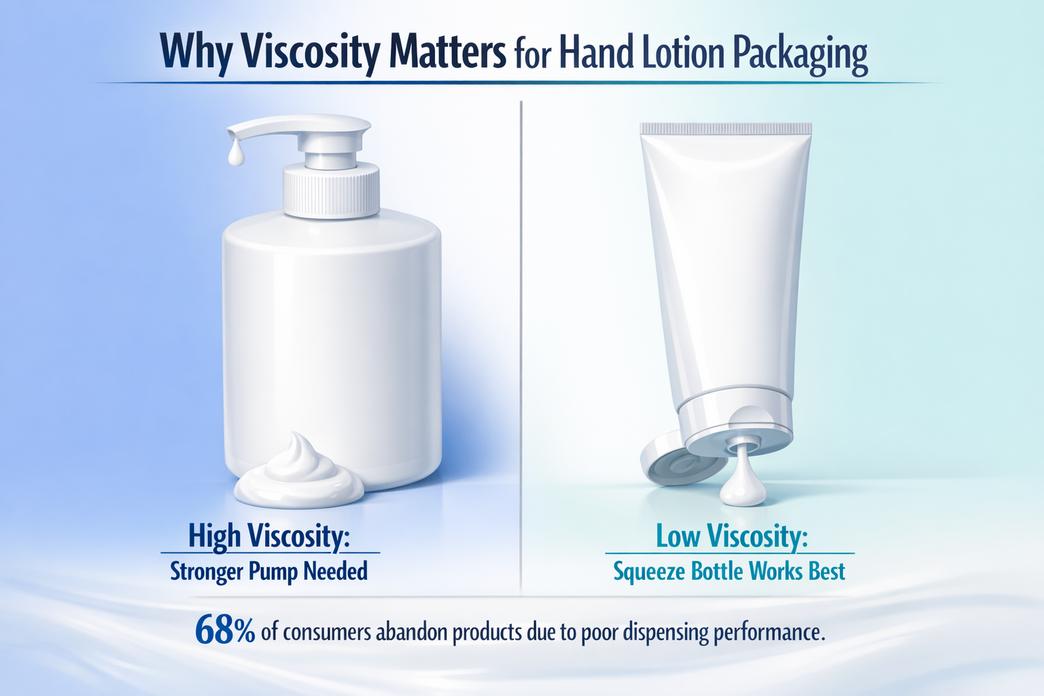
Why Viscosity Matters For Hand Lotion Packaging
Getting your hand lotion containers right isn’t just about looks—it’s about how the product flows and feels. Here’s why thickness changes everything.
Understanding the Impact of Viscosity on Lotion Dispensers
Thicker or thinner lotions behave very differently inside a container. That’s where viscosity steps in:
A. How viscosity affects dispensing:
1. High-viscosity lotions move slower, needing stronger dispensing mechanisms like pumps with wider nozzles.
2. Low-viscosity formulas flow faster, often working better with gravity-fed tubes or squeeze bottles.
B. Matching packaging to formula consistency:
- Thick creams? Go for airless pumps or jars that support dense textures without clogging.
- Lightweight lotions? Flip-top caps and squeezable tubes keep things mess-free and smooth.
C. User experience matters too:
• If you’ve ever fought with a pump that won’t give up its contents, you’ve seen bad packaging functionality firsthand.
• The right combo of tube material, pump mechanics, and formula thickness can make or break customer satisfaction.
Smart brands test lotion flow under different conditions to fine-tune their pump design, ensuring every press delivers just enough without spitting or jamming.
Why Lotion Thickness Determines Packaging Choices
The thicker the lotion, the more it resists movement—which totally changes how it should be packaged.
- Light lotions with low resistance pair well with PET bottles topped by disc caps—great for fast-flowing formulas.
- Dense butters need wide-mouth jars that protect product integrity while allowing easy scooping.
- Sprayers? Only for ultra-thin body mists or toners—not your average cream-based moisturizer.
“According to Mintel’s 2024 Global Beauty Report, over 68% of consumers abandon products due to poor dispensing performance.”
Choosing packaging based on lotion rheology isn’t optional anymore—it’s part of smart material selection, better usability, and even brand loyalty through clever packaging innovation.
So yeah, if you’re planning anything from creamy moisturizers to watery after-sun gels—know this: your container can either elevate your product…or totally tank it.
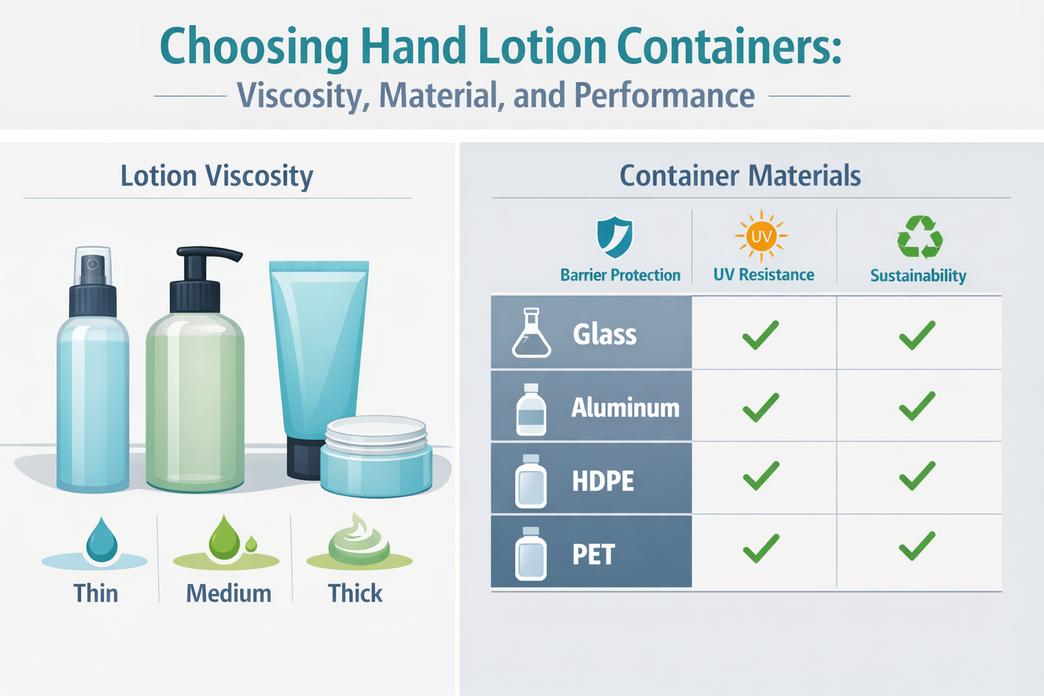
Types Of Hand Lotion Containers For Various Viscosities
Choosing the right container for hand lotion isn’t just about looks—it’s about formula flow, hygiene, and how people actually use it.
Best Containers for Thin, Watery Lotion Formulas
Thin lotions are tricky little things. They run fast and leak easily if you don’t lock them down right. That’s where these containers shine:
- Spray bottles with fine mist nozzles—perfect for even distribution on the go.
- Flip-top caps on soft squeeze bottles, giving you just enough without waste.
- Compact dropper bottles, ideal for targeted application or travel-size formulas.
These types of packaging help prevent spills while keeping watery formulas easy to apply and mess-free. Choose containers between 100ml–250ml to keep things light and portable.
The Ideal Bottles for Medium Consistency Hand Lotions
When you’re working with medium-thick cream textures, you’ve got more wiggle room—but still need control.
• A classic choice is a pump bottle, especially on a sturdy oval or cylindrical HDPE base.
• If you’re going eco-friendly, try refillable airless pumps—they protect your formula from oxidation.
• Want something simple? Go with a disc-top cap paired with a semi-rigid bottle that flexes just enough.
Medium viscosity products like daily-use creams benefit most from packaging that balances ease of use and formula protection.
Thick Lotion Containers: Tube, Jar, or Pump?
Thicker creams call for stronger solutions:
- Tubes work best when squeezing out rich body butters or balms.
- Wide-mouth jars allow full scooping access—especially handy when using thicker textures in colder seasons.
- Pumps? Yes—but only if they’re made for heavy-duty dispensing.
Each option has its perks:
→ Jars = max access
→ Pumps = cleaner hands
→ Tubes = travel-ready
Match your texture to the container’s strength so users don’t have to fight their lotion out every time.
How Container Material Affects Lotion Formula Performance
Material matters more than most folks think—it can make or break your product’s shelf life and stability.
| Container Material | Barrier Protection | UV Resistance | Sustainability Rating |
|---|---|---|---|
| Glass | High | Excellent | Moderate |
| Aluminum | Very High | Good | High |
| HDPE Plastic | Medium | Fair | High (if PCR used) |
| PET Plastic | Low | Poor | Moderate |
Using materials like glass or coated aluminum protects sensitive ingredients from light and air exposure. On the flip side, recycled content in HDPE plastic supports eco goals while still being durable enough for everyday use. Get smart about what holds your lotion—it directly affects how long it stays fresh and effective.
Hand lotion containers aren’t one-size-fits-all—the formula’s thickness, user habits, and material compatibility all play into what works best.
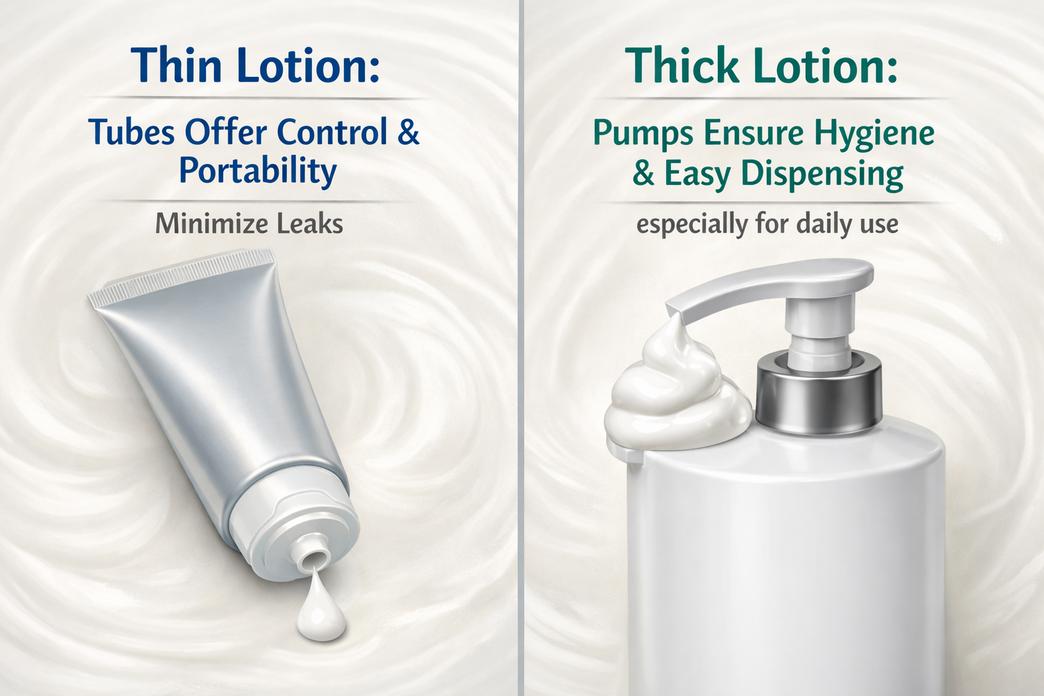
Comparing Tube Vs. Pump For Thick Vs. Thin Lotion
Picking the right style of hand lotion container isn’t just about looks—it can totally change how your product feels and works.
Tube vs. Pump: Dispensing for Thin Lotion Consistency
When dealing with a thin lotion, the container’s design has to help control flow, not make a mess. Here’s how that plays out:
A. Flow Behavior & Viscosity Matching
- Low-viscosity lotions behave more like liquids than creams.
- These formulas often slip through pump dispensers too quickly, leading to spillage or overuse.
- Flip-top tubes or disc caps allow better portion control by giving users more say in how much they squeeze out.
B. Leakage Risks with Pumps
- Pumps aren’t great at sealing off runny formulas.
- If stored sideways, leakage is common.
- Airless pumps may reduce this but cost more and add complexity.
C. Portability & Storage
- Tubes:
- Lightweight and flexible
- Easy to toss into bags without worrying about leaks
- Pumps:
- Bulkier, less travel-friendly
“Consumers are increasingly seeking packaging that minimizes waste while maximizing ease of use,” according to Mintel’s Global Packaging Trends Report 2024.
In short, tubes win when it comes to low-viscosity products—they’re cleaner, simpler, and just make more sense for everyday use.
Choosing Between Tube and Pump for Thick Lotion
A rich, buttery thick lotion needs packaging that works with—not against—its texture.
• Squeezable tubes with soft-touch coatings offer grip support when pressing out dense creams. That tactile feel really matters during daily routines.
- Pumps designed for high viscosity formulas usually come with wider nozzles or piston mechanisms:
- These allow better suction power
- No need to shake or tilt the bottle
- When choosing between tube or pump:
- Think about frequency of use—pumps are great for daily routines like after-shower moisturizing.
- Consider hygiene—pumps reduce hand contact inside the container.
- Product extraction is another factor:
- Tubes let you roll them up near-empty
- But pumps often leave residue unless they’re airless
The best call? Match your container to both the formula’s thickness and your audience’s habits using smart container design choices tailored around real-world user experience with different types of hand lotion containers.
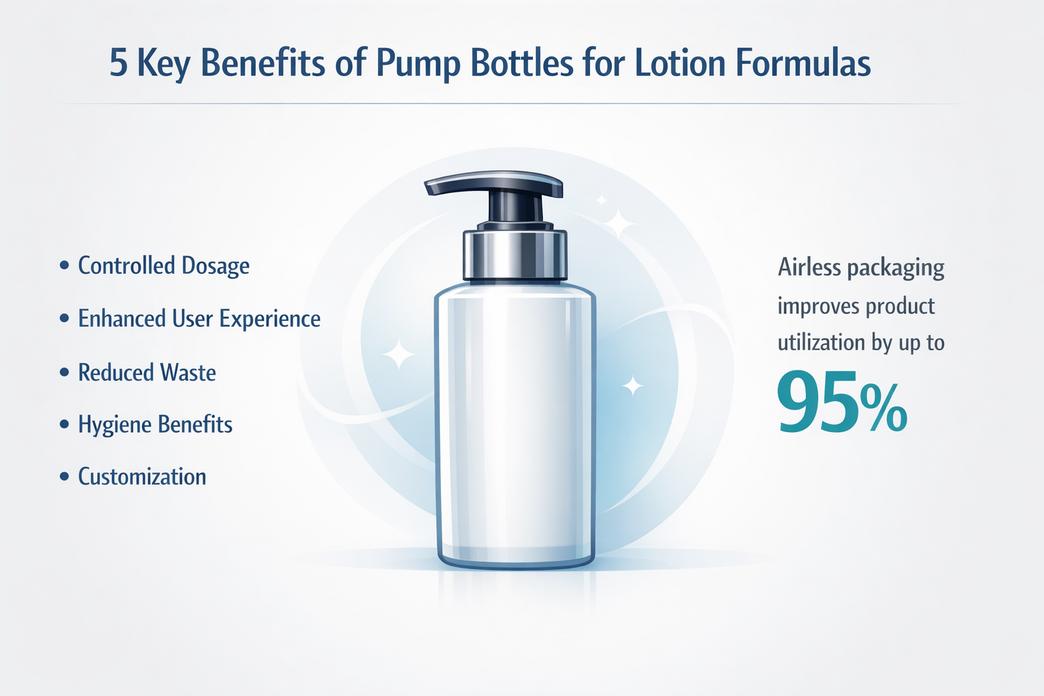
5 Key Benefits Of Pump Bottles For Lotion Formulas
Pump bottles aren’t just about aesthetics—they’re designed for performance, hygiene, and smart use of your favorite hand lotion containers.
Consistency Control: Pumps Versus Other Dispensers
- Pumps are champs when it comes to controlling flow.
- No more guessing or squeezing too hard—just press and go.
- Especially helpful with thicker lotions that resist movement.
- Controlled dosage means less mess and no waste.
- Works great across a range of lotion viscosity, from creamy to dense.
- Unlike a squeeze bottle, pumps won’t shoot out excess product.
Compare this to a jar or tube—you’re digging around or over-squeezing every time.
With a pump-style dispensing mechanism, the lotion flows evenly, giving you consistent results every time you moisturize. That’s not just practical—it’s efficient skincare.
How Pump Dispensers Enhance User Experience
• One-hand use? Yes, please—especially when you’re multitasking in the morning rush.
• The smooth pump action gives a clean, mess-free application without dripping on counters.
- It’s all about ease—press once for just enough lotion.
- Portable enough to toss into bags without leaks.
- The design supports both style and function in daily routines.
You’ll love how it simplifies your self-care ritual while keeping things neat and tidy.
Reducing Waste with Pump Bottles for Lotion
- A pump bottle helps you squeeze out nearly every drop—no more shaking upside down like it’s ketchup.
- Airless pumps reduce oxygen exposure and help with full evacuation of contents.
- Less spillage equals less money wasted on unused product.
“According to Mintel’s 2024 Packaging Insight Report, airless packaging can improve product utilization by up to 95%, significantly reducing environmental impact.”
That makes pump-based hand lotion containers not only smarter but also greener choices for everyday skincare lovers.
The Hygiene Benefits of Pump Dispensers
• No fingers in jars = fewer germs in your moisturizer!
• Keeps the formula safe from air exposure that can degrade active ingredients fast.
- An airless pump prevents bacteria buildup inside the container.
- You’re not double-dipping—so there’s zero risk of cross-contamination.
- Keeps your skin products fresher longer by preserving their original integrity.
If you’ve ever worried about what might be lurking under jar lids, this is your solution for clean skincare delivery every single time.
Customizing Pump Bottles for Branding and Sustainability
A brand’s vibe starts at first glance—and nothing says “we care” like thoughtful packaging:
- Use custom colors or finishes that reflect your brand identity.
- Choose eco-conscious materials like PCR plastic or refillable designs.
- Add silk-screened logos or recyclable labeling options to stand out on shelves.
You get full control over the visual language while using materials that align with sustainability goals—a win-win if you’re launching or relaunching a line of premium hand lotion containers tailored to modern values and aesthetics.
Practical Tips For Selecting Lotion Containers Based On Formula
Picking the right container for your lotion isn’t just about looks — it’s about making sure your formula works, lasts, and feels great to use.
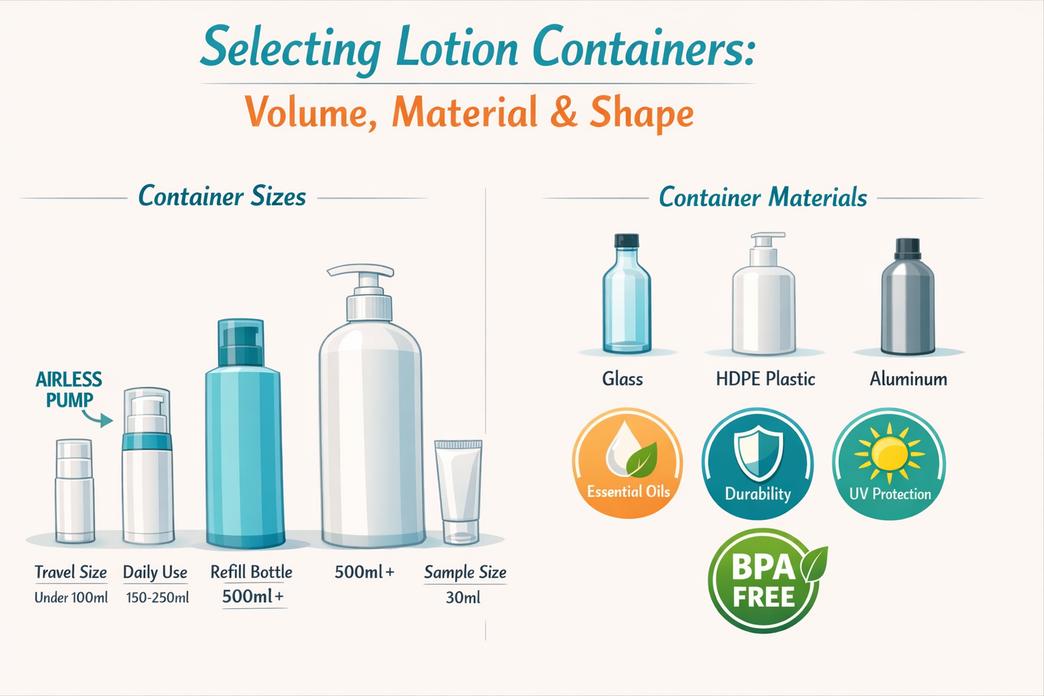
Choosing the Right Volume Capacity for Your Lotion Formula
• Travel size bottles under 100ml are perfect for on-the-go routines.
• 150ml to 250ml hits the sweet spot for daily use.
• Bulk up with 500ml+ containers when aiming for refillable, family-sized options.
- Sampling a new product? Go with a 30ml or smaller sample size—easy to distribute and test.
- Selling in spas or salons? Larger sizes reduce waste and refill costs over time.
Single-use sachets work well in hotels but aren’t eco-friendly long-term.
Whether you’re bottling shea butter-rich blends or lightweight aloe lotions, matching volume to purpose keeps customers happy without overpackaging.
Material Matters: Best Containers for Preserving Lotion Quality
• Go with glass if your lotion includes essential oils—it won’t react like plastic might.
• Lightweight yet sturdy, HDPE plastic is ideal for daily-use lotions that need durability on the shelf.
• Choose an aluminum container when UV protection matters—especially for formulas with light-sensitive actives.
- PET offers crystal clarity but may not withstand high heat during shipping.
- Look out for containers labeled as BPA-free, especially if you’re marketing to health-conscious buyers.
According to Mintel’s Global Packaging Trends 2024 report, “Consumers now expect packaging that protects both product integrity and environmental impact.”
UV-blocking finishes and air-tight closures like an airless pump extend shelf life while reducing oxidation risks—great news if you’re working with plant-based ingredients.
Tailoring Container Shape and Finish to Your Lotion’s Needs
Oval-shaped bottles offer better grip than round ones—especially handy in humid bathrooms where slippery hands are common. A matte finish adds visual appeal while hiding fingerprints and smudges, which glossy finishes tend to highlight more.
• A squeezable tube works best for thick creams needing precise control during application.
• A wide-mouth jar suits rich body butters but isn’t ideal if hygiene is a top concern—unless paired with a spatula or inner lid seal.
- Use a tall cylindrical bottle with a smooth pump dispenser when elegance meets function on vanity shelves.
- Add a flip-top cap when convenience trumps aesthetics—like gym bags or travel kits.
Ergonomics matter too: don’t overlook how users interact daily with their container choice—it can make or break repeat purchases of your hand lotion containers line-up.
Top 3 Lotion Packaging Mistakes And How To Avoid Them
Lotion packaging can make or break a product. Here’s how to avoid the biggest slip-ups with your hand lotion containers.
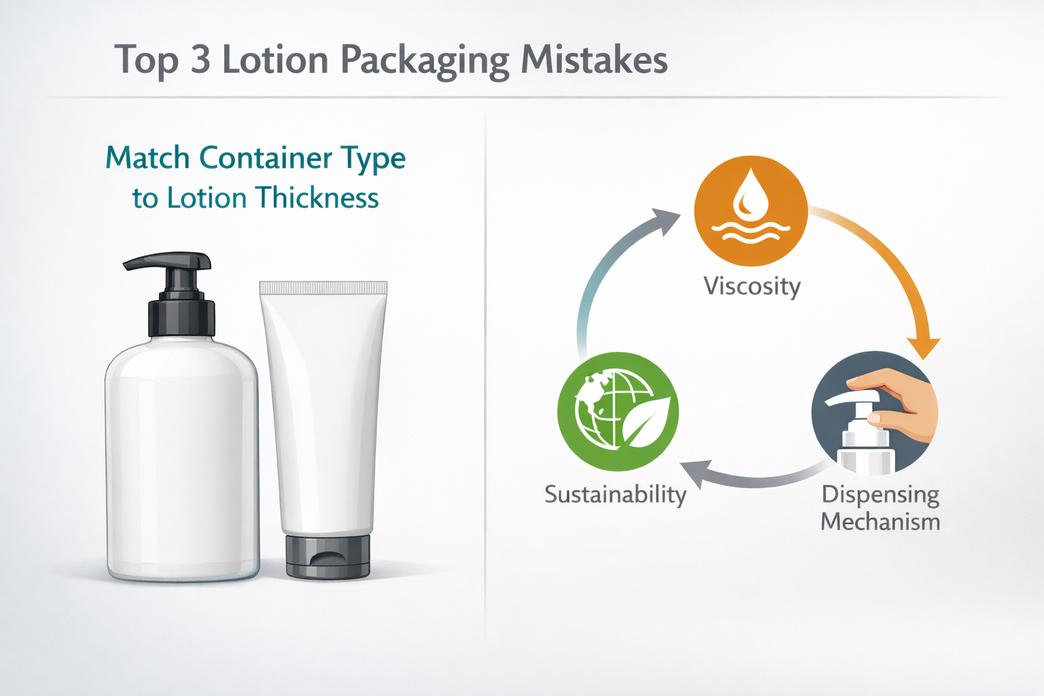
Mistake 1: Overlooking the Impact of Viscosity on Packaging
Choosing the wrong container for thick or runny lotion isn’t just annoying—it kills usability. Here’s how to get it right:
A. Match container type to lotion thickness
- If your formula is thick, go with a pump or jar—forget flip tops.
- Lighter lotions? Squeeze tubes or disc caps are your best friends.
B. Understand how viscosity affects flow
- Thicker lotions resist movement, so you need wider necks and airless pumps.
- Thin lotions can leak in jars not designed for liquid flow.
C. Consider user experience and shelf life
- Bad product flow leads to frustration—no one wants to shake a bottle endlessly.
- The wrong container shape can make it hard to scoop or squeeze out product cleanly.
- Ensure your packaging material supports long-term formula consistency, especially when heat or cold comes into play.
Getting this balance right means fewer complaints and better reviews for your hand lotion containers.
Mistake 2: Selecting the Wrong Dispensing Mechanism for Lotion Type
The applicator matters more than people think—it shapes how users feel about your product from day one.
A. Start with the lotion’s texture
- Light formulas work great in a spray bottle, especially if fast absorption is key.
- Medium-weight creams do well in a squeeze tube, offering control without mess.
- Heavy creams? Go straight for a sturdy pump dispenser or classic jar packaging.
B. Think about where and how it’s used
- Travel-friendly? Use compact tubes with secure closures like a tight flip-top cap.
- Spa-like luxury at home? A wide-mouth jar adds that premium touch.
Each choice affects not only ease of use but also overall user convenience, making sure every drop gets used efficiently during daily product application routines.
Mistake 3: Failing to Consider Sustainability Features in Packaging
Eco-conscious buyers notice what you’re using—and what you’re wasting. Don’t let poor choices turn them off.
• Skip multi-layer plastics that aren’t recyclable—opt for mono-materials instead. They simplify sorting and improve recyclability rates across regions.
• Choose packaging made from high levels of recycled content, ideally post-consumer resin (PCR). It reduces demand on virgin materials while keeping quality high.
• Offer smart refills using lightweight pouches that fit into durable base bottles—this cuts down on bulk waste while appealing to eco-minded shoppers looking for real change.
Refillable options paired with biodegradable or low-impact materials help reduce both visual clutter and actual carbon footprint, giving your brand an edge among buyers who care deeply about their environmental impact—and expect their favorite brands to do the same when designing their next line of sleek, sustainable hand lotion containers.
FAQs about Hand Lotion Containers
What factors decide the ideal dispensing mechanism for different lotion textures?
Soft and thin lotions come alive with a fine mist sprayer or disc-top cap; they glide through PET plastic bottles like watercolor. Medium-density blends feel natural in pump dispensers placed on cylindrical or oval HDPE bottles, balancing flow without splashback. Thick creams prefer slow release from lotion pumps fitted to Boston round containers or squeezable tubes wrapped in soft-touch coating—the closer it feels to skin movement, the better the experience.
How does container material affect shelf life and formula stability?
Each material tells its own story: HDPE plastic shields against moisture loss; PET plastic keeps clarity while resisting impact; PP plastic offers chemical calmness for longer preservation. Glass speaks of purity—cool, inert, timeless—and Aluminum guards heavier serums with invisible armor against oxidation. Together they serve comfort before luxury.
Which finishes and decoration options truly enhance brand character on hand lotion packaging?
Surface choice becomes personality—Matte finish gives trustful elegance under fingertips; Glossy finish radiates confidence for vivid colors made by hot stamping or UV coating; Frosted finish whispers minimal charm found mostly in premium jars. Techniques like silk screen printing or custom color matching turn simple vessels into emotional messengers of brand care.
Can refillable bottle designs offer sustainability along with ease of use?
Refillable containers built from PCR plastic or lightweight mono-material design keep waste low yet deliver modern grace. Pump dispensers allow repeated cycles without drips, while recyclable components return naturally to production lines—a quiet rhythm between human touch and environmental respect that makes every refill an intentional gesture toward longevity.
References
[Statista - Retail sales of hand and body lotion in the U.S. - https://www.statista.com/statistics/259230/us-retail-sales-of-hand-and-body-lotion/]
[Mintel - Global Beauty and Personal Care Market News - https://www.mintel.com/beauty-and-personal-care-market-news/]
[Mintel - Global Packaging Trends - https://www.mintel.com/packaging-market-news/global-packaging-trends/]