Benefits of Purchasing Empty Cream Containers Wholesale
Ever paid retail price for packaging and felt like your profits just packed their bags and walked out the door? You’re not alone. For anyone in cosmetics or skincare, buying empty cream containers wholesale is like switching from bottled water to a filtered tap—same result, way less spend.
But here’s the kicker: bulk buying doesn’t mean boring. From smoky glass jars to matte black bamboo lids, customization options can make even your moisturizer look ready for its Vogue close-up.
So if you’re juggling tight margins, wild lead times, and big branding dreams—grab that coffee and let’s talk about how smart packaging choices aren’t just pretty… they pay off.
Key Points in the Smart Buy Symphony: Empty Cream Containers Wholesale Edition
→ Bulk Pricing Power: Buying empty cream containers wholesale reduces unit costs substantially by leveraging economies of scale. (Emerald)
→ Material Matters: Choose from cost-effective HDPE, recyclable PET, elegant glass, or natural bamboo to match price point and brand ethos.
→ Customization Counts: Elevate brand appeal with closures, colors, and decorative options like tamper-evident seals, hot stamping foil accents, or custom mold engraving.
→ Certifications Are Key: Partner with ISO 9001 manufacturers and GMP-guided facilities to ensure consistent quality and regulatory readiness.
→ Fast Fulfillment Wins: Avoid costly launch delays by sourcing in-demand sizes (e.g., 30 ml travel bottles, frosted black jars) that are available for immediate shipment.
→ Storage Smarts: Use climate-controlled environments for glass and batch labeling for smooth inventory turns.
Big Cost Savings When Buying Empty Cream Containers Wholesale
Looking to cut packaging costs without compromising quality? Smart bulk buying slashes per-unit expense through supplier tiers, standardized molds, and freight efficiency—classic economies of scale at work. (Emerald)
High-density polyethylene plastic jars for budget-friendly orders
Bulk buyers love high-density polyethylene because it’s tough, light, and economical—attributes borne out in HDPE technical data (impact resistance, low moisture uptake, chemical resistance). (Curbell Plastics)
When shopping empty cream containers wholesale, this material adds serious value—especially when scaling seasonal runs.
50 ml standard packaging: optimal volume for discounts
A 50 ml jar hits the sweet spot between consumer convenience and manufacturer efficiency, unlocking common price breaks for standard tooling and faster line speeds.
Screw-top jar lids in opaque white for cost-effective sealing
Classic screw-top closures in opaque white keep things minimal, UV-friendly, and leak-resistant—ideal when every cent matters at wholesale volumes.
ISO 9001 manufacturers for affordable quality
Working with an ISO 9001–certified manufacturer bakes quality into every stage and helps avoid costly returns. (See ISO’s overview of the standard’s purpose and scope.) (国际标准化组织)
One trusted name helping brands get there? Topfeelpack—a specialist in airless and jar systems with rapid customization, competitive pricing, and fast delivery.
Bulk Versus Retail Cream Containers
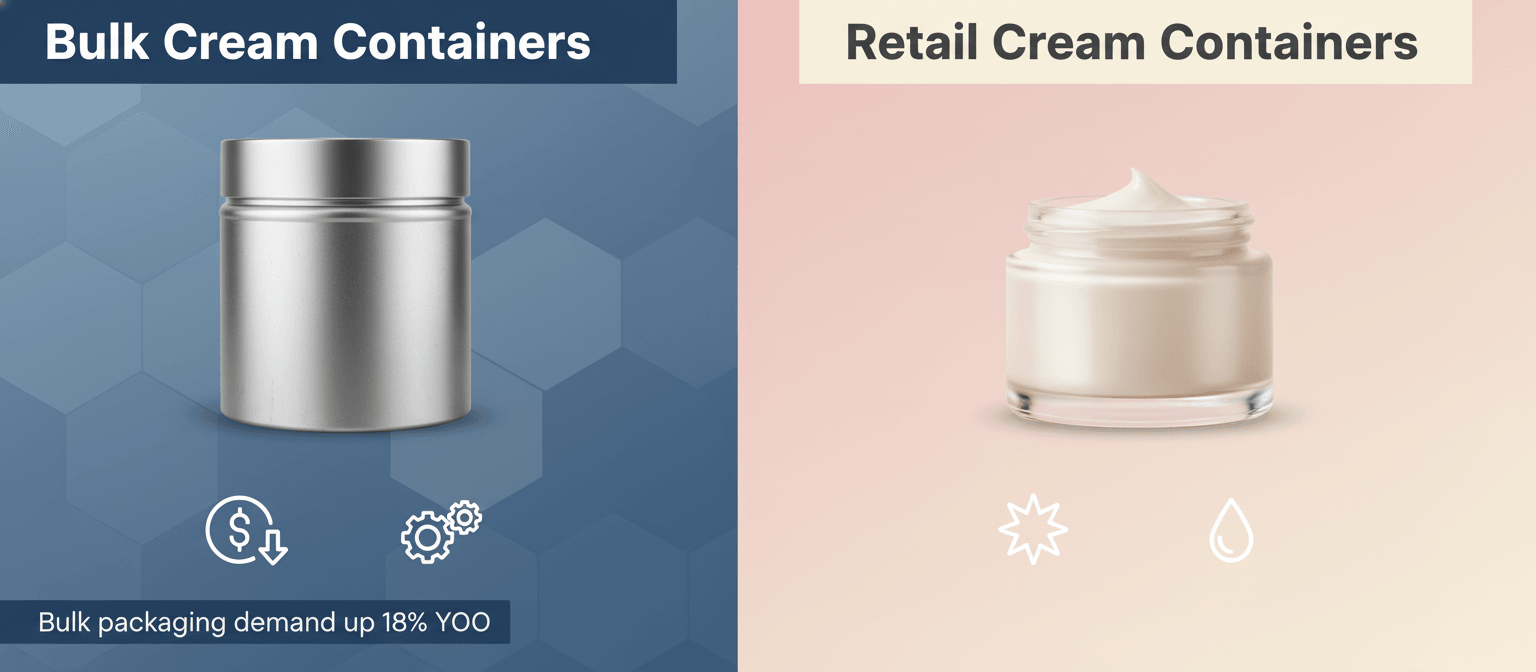
Bulk containers suit scaling brands: lower unit prices, recurring availability, and streamlined logistics. Retail containers emphasize shelf appeal and convenience for personal use.
Types of Cream Container Materials and Sizes
High-density polyethylene plastic in 15 ml sample sizes
HDPE travel testers are resilient, light, and moisture-resistant—perfect for giveaways and subscription boxes. (See HDPE property sheets.) (Curbell Plastics)
Polypropylene copolymer 30 ml travel containers
Polypropylene jars balance chemical resistance and portability, and the 30 ml size fits typical carry-on kits. For U.S. travel packs, align toiletries with TSA’s liquids rule. (运输安全管理局)
Clear soda-lime glass in 50 ml standard packaging
For premium lines, glass is nonporous and impermeable, helping formulas avoid packaging interaction—one reason it dominates luxury skincare. (GPI)
Recyclable PET plastic 100 ml retail volumes
PET offers clarity and durability—and it’s widely recyclable, with an active U.S. recycling ecosystem supported by PETRA. (PET树脂协会)
Eco-friendly bamboo material for 200 ml family sizes
Bamboo-accented designs convey natural credentials while supporting refillable systems.
Grouped Overview (use cases)
Sampling (HDPE) · Travel (PP 30 ml) · Retail (glass 50 ml) · Sustainable retail (PET 100 ml) · Family-size eco (bamboo 200 ml).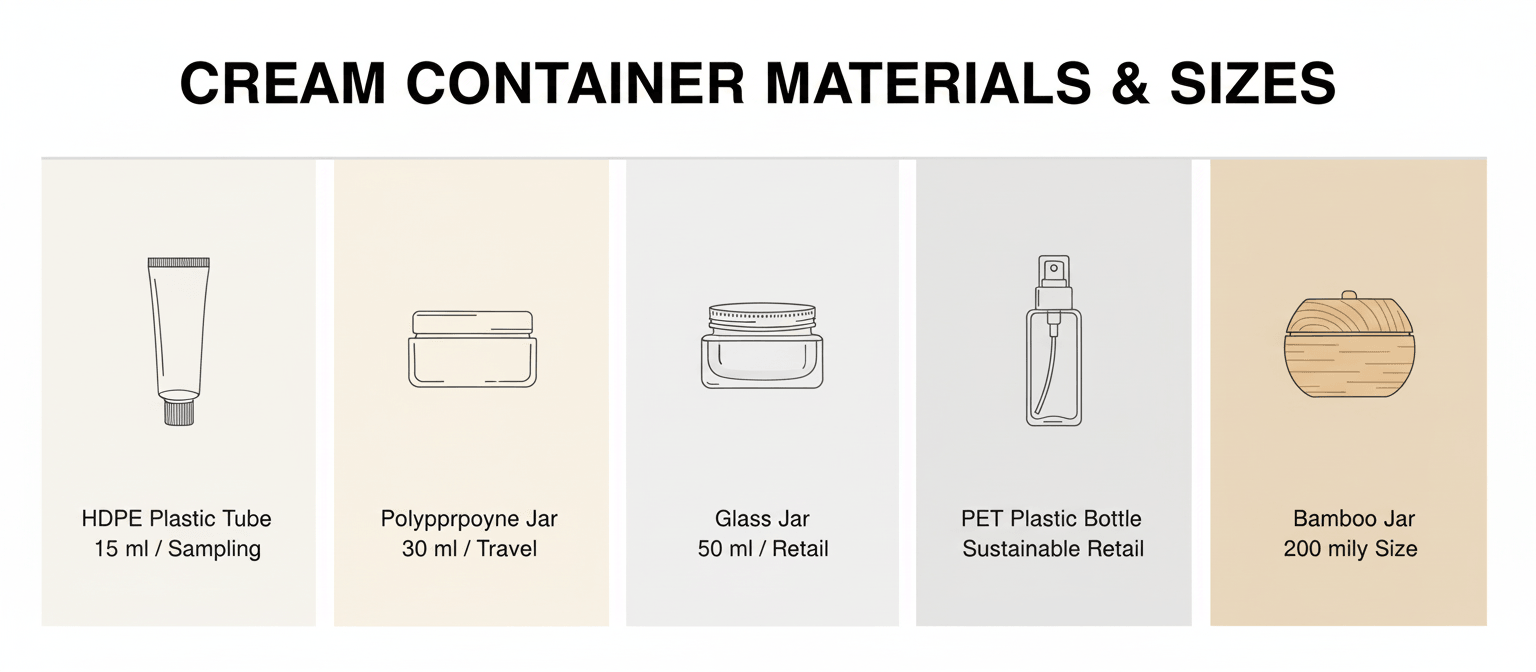
Three Steps to Order Empty Cream Containers Wholesale
1) Select double-walled jars or airless pumps (by formula)
If you’re going luxe, choose double-walled cream jars. For oxygen-sensitive actives, airless pump bottles keep formulas fresher by minimizing air contact; leading suppliers note airless technology helps prevent oxidation and contamination. (Aptar)
Tip: Align container choice with viscosity, brand positioning, and shelf presence; many brands use both types across SKUs.
2) Customize closures, colors, and decorations
Security matters: tamper-evident systems like induction heat sealing liners help deter tampering and leakage, while hot stamping and screen printing elevate perceived value. (Bain)
3) Finalize quantities and verify certifications & regulations
Lock in MOQs and request ISO 9001 documentation. For U.S. market shipments, ensure materials and labeling align with FDA cosmetics regulations (cosmetics are FDA-regulated but not pre-approved) and implement cosmetics GMP via ISO 22716. (U.S. Food and Drug Administration)
Packaging Delay? Wholesale Empty Cream Containers Offer Instant Availability
Stock clear 30 ml travel bottles that conform to TSA guidelines and fast-ship frosted black jars with induction heat sealing liners so you can fill and go. For medical-grade balms, prioritize GMP-guided facilities (ISO 22716). (运输安全管理局)
How to Store Empty Cream Containers Wholesale
Organizing acrylic lotion dispensers
Group by size, then material; keep fast-moving travel pumps up front and track with shelf-level labels.
Climate-control tips for clear soda-lime glass jars
Keep glass dry, cool, and away from direct sunlight; avoid stacking pressure. Industry storage guides recommend dry, ventilated, climate-controlled warehousing to reduce breakage and staining. (Glassbel)
Label 50 ml and 100 ml batches for fast inventory turns
Barcodes + color-tagging + weekly audits keep counts accurate when fulfillment ramps.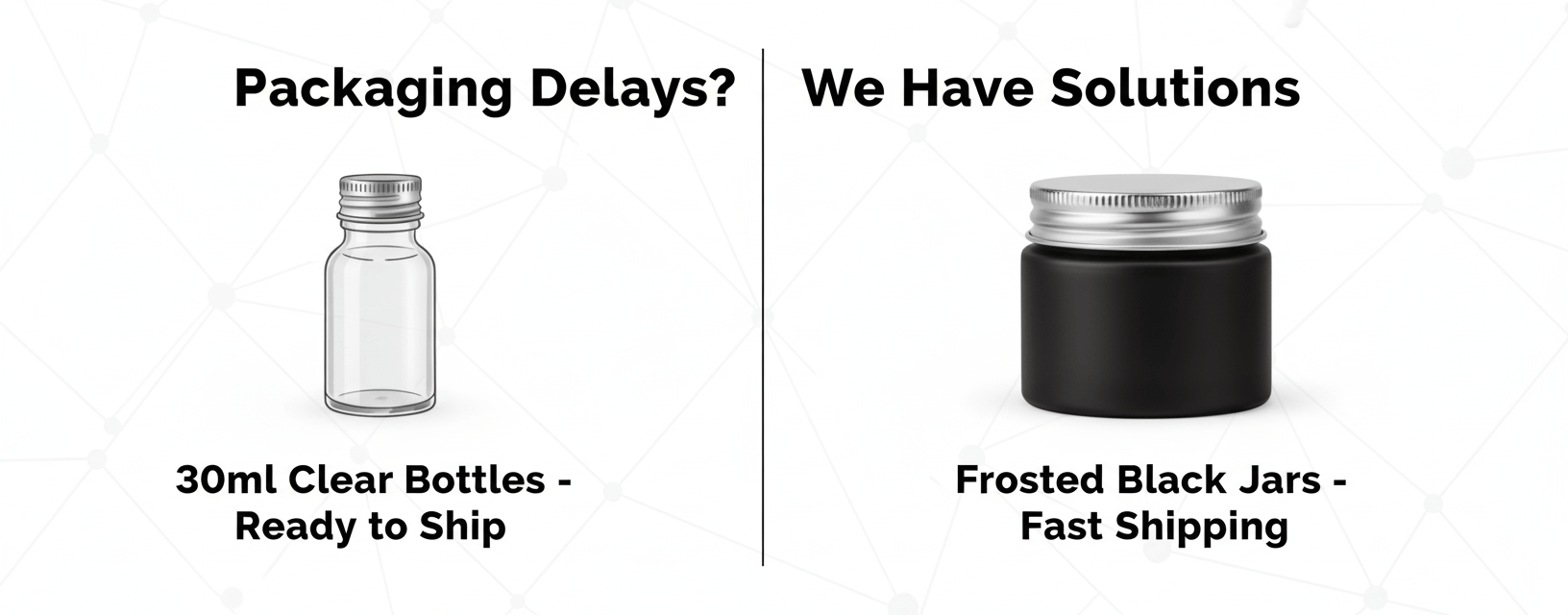
FAQs about Empty Cream Containers Wholesale
What materials make the most sense in bulk?
HDPE is tough and economical; PP travels well; PET provides clarity and recyclability for retail-ready jars. (PET树脂协会)
Airless pump or double-walled jar?
For oxygen-sensitive formulas, airless pumps minimize air exposure; double-walled jars insulate and project a premium feel. (Aptar)
Can we personalize closures and design?
Yes—mix lids, induction liners, and finishes (screen, foil) to match your brand system. (Bain)
Are sustainable options stylish?
Bamboo details, rPET, and refillables look premium and reduce footprint.
How do we avoid chaos in storage?
Dry, temperature-controlled zones; dividers; clear labels by size/material.
References
- Economies of Scale – Investopedia — https://www.investopedia.com/terms/e/economiesofscale.asp
- Cosmetics Q&A: Why Are Cosmetics Not FDA-Approved? – FDA — https://www.fda.gov/cosmetics/resources-consumers-cosmetics/cosmetics-qa-why-are-cosmetics-not-fda-approved
- ISO 22716:2007 – Cosmetics — Good Manufacturing Practices (GMP) – ISO — https://www.iso.org/standard/36437.html
- 3-1-1 Liquids Rule – TSA — https://www.tsa.gov/travel/security-screening/whatcanibring/items/3-1-1-liquids-rule
- Induction Sealing: Benefits & Tamper Evidence – Enercon — https://www.enerconind.com/enercon-induction-sealing/what-is-induction-sealing/benefits
- HDPE Technical Data – Curbell Plastics (PDF) — https://www.curbellplastics.com/wp-content/uploads/2022/11/Curbell-Plastics-HDPE-Data-Sheet.pdf
- PET Resin Association (PETRA) – PET & Recycling Facts — https://petresin.org/
- Facts About Glass – Glass Packaging Institute — https://www.gpi.org/facts-about-glass
- Aptar Beauty – Nouvelle Airless (oxidation & discoloration protection) — https://aptar.com/products/beauty/nouvelle-customizable-airless-packaging/
- Glass Delivery, Storage & Handling (climate guidance) – Glassbel (PDF) — https://m.glassbel.com/upload/iblock/495/GTB001_Delivery%20storage%20and%20handling.pdf
- Glass Handling & Safety Guide – Viridian (PDF) — https://www.viridianglass.com/wp-content/uploads/2024/03/Viridian-Glass-Handling-and-Safety-Guide.pdf