The 7 Key Steps to a Winning Beauty Care Business Plan for Startups 2026
Packaging can make or break your beauty care business plan—because looking luxe, not “gas station lip balm,” sells at scale.
By 2026, launching a beauty brand isn’t just about mixing shea butter with fairy dust and hoping it sells. Crafting a killer beauty care business plan means knowing your audience, budgeting like your grandma taught you, and—yes—picking packaging that doesn’t scream gas station lip balm. With Gen Z canceling anything plastic-looking and retailers asking for “clean vibes only,” strategy beats guesswork every time.
Truth is, the wrong bottle can sink the right product. You could have gold in a jar, but if it looks like a dollar store clearance item? Game over.
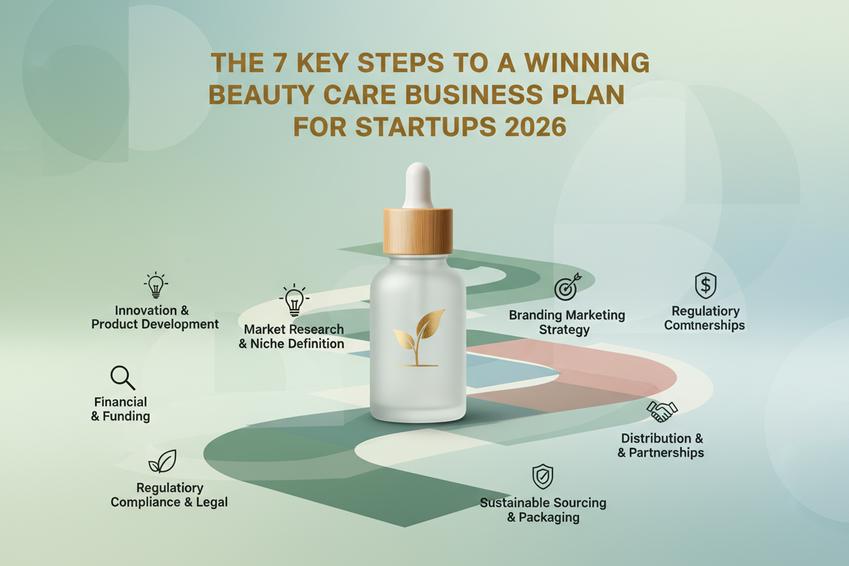
Essential Insights for a Winning Beauty Care Business Plan
- Market Analysis: Understand consumer trends and preferences to tailor products effectively.
- Target Demographics: Identify your ideal customer’s characteristics to create resonant marketing strategies.
- Budgeting Essentials: Accurately estimate costs for ingredients and packaging to forecast profits realistically.
- Revenue Projections: Analyze potential earnings based on pricing strategies and competition for sustainable growth.
- Brand Identity: Develop a unique selling proposition through thoughtful packaging and design choices.
- Quality Ingredients: Prioritize eco-friendly and high-quality materials for your products to attract conscious consumers.
- Supplier Selection: Choose certified GMP providers to ensure safety and compliance in your product sourcing.
- Supply Chain Management: Implement strategies for timely delivery to avoid production delays and optimize operations.
Essential Steps In Crafting A Winning Beauty Care Business Plan
Nailing your beauty care business plan starts with knowing your crowd, pricing right, and keeping costs lean but smart.
Market Analysis: A Deep Dive into Consumer Trends
Understanding what’s hot—and what’s not—in the beauty biz is half the battle won. You’ve got to track industry trends, dig into consumer behavior, and spy on your competitive landscape without blinking.
- Check out what sells fast—clean beauty? K-beauty? Men’s skincare?
- See how big players shift gears when trends change.
- Watch indie brands for innovation—they’re often ahead of the curve.
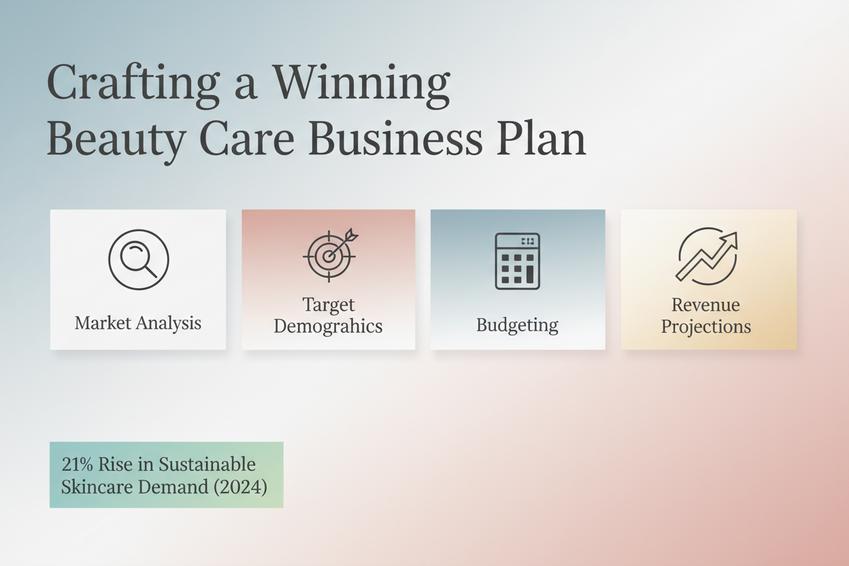
“In 2024, Gen Z consumers drove a 21% rise in demand for sustainable skincare,” according to McKinsey & Company’s latest report on the global beauty industry.
Now blend that insight with a solid SWOT analysis—your strengths, weaknesses, opportunities, threats—and you’ll get a clear picture of where to steer your product line. This part sets the vibe for everything else in your beauty care business plan.
Identifying Target Demographics: Understanding Your Ideal Customer
You can’t sell skincare to everyone. But you can win big by zoning in on folks who actually want it—and need it now.
Age Groups & Preferences:
- Gen Z wants cruelty-free and bold packaging.
- Millennials dig anti-aging serums that multitask.
Income Levels:
- Budget-conscious buyers prefer value packs.
- Premium buyers crave exclusivity and minimalism.
Geographic Location:
- Urban dwellers buy more often online.
- Suburban shoppers still love retail touchpoints.
Lifestyle Tags: • Gym-goers = sweat-proof makeup • Busy moms = quick-fix skincare kits • Digital nomads = TSA-friendly packaging
Build an ideal customer profile, then tailor products that feel like they were made just for them. That’s how you turn browsers into loyal fans within your beauty care business plan strategy.
Budgeting Essentials: Costing Ingredients and Packaging Variants
Let’s talk money—the unglamorous but vital part of building any solid beauty brand foundation. If you don’t know where every dollar goes, you’re flying blind.
Raw Materials: • Organic oils vs synthetic bases—price gaps are huge • Active ingredients like retinol or niacinamide cost more but work better
Packaging Costs: • Glass jars look luxe but weigh more = higher shipping fees • Recyclable plastics are cheaper but may not suit premium branding
Supplier Negotiation Tips: • Order in bulk to lower unit costs • Build long-term relationships for loyalty discounts
Production Costs Breakdown: • Labor hours per batch • Equipment maintenance • Testing & compliance fees
Keep tabs on all these using real-time inventory tools like Topfeelpack’s integrated supply system—it streamlines both costing and scaling inside any beauty care business plan framework you build.
Revenue Projections: Estimating Earning Potential with Competitive Pricing
This is where things start looking exciting—how much cash could your brand realistically bring in?
Sales Forecast Factors:
- Monthly units sold × average price = base revenue
- Add-ons like subscription boxes or bundles boost margins
- Seasonal spikes during holidays can double earnings
Pricing Strategy Options:
- Penetration pricing if you’re new on shelves
- Value-based pricing if you’re solving niche problems
Break-Even Analysis Snapshot: If monthly fixed costs are $8,000 and profit per unit is $10—you’ll need to sell at least 800 units/month just to break even. Anything above that is pure growth territory!
Your goal? Balance profitability while staying competitive enough to grow market share fast without burning out budgets or undercutting yourself—a crucial move when writing a future-proof beauty care business plan.
Building A Brand Identity: Unique Selling Proposition
A killer beauty care business plan doesn’t just rely on good products—it thrives on unforgettable branding choices that speak volumes before a word is said.
Choosing Packaging Types: Glass Bottles vs. Plastic Jars
• Glass bottles scream high-end, but they’re heavier and pricier to ship. • Plastic jars, on the flip side, cut costs and resist shattering—super practical for fast-moving goods. • Sustainability matters: recyclable glass appeals to eco-conscious shoppers, while PET-based plastic can also be recycled if labeled properly.
Now, think vibe—if your brand leans luxury spa or boutique skincare, go with sleek glass packaging. But if it’s more everyday, trendy, and price-sensitive? Durable plastic jars are your best bet for mass appeal.
In short bursts: – Premium serums? Think frosted dropper-top bottles. – Budget-friendly creams? Lightweight wide-mouth jars win out. – Want refillable options? Both materials offer solutions when paired with smart design.
Whatever you pick should echo your brand voice loud and clear—and Topfeelpack has both bases covered with customizable options tailored to your exact vibe.
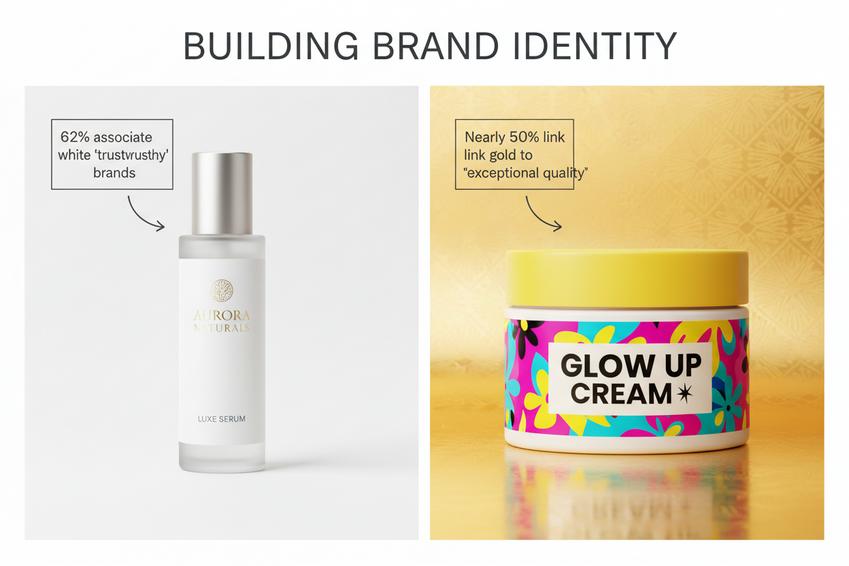
Color Psychology in Branding: Opaque White vs. Glossy Gold
- Clean & Calm – Brands pushing a minimalist identity often lean into opaque white, giving off vibes of purity and simplicity that align perfectly with clean beauty trends.
- Flash & Flair – If you’re targeting prestige markets or high-glam segments of the beauty care business plan, nothing turns heads faster than rich, reflective glossy gold finishes.
- The Mix Game – Blending these two creates contrast that draws eyes without overwhelming them—white as the base tone and gold as an accent can work wonders on shelf presence.
According to Mintel’s 2024 Global Beauty Report, over 62% of consumers associate white packaging with “trustworthy” brands, while nearly half link gold tones to “exceptional quality.” That emotional pull? It’s powerful stuff in consumer decision-making.
Choose colors not just for looks—but for how they make people feel about what’s inside the jar or bottle.
Decoration Techniques: Hot Stamping vs. Silk Screening
⭑ Shine vs Flexibility – Want high-impact luxe finishes? Go for hot stamping, which adds metallic shine that’s almost impossible to ignore under store lights.
⭑ Detail-Oriented? – If you need intricate multi-color designs across curved surfaces like round jars or tubes, then versatile silk screening is where it’s at—clean lines every time.
⭑ Feel Factor – Texture plays a role too; stamped foils have a tactile edge that printed ink simply doesn’t replicate.
Grouped by use case: – Launching a premium anti-aging serum line? Embossed foil via hot-stamped accents = instant shelf standout. – Releasing seasonal collections with bold graphics? Multi-layered silk screen prints keep visuals crisp without sacrificing speed. – Need consistent branding across multiple SKUs? Combine both methods strategically depending on each product’s material base and shape.
Ultimately, decoration isn’t just visual—it’s part of how customers experience your product before even opening it. In the crowded space of beauty care branding, subtle details like this can push your identity from forgettable to iconic.
Sourcing Quality Ingredients For Your Beauty Care Business
Building a solid beauty care business plan starts with one thing—quality ingredients. Here’s how to choose them smartly.
Eco-Friendly Materials: The Rise of Sustainable Sourcing
- Eco-friendly materials aren’t just trendy—they’re demanded by over 73% of Gen Z and Millennial consumers, according to NielsenIQ’s 2024 Green Beauty Survey.
- Brands that commit to sustainable sourcing often see higher retention rates and stronger word-of-mouth buzz.
- Think beyond the label—how were the renewable resources farmed? What’s the carbon footprint?