Why an Airless Container is the Ultimate Choice for Your Skincare Routine
Airless containers aren’t just a trend; they’re the gold standard for formula integrity—our advanced cosmetic packaging solutions protect your high-performance ingredients from the first pump to the last.
When you invest in a premium serum or cream, you expect it to work exactly as promised. But did you know that every time you open a traditional jar, you’re exposing your product to air, light, and bacteria? This is where the airless container steps in. By creating a vacuum-sealed environment, these bottles ensure that your skincare remains potent, hygienic, and effective until the very last drop.
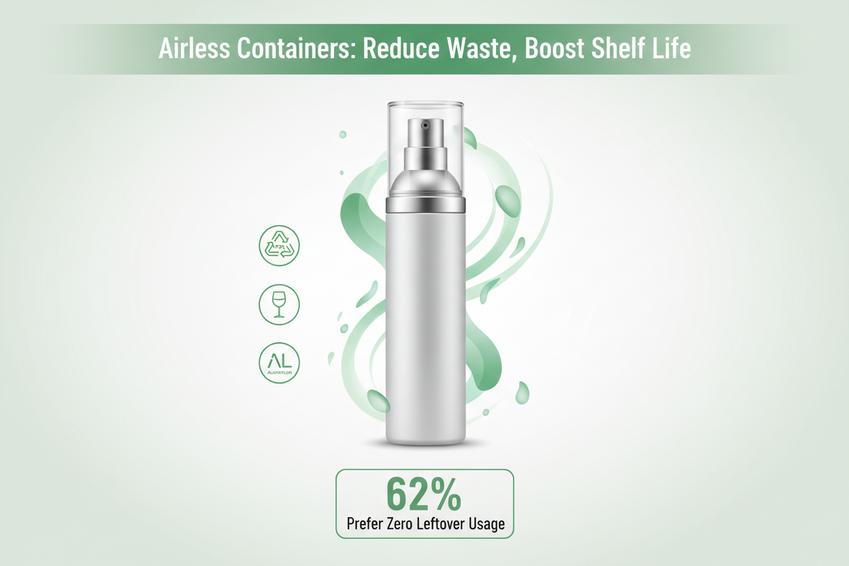
Essential Points for Choosing an Airless Container
- Oxidation Prevention: Blocks air entry to protect sensitive ingredients like Vitamin C and Retinol.
- Precise Dosing: Delivers a consistent amount of product with every pump, reducing waste.
- Hygienic Design: Eliminates the need to dip fingers into jars, preventing bacterial contamination.
- Extended Shelf Life: Minimizes the need for heavy preservatives by maintaining a sealed environment.
- Material Versatility: Available in sustainable packaging options like PP, PET, and PCR plastics.
The Science of Freshness: Preventing Oxidation
The primary enemy of active skincare ingredients is oxidation. When ingredients like antioxidants or essential oils meet oxygen, they begin to break down, losing their efficacy.
An airless container uses a non-pressurized vacuum system. Instead of a traditional straw (dip tube), it features a piston mechanism that rises as the product is dispensed. This design ensures that no air is sucked back into the airless bottle, keeping the formula as fresh as the day it was bottled.
According to the Mordor Intelligence Airless Packaging Market Report, the demand for airless systems is growing at a CAGR of over 5% as brands prioritize “clean beauty” formulas that require less chemical stabilization.
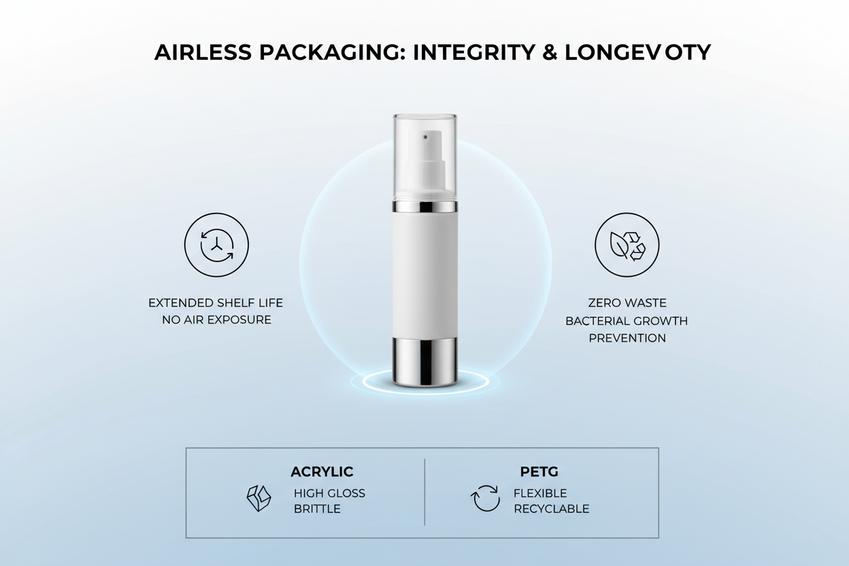
Precise Dosing: No More Product Waste
Have you ever struggled to get the last bit of lotion out of a bottle? In a standard pump bottle, up to 15% of the product is often left behind, trapped at the bottom or on the sides.
The airless container solves this with its internal piston. Because the piston pushes the product upward, it clears the walls of the bottle effectively. This results in an almost 99% evacuation rate, meaning you get exactly what you paid for. Furthermore, the pump mechanism provides precise dosing, allowing consumers to use the perfect amount every time.
5 Key Advantages of Airless Packaging
Choosing the right container is about more than just aesthetics; it’s about the lifecycle of the product.
- Hygiene First: Because the system is sealed, there is zero risk of airborne contaminants or skin oils entering the bottle.
- Increased Shelf Life: By limiting exposure to environmental factors, the shelf life of natural and preservative-free products is significantly extended.
- Consistent Dosage: Every pump delivers the same volume, which is critical for medicated or high-potency treatments.
- Luxury Aesthetics: The sleek, modern look of airless bottles often commands a premium feel on the shelf.
- Sustainability: Many modern airless systems are designed with sustainable packaging in mind, utilizing recyclable materials or refillable designs.
Consumer Preferences: Why Airless is Winning
In a world where consumers are increasingly educated about ingredient stability, packaging matters. A Statista survey on beauty packaging indicated that over 90% of premium skincare users prefer pump-based or airless systems over traditional jars due to concerns about hygiene and efficacy.
Brands that utilize an airless container often see higher customer satisfaction rates because the product performs consistently from the first use to the last.
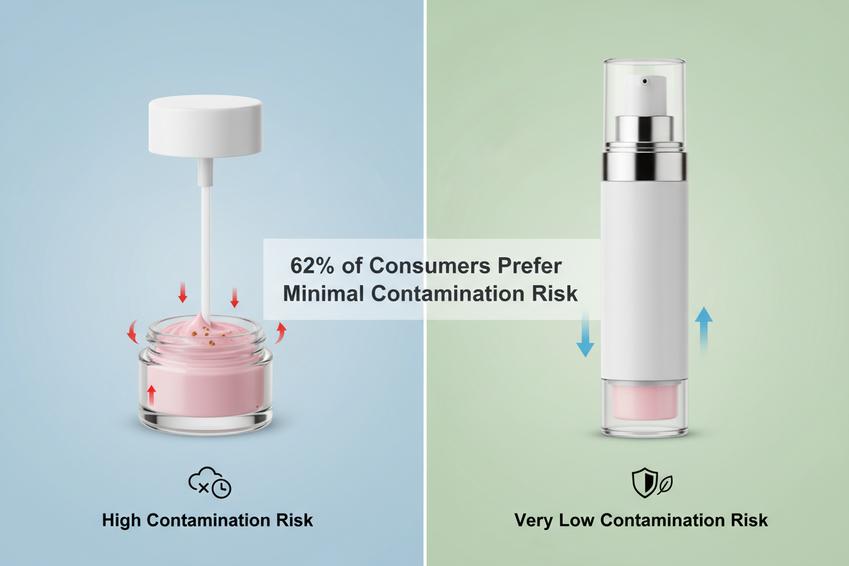
Materials: PP, PET, and Sustainable Options
Not all airless bottles are created equal. The choice of material impacts both the look and the environmental footprint of the product.
- PP (Polypropylene): A classic choice known for high chemical resistance and durability.
- PET: Offers glass-like transparency while remaining lightweight and shatterproof.
- PCR Packaging: Using PCR packaging (Post-Consumer Recycled) helps brands reduce their carbon footprint and appeal to eco-conscious shoppers.
- Mono-material Designs: Some manufacturers now offer mono-material packaging where the entire pump and bottle are made from the same plastic family, making the whole unit much easier to recycle.
FAQs about Airless Containers
Can I refill an airless container?
Standard airless bottles are often designed as single-use to ensure a sterile environment. However, the industry is shifting toward the refillable bottle system where an inner cartridge can be replaced while keeping the outer shell.
How do I “prime” an airless pump?
If your pump doesn’t work immediately, it likely needs to be primed. Simply pump the head a few times to evacuate the air gap and engage the vacuum piston.
Are airless containers better for “clean” beauty?
Yes. Because they provide a sterile environment, brands can often formulate with fewer preservative-free alternatives or lower concentrations of traditional preservatives.
Why is there a small hole at the bottom of my airless bottle?
That hole is essential! It allows air to enter below the piston to push it up as you pump the product out.
References
[ScienceDirect: Oxidation - https://www.sciencedirect.com/topics/medicine-and-dentistry/oxidation]
[Mordor Intelligence: Airless Packaging Market - https://www.mordorintelligence.com/industry-reports/airless-packaging-market]
[NCBI: Cosmetic Preservatives and Hygiene - https://www.ncbi.nlm.nih.gov/pmc/articles/PMC3016930/]
[Statista: Beauty Industry Trends - https://www.statista.com]
[Plastics Industry Association: Sustainable Materials - https://www.plasticsindustry.org]